
You're probably here because the year got away from you.
You did the work, sent some invoices, paid for fuel, software, tools, subcontractors, maybe used one bank card for business and another for whatever was urgent that week. Now you need to format financial statements properly and everything is scattered across email, paper receipts, PDFs, and bank feeds that were never fully reconciled.
That's more common than most first-time business owners think. New UK companies aren't required to file their first set of accounts until 21 months after incorporation, which creates a very real gap where bookkeeping often hasn't been kept up from day one, as noted in this discussion of the first-accounts timing gap for UK companies. The hard part isn't usually understanding what a profit and loss account is. It's reconstructing one from real life.
If you're still setting up the basics of how your business operates, the AetherCloud company setup tools can help you get your admin organised earlier, before year-end catches up with you.
Table of Contents
- Why Properly Formatted Financials Matter for Your Service Business
- Understanding the Three Core Financial Statements
- Assembling Your Financial Statements Step-by-Step
- Meeting UK Compliance and Avoiding Common Mistakes
- How AetherCloud Automates Your Financial Reporting
- From Financial Admin to Business Insight
Why Properly Formatted Financials Matter for Your Service Business
A lot of people think formatting financial statements is just about satisfying HMRC or Companies House. It isn't. Properly formatted accounts help you answer much more immediate questions. Did you make money on the jobs you were busy doing? Are you carrying unpaid invoices that look like sales but haven't turned into cash? Can you show a lender, accountant, or business partner something coherent?
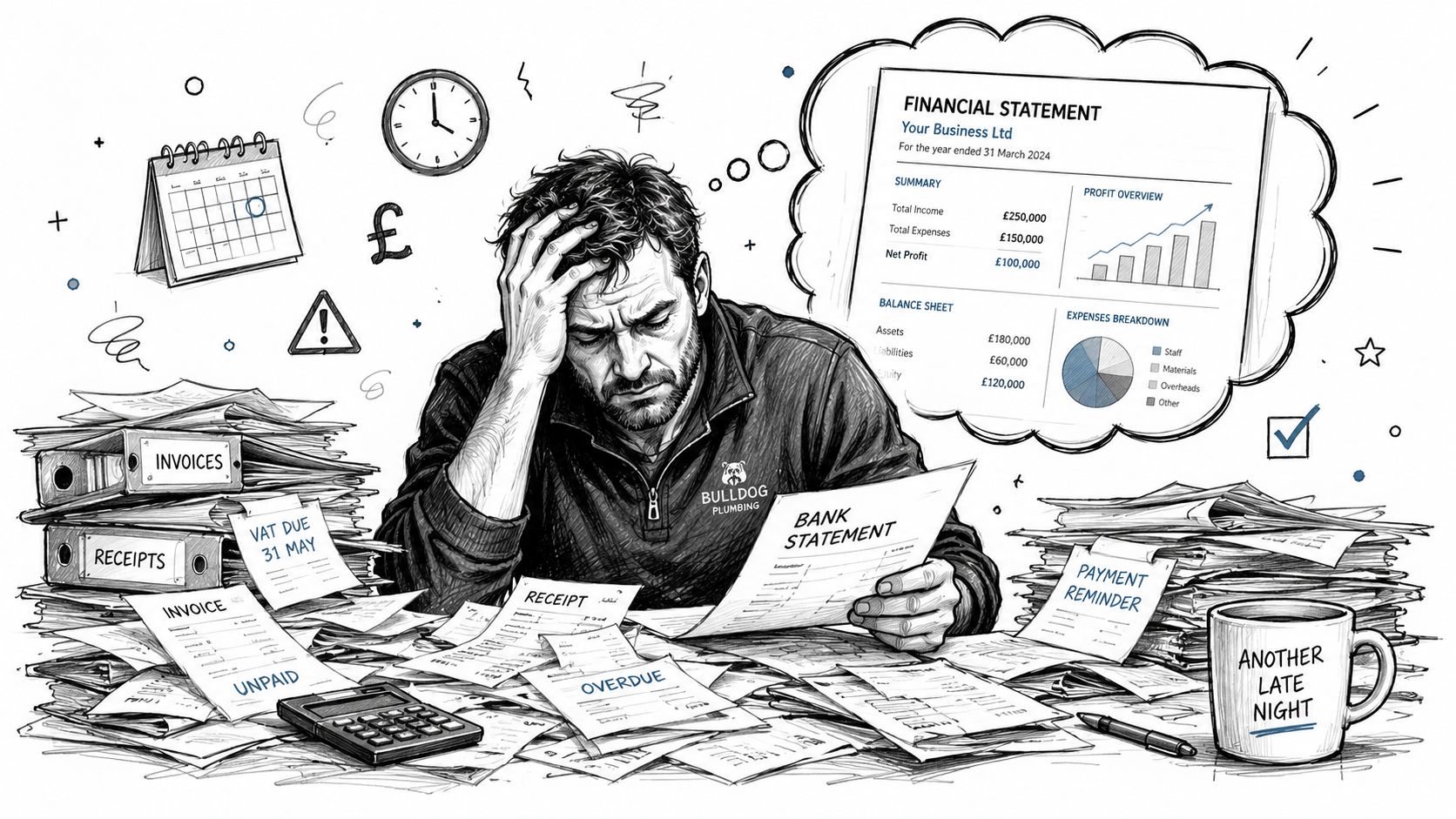
Take a typical first-year plumber or consultant. They may have quotes in one app, invoices in another, receipts in a shoebox, and bank transactions that include both materials and personal spending. By the time accounts are due, they aren't starting from clean books. They're trying to rebuild the story of the business from fragments. That's why a practical approach matters far more than textbook definitions.
What good formatting actually does
When you format a financial statement properly, you make the numbers usable.
A lender can follow it. An accountant can prepare filings from it. You can compare one month with another without guessing what was included last time. This allows you to stop relying on memory. Memory is always generous to revenue and vague about costs.
Practical rule: If someone outside your business can't understand where the numbers came from, the statement isn't ready.
For a service business, that matters early. You may need accounts to support a finance application for a van, to discuss a tax bill before it lands, or to work out whether your pricing covers your delivery costs. A badly assembled spreadsheet causes delays because every figure needs explaining. A clean set of statements shortens that conversation.
Retroactive bookkeeping is normal, but it needs structure
Delayed bookkeeping creates two risks. First, transactions get missed. Second, transactions get grouped badly, which can make a busy business look healthier or weaker than it really is.
The fix is not panic. The fix is method. Start with the source records, rebuild income and expenses in date order, and then place them into a format that matches what UK accounts require. That's the difference between “I've got bank statements” and “I've got financial statements”.
A proper format financial statement also saves headaches later. Once categories are consistent, future bookkeeping becomes much easier. You stop reinventing your chart of accounts every quarter, and year-end stops feeling like an archaeological dig.
Understanding the Three Core Financial Statements
Before you can format financial statements well, you need to know what each one is trying to show. Most confusion comes from mixing them together.
This visual gives the basic structure.
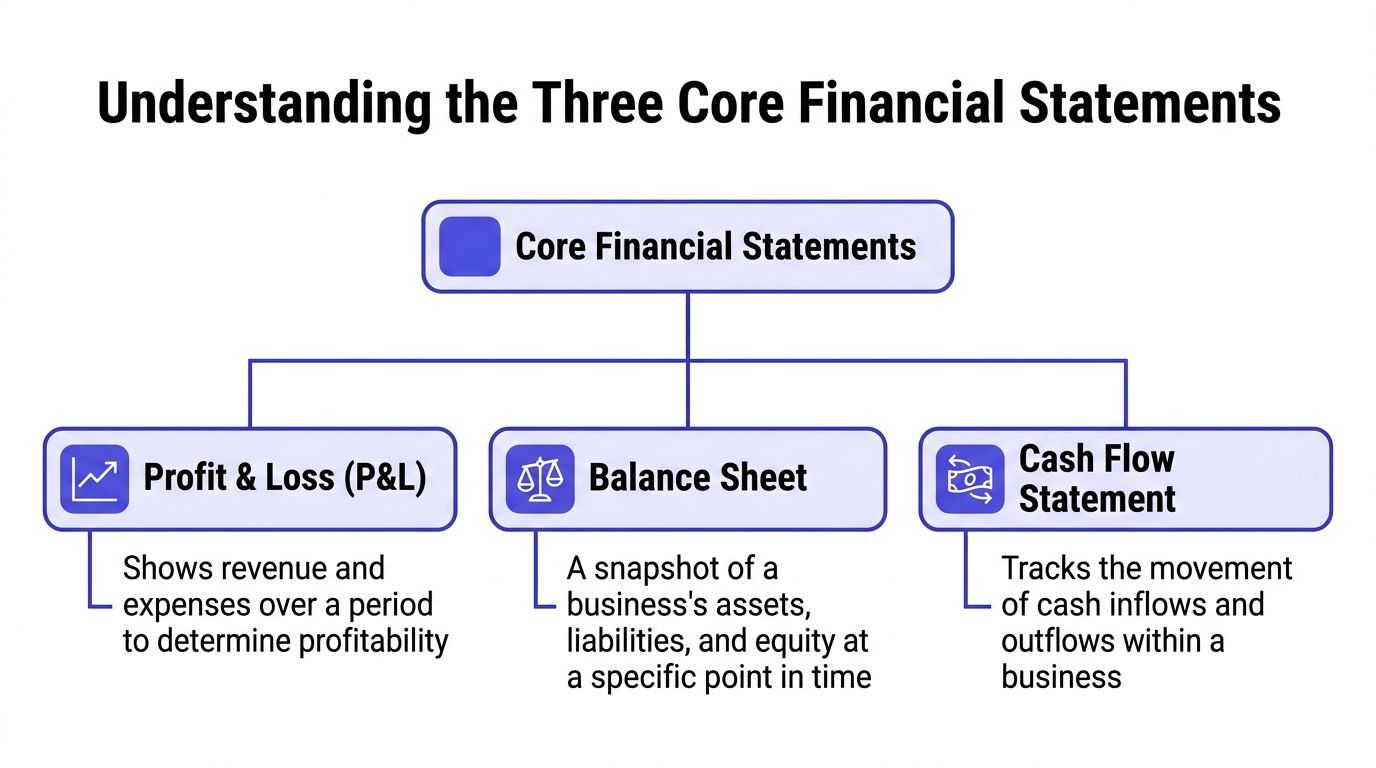
The short version is simple. One shows performance over time, one shows position at a point in time, and one shows movement of cash.
Profit and loss statement
The profit and loss statement, often called the P&L or income statement, shows what you earned and what it cost to earn it over a period.
For a freelance designer, that might include invoice income, software subscriptions, subcontractor costs, travel, insurance, and telephone costs. For a ground care specialist, it could include labour, plant hire, fuel, waste disposal, and tools. This statement tells you whether the work was profitable on paper.
That matters because “money came in” isn't the same as “the business made a profit”. If you invoiced heavily in one month but also bought equipment, paid annual insurance, and absorbed lots of materials costs, the P&L helps you see the full trading result.
Balance sheet
The balance sheet is a snapshot on a specific date. It shows what the business owns, what it owes, and what's left over.
A consultant might have cash at bank, unpaid customer invoices, a laptop, tax due, and perhaps a business loan. A plumber might have a van, tools, trade debtors, supplier balances, finance commitments, and VAT liabilities. The balance sheet brings all of that together in one view.
It's useful because businesses can look profitable while still being under pressure. If a lot of your money is tied up in unpaid invoices, or if you owe suppliers and tax at the same time, the balance sheet shows that strain.
Here's a simple comparison:
| Statement | What it answers | Service business example |
|---|---|---|
| Profit and loss | Did the work make money over a period? | Did this quarter's client work cover wages, software, and overheads? |
| Balance sheet | What does the business own and owe today? | How much is tied up in invoices, equipment, tax, and loans at year-end? |
| Cash flow statement | Where did cash actually move? | Did customer payments arrive in time to cover rent, fuel, and suppliers? |
A short explainer can help if you want a visual walkthrough before building your own statements.
Cash flow statement
The cash flow statement tracks money moving in and out. It's the statement that often explains why a business feels busy but still feels tight on cash.
A marketing consultant may show a healthy profit, but if clients pay late and software licences renew before invoices are settled, cash gets squeezed. A cleaning business might take deposits in one period and incur staffing costs in another. The cash flow statement helps you separate profit from liquidity.
Profit answers whether the business worked commercially. Cash flow answers whether the business could keep moving while it worked.
For many first-time owners, the P&L gets all the attention and cash gets ignored until a payment deadline appears. That's a mistake. If you want to format a financial statement set that gives a complete picture, you need all three perspectives.
Assembling Your Financial Statements Step-by-Step
Many individuals get stuck here. They don't need more theory. They need an order of work.
If your bookkeeping is late, don't start by designing a polished report. Start by rebuilding the raw records. Once the records are complete, formatting becomes much easier.
Step 1 Gather the evidence first
Pull together everything that proves money in or money out.
That usually means:
- Bank statements: Every business account, plus any personal account used for business spending.
- Sales records: Quotes, invoices, payment confirmations, and customer remittance emails.
- Cost records: Receipts, supplier invoices, subscriptions, insurance schedules, loan statements, and payroll records if relevant.
- Tax support: VAT workings, prior returns, and correspondence with your accountant.
If your invoicing has been spread across emails and PDFs, moving current and future billing into one place helps. The AetherCloud invoicing workflow gives you a cleaner sales trail to work from going forward.
Step 2 Work in date order, not by memory
Start with the first month of trading and move forward line by line. Match each bank entry to supporting evidence.
A common mistake is trying to remember what a payment was for six or nine months later. Don't. If a bank line says a supplier was paid, find the invoice. If cash came in from a client, match it to the sales invoice. If you can't identify an item, put it on a questions list and come back to it.
Leave unknown transactions marked as “query” until you have evidence. Guessing creates more cleanup later than a short unresolved list.
Step 3 Sort every transaction into sensible categories
Once each entry is identified, assign it to a consistent category. The category names matter because they feed directly into your profit and loss account and balance sheet.
For a service business, a practical first pass often looks like this:
| Area | Typical categories |
|---|---|
| Income | Sales, other operating income |
| Direct costs | Materials, subcontractors, job-specific travel |
| Overheads | Rent, software, insurance, telephone, marketing |
| Assets | Equipment, vehicles, deposits, trade debtors, bank |
| Liabilities | Loans, tax due, VAT due, trade creditors |
Keep the categories stable. Don't post fuel to “travel” one month, “motor” the next, and “sundries” after that. Inconsistent coding makes trend analysis almost useless.
Step 4 Build the statements in the correct statutory shape
For UK GAAP work, the method matters. Preparers should first determine the entity's classification under FRS 100, then apply the balance sheet format required by Schedule 1 to the UK Small Companies Regulations, rather than following the IAS 1 presentation format. ICAEW guidance also highlights a frequent filing failure. A private limited company's balance sheet must include a director's signature and printed name, or Companies House can reject it, as explained in ICAEW guidance on formatting accounts under new UK GAAP.
That sounds technical, but the practical point is straightforward. Use a UK statutory format, not a generic internet template built for another framework.
Step 5 Include what the regulations actually expect
Where a summary financial statement is used, the law requires a summary profit and loss account derived from the full account, dividend information from the full accounts, and a summary balance sheet derived from the full balance sheet, with any further information needed for consistency with the full accounts and reports. That comes from the Companies (Summary Financial Statement) Regulations 2008.
For first-time preparers, the takeaway is simple. Your summary or final presentation still has to tie back to the underlying full records. You can simplify presentation, but you can't make it inconsistent.
A practical mini example
A gardener finishes the year with sales invoices, supplier bills for materials, fuel receipts, insurance, and a van finance statement. The first pass is not to “prepare accounts”. It's to separate those records into income, job costs, overheads, assets, and liabilities.
Once that's done, the P&L shows trading performance over the year. The balance sheet shows the van finance still owed, any unpaid customer invoices, and the bank balance at year-end. Suddenly the business stops looking like a pile of paperwork and starts looking like a set of understandable numbers.
Meeting UK Compliance and Avoiding Common Mistakes
Formatting is only half the job. Compliance is where many first-time filings go wrong, especially when people rely on old templates, generic software exports, or assumptions borrowed from non-UK guidance.
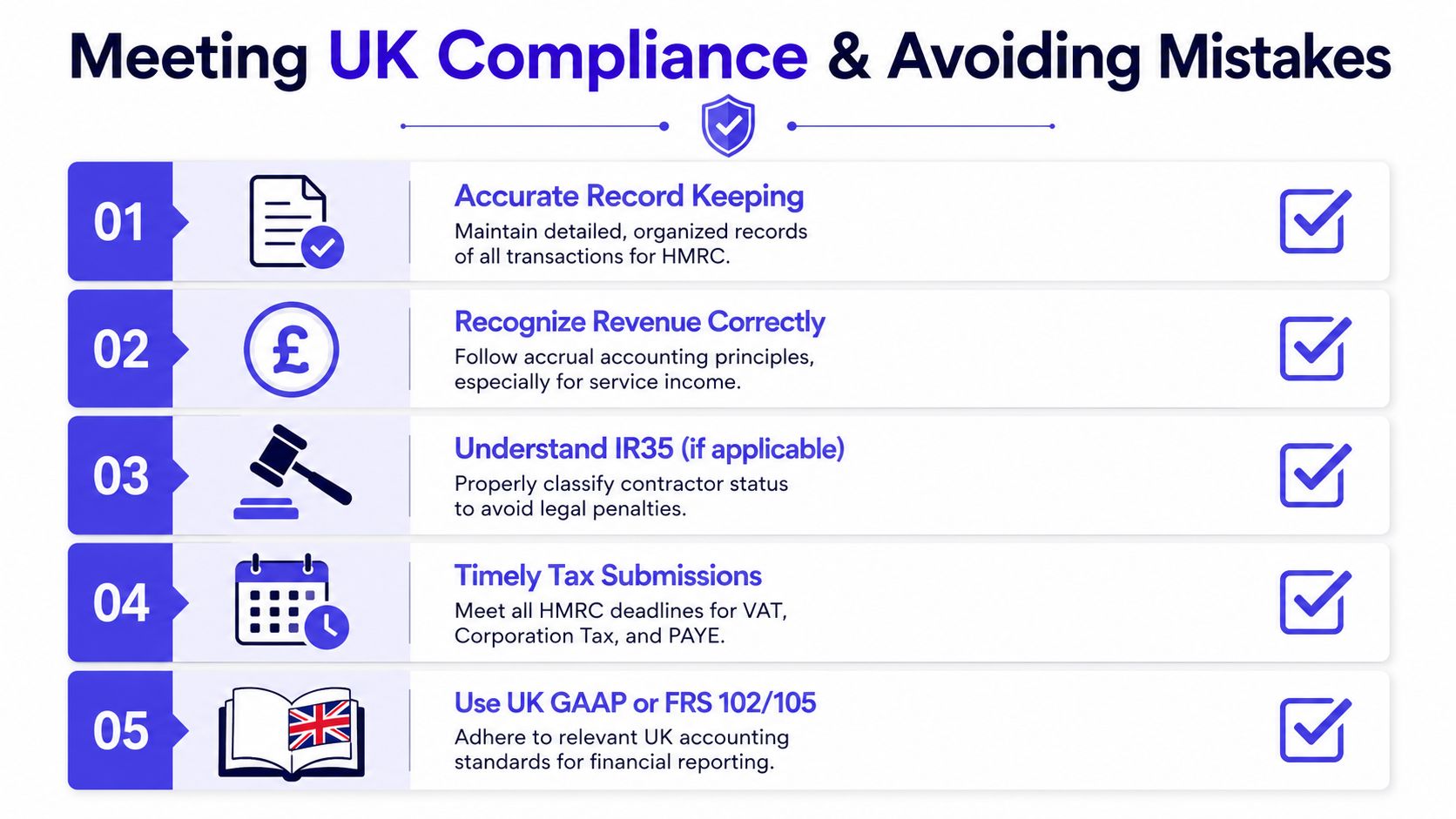
The good news is that most errors are predictable. If you know where they happen, you can catch them before filing.
The compliance points that matter most
Under UK company law modernisation, all accounts filings made on or after 1 April 2028 must be submitted using commercial software in iXBRL format, and the web and paper filing routes for accounts will close from that date. The same changes state that small companies will no longer be permitted to prepare or file abridged accounts, and any company claiming audit exemption must add an enhanced directors' statement on the balance sheet specifying the exemption claimed and confirming qualification, according to the UK government guidance on changes to company accounts filing.
That means a format financial statement isn't just about appearance anymore. It's increasingly tied to digital filing rules and software compatibility.
Common mistakes I see first-time preparers make
Some mistakes are technical. Others are just the result of messy records.
- Mixing personal and business spending: This creates confusion over whether payments are drawings, reimbursements, or business costs.
- Posting loan money as sales: Borrowed funds are not turnover.
- Ignoring unpaid invoices and bills: That distorts both the P&L and the balance sheet.
- Using a generic balance sheet layout: UK statutory presentation requirements are specific.
- Forgetting the narrative details: Audit exemption wording and related statements matter where applicable.
If a number can't be traced to a record, it shouldn't be in the final statement.
A quick decision view for small businesses
| Issue | What works | What doesn't |
|---|---|---|
| Year-end assembly | Reconcile records before formatting | Build the report first and hope the records fit |
| Statement layout | Use UK-compliant formats | Use a random downloadable template |
| Filing prep | Check digital filing requirements early | Leave software and tagging questions to the deadline week |
| Director approval | Review signatures and statements before submission | Assume the software fills every legal requirement automatically |
If you want ongoing practical guidance on business admin and reporting, the AetherCloud blog is a useful place to keep an eye on operational topics that affect service firms.
How AetherCloud Automates Your Financial Reporting
Manual reporting usually fails long before year-end. It fails when the quote lives in one tool, the invoice in another, the payment in a bank app, and the customer details in someone's phone.
That fragmentation creates the same problem every time. You end up rebuilding the trading history from scratch instead of maintaining it as you go. For a small service business, that's where admin starts eating evenings and weekends.
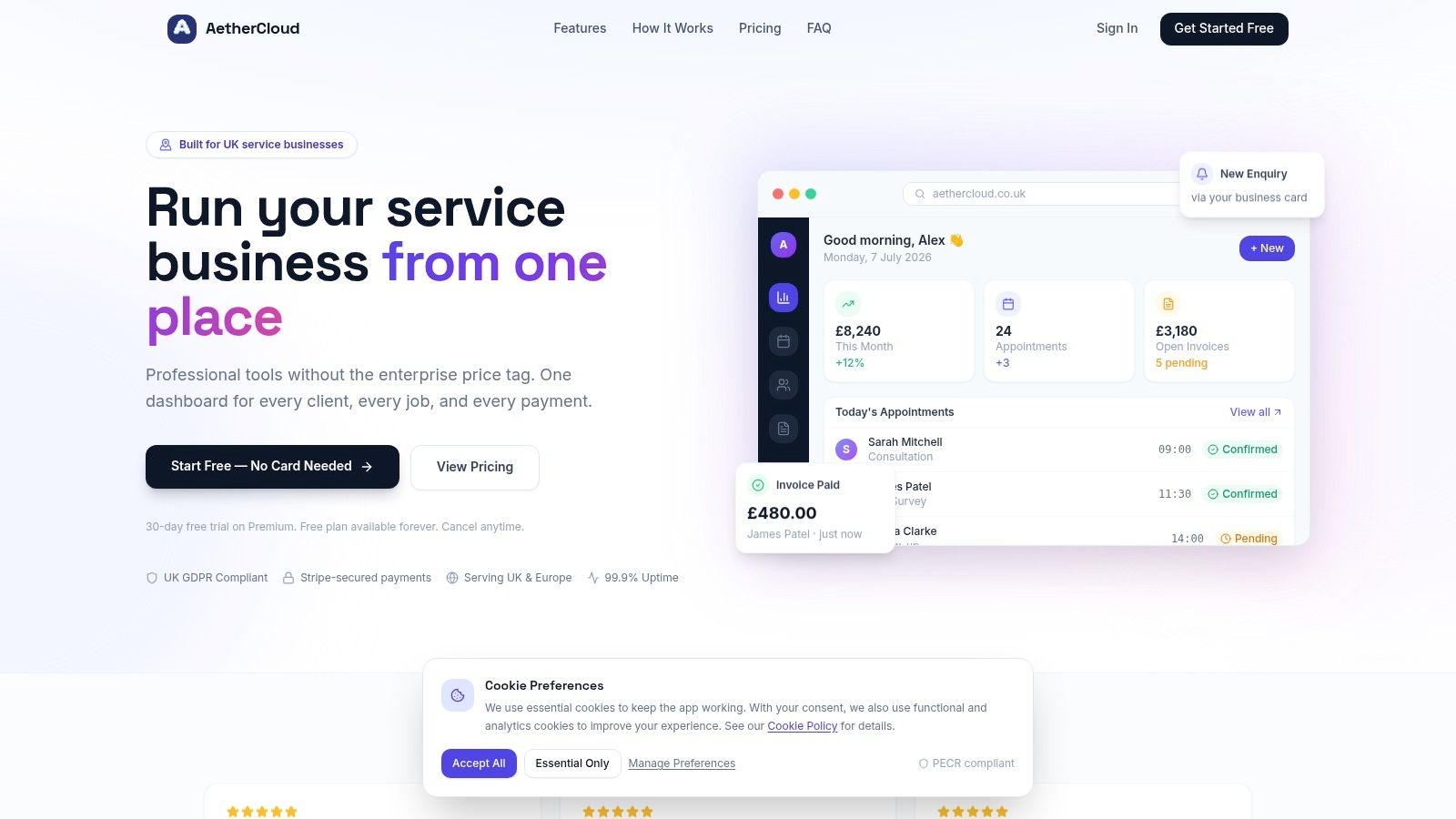
Why one workflow is easier to report from
When quotes, invoices, customer records, and payments sit together, the reporting trail is cleaner. You can see what was quoted, what was approved, what was invoiced, and what has been paid without stitching together evidence from several places.
That matters more as digital reporting rules tighten. Sole traders in the UK earning annual income over £50,000 must, by April 2026, submit quarterly financial updates to HMRC through compatible accounting software under the phased rollout of Making Tax Digital, as noted in this summary of UK small business regulatory changes. The direction of travel is obvious. Cleaner digital records now mean less friction later.
What that changes in practice
For a consultant, it means approved work doesn't need to be retyped into a separate invoicing system. For a trades business, it means the team can keep customer details, quotes, and billing linked to the same job record. For a freelancer, it means less hunting through old emails when reconciling what was billed and what was paid.
A central settings area also matters more than many owners realise. VAT setup, company details, branding, user access, and billing basics all affect how clean your records are. The AetherCloud settings area gives businesses one place to control those operational details instead of scattering them across separate apps.
Good reporting starts upstream. If the job, invoice, and payment records are disconnected, year-end accounts will be slower and messier than they need to be.
A platform won't replace judgment. You still need to classify transactions correctly and review your year-end position. But it does remove a lot of the preventable admin that turns first accounts into a scramble.
From Financial Admin to Business Insight
The main benefit of learning how to format financial statements isn't the finished document. It's what the finished document lets you see.
Once your profit and loss account is in order, you can judge whether your pricing works. Once your balance sheet is clean, you can see whether unpaid invoices or tax liabilities are putting pressure on the business. Once cash flow is visible, you stop being surprised by timing gaps.
What changes when the records are reliable
A tidy reporting process changes the questions you ask.
Instead of “where did that number come from?”, you start asking “which service line is strongest?”, “which clients pay slowly?”, and “are overheads drifting upward?” That's a much better place to run a business from.
If you want those patterns visible during the year rather than only at year-end, a live dashboard helps. The AetherCloud analytics tools give service businesses a clearer view of revenue, activity, and performance without forcing them to build reports from scratch each time.
The practical takeaway
If your books are behind, don't try to solve everything at once. Reconstruct the records carefully, format the statements in the right UK structure, and check the compliance details before filing.
Then fix the system that created the mess in the first place.
Businesses rarely struggle because financial statements are impossible. They struggle because the underlying admin is fragmented. Once the flow of quotes, invoices, payments, and records becomes consistent, the statements stop being a once-a-year panic and start becoming a useful management tool.
AetherCloud helps UK service businesses replace scattered tools with one simple system for scheduling, CRM, quoting, invoicing, payments, and analytics. If you want cleaner records, less year-end stress, and a more professional way to run the business day to day, try AetherCloud and see how it simplifies the work behind better financial reporting.