
Jobs overrun. Quotes go out based on instinct. Then the admin catches up with you at the end of the week and you realise the profitable work wasn't as profitable as it looked. That's a common pattern in UK service businesses, especially when scheduling, quoting, and invoicing live in separate tools.
Time and motion studies help because they turn hunches into evidence. You stop arguing about whether a task “usually takes about an hour” and start recording what took place, step by step. In the UK care sector, the CSP activity analysis and time and motion guidance formalised a two-week collection period using 10-minute units, specifically to capture stable activity patterns for costing and service review. That principle travels well beyond care. If you measure during a normal period and record work consistently, your pricing decisions get better.
The good news is you don't need specialist software on day one. A practical template is enough to start. The better news is that the spreadsheet isn't the end state. Once you know where time is going, you can use that data to improve bookings, tighten quote allowances, and reduce admin inside one system. That's where a platform such as AetherCloud becomes useful. It gives you a place to apply what the template reveals, instead of filing the study away and carrying on as before.
Table of Contents
- 1. Smartsheet
- 2. Lean Methods Group
- 3. SimplicityHub UK
- 4. Lean Enterprise Institute LEI
- 5. Gemba Academy
- 6. NHS England
- 7. ACSCO Timer Pro
- 8. ExcelSirJi
- 9. LeanSmarts
- 10. Standard Textile
- Comparison of Top 10 Time & Motion Templates
- Automate Your Efficiency The Next Step After Templates
1. Smartsheet
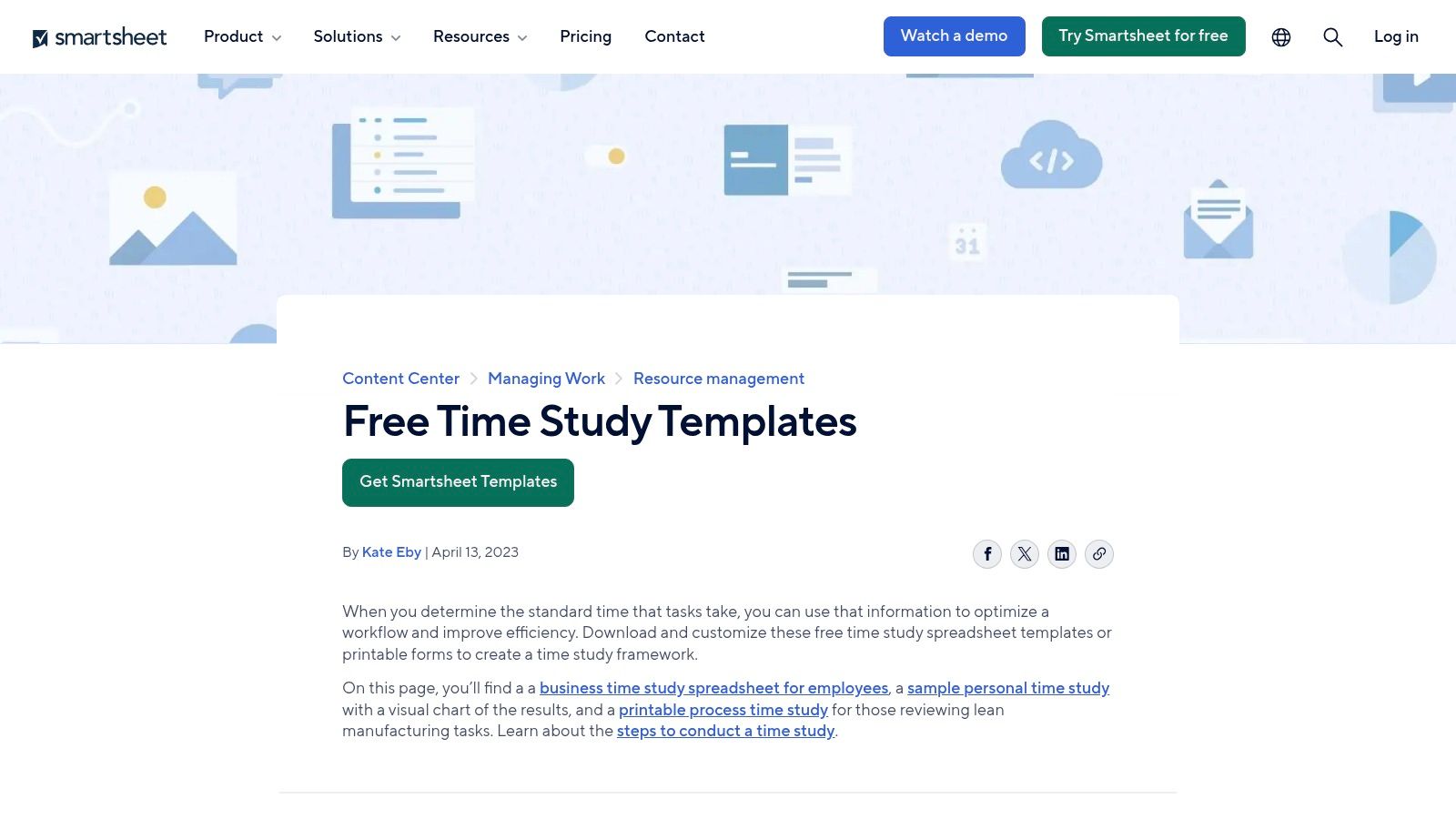
Smartsheet's free time study templates are one of the easiest places to begin if you need structure today, not next week. The library includes printable forms, spreadsheet versions, and PDFs, so you can test a study on site, in the office, or across a small team without building the layout yourself.
That matters because most service businesses don't fail at process improvement through lack of intent. They fail because setting up the study feels like extra admin. Smartsheet removes that setup barrier. If you're timing a quoting workflow, a property visit, or repeated admin steps, the templates are usable straight away.
Best when you need a fast starting point
What I like here is the format flexibility. A field team can print the process time study form, while an office manager can use the spreadsheet version to total observations and spot patterns.
- Ready to use: You can start timing repeated tasks without designing a workbook first.
- Multiple formats: Excel, Google Sheets and PDF options make rollout easier across mixed teams.
- Simple analysis: Basic totals and charts help you get to an initial view quickly.
The limitation is that the forms are generic. They don't reflect UK service quoting, staff grade costing, or reality of juggling appointments, client calls, follow-up messages and payment chasing. That's fine for the study itself, but you'll probably need to adapt labels before the data becomes commercially useful.
Practical rule: If you download a generic template, add columns for job type, travel, client communication, and rework before you start.
Once you've collected a week or two of timings, move the insight into something operational. AetherCloud's business analytics tools are useful at that stage because they give you one place to compare activity with revenue, instead of keeping findings in a disconnected spreadsheet.
2. Lean Methods Group
Lean Methods Group's time observation template is stripped back in a good way. It focuses on observing work elements and capturing cycle times cleanly, which makes it useful when you're trying to diagnose waste instead of producing a polished report.
That simplicity suits repetitive or semi-repetitive service tasks. Think intake calls, site survey steps, job closeout, or the handoff from approved quote to scheduled work. If a task happens often enough to feel routine, this kind of sheet can expose where the minutes are leaking.
Where it works well
This is the sort of template I'd use when a team already knows there's a bottleneck but can't agree on where it sits. Because the layout is minimal, observers tend to focus on the work rather than the spreadsheet.
A few trade-offs matter:
- Clean structure: Good for breaking a process into elements without clutter.
- Lean-friendly design: Useful if your business already thinks in terms of waste, delay and standard work.
- Manual analysis: You'll need your own spreadsheet skills for charts, comparisons and follow-up analysis.
There's no built-in dashboard, and that's the primary drawback. For many service firms, the template will identify that scheduling or handoffs are causing delay, but the template itself won't fix the booking chaos.
That's where a connected system helps. If your study shows that delays start before the job begins, centralising appointment scheduling in AetherCloud makes more difference than polishing the worksheet. UK government reporting on SME digital adoption also points to standardisation and data portability as barriers for software-heavy workflows, which is exactly why fragmented scheduling, CRM and billing setups create so much manual reconciliation in small firms.
3. SimplicityHub UK
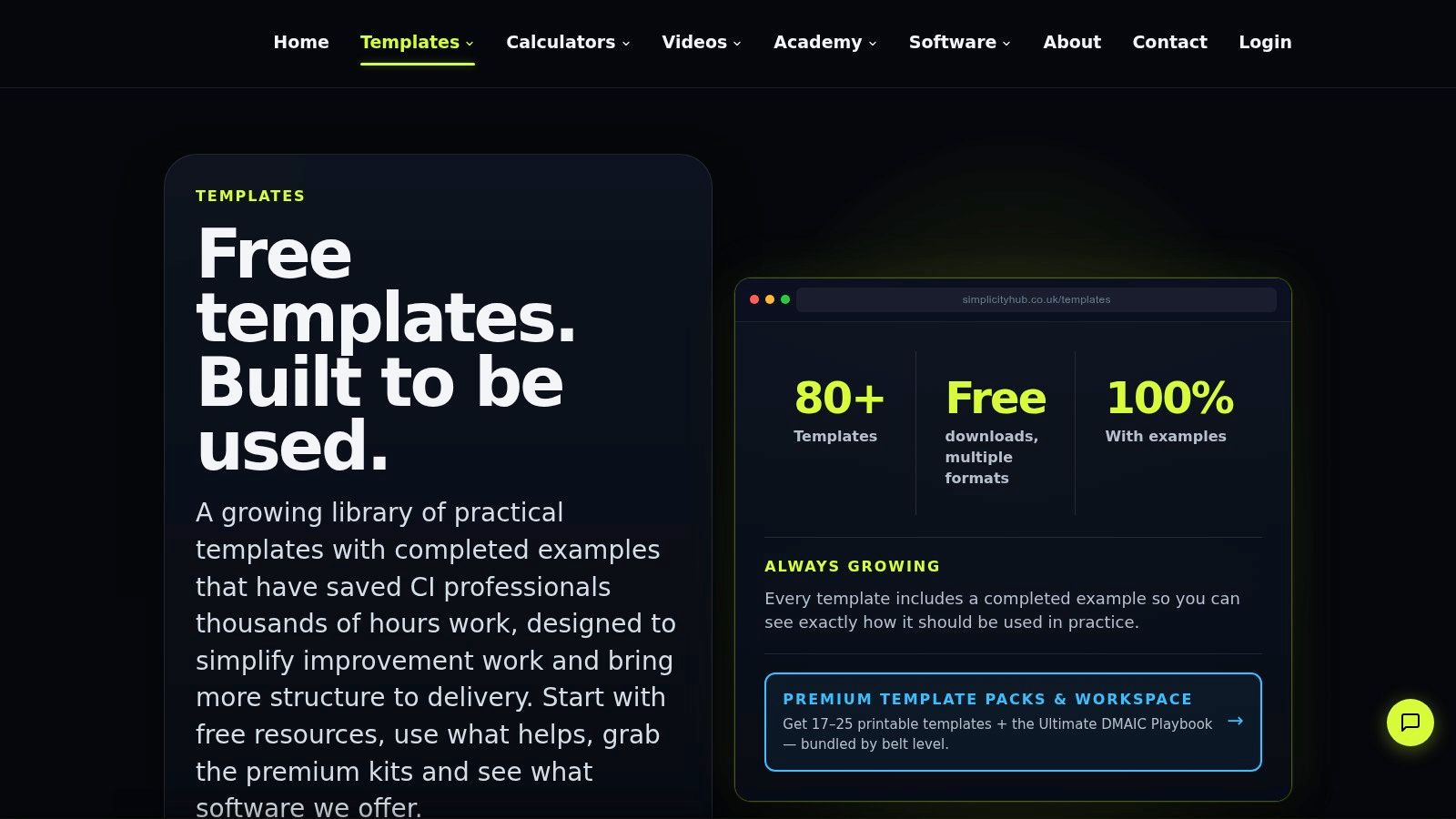
SimplicityHub's template library is worth a look if you want UK terminology and examples rather than a generic process improvement download. Its Process Observation Sheet sits inside a broader lean library, which is useful if your time study is part of a wider operational tidy-up.
For UK service operators, that local feel matters more than people think. Templates written for factory settings in another market often need so much relabelling that teams stop using them properly. SimplicityHub is broader than a pure stopwatch sheet, but that can indeed help when the core issue isn't just task duration. It's interruptions, missing information, and poor handoffs.
A better fit for UK operators
This one works well for observation walks, shadowing and process reviews where you want notes as well as timings. I'd add a dedicated duration column and a simple reason-code field for delays.
- UK context: The wording is easier for local teams to adopt without translation.
- Multiple formats: Excel, Google Sheets, PDF and Numbers give you flexibility.
- Helpful extras: Worked examples and related lean templates make rollout easier.
The downside is precision. If you need strict cycle-time analysis, you'll need to tighten the format yourself.
That said, many service businesses aren't short on templates. They're short on joined-up follow-through. Once your observations reveal that new work is getting stuck at first contact, the next step is improving capture and response. AetherCloud's enquiries management tools help turn those observations into a cleaner intake process, which is often where wasted time begins.
4. Lean Enterprise Institute LEI
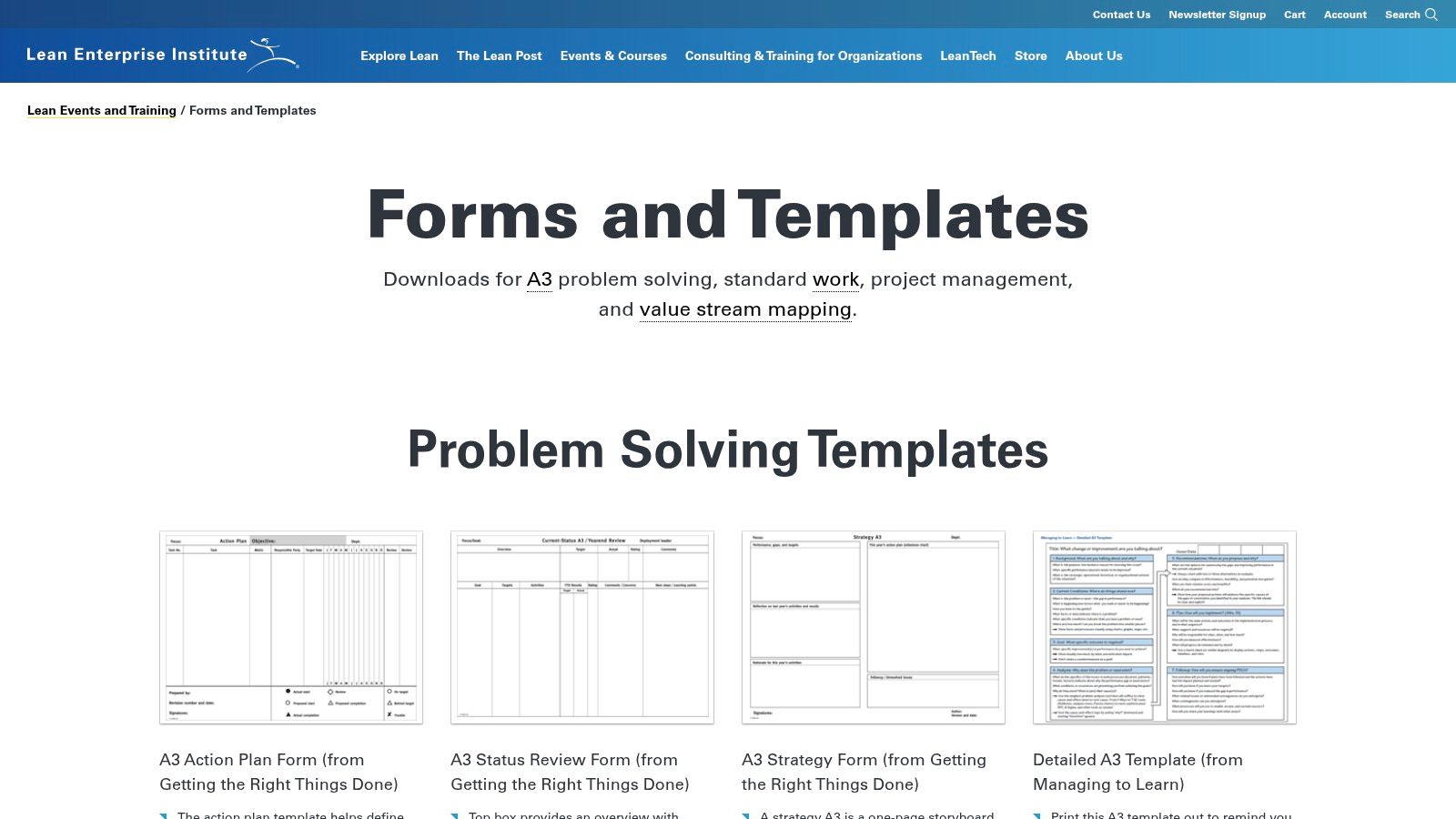
The Lean Enterprise Institute forms library is more serious than most free downloads. The Standard Work Process Study Sheet sits alongside operator balance and combination forms, so you're not just timing tasks. You're building a repeatable way of doing them.
That's useful if your service business is growing and different staff carry out the same work in noticeably different ways. One engineer logs notes during the visit. Another does it back at the van. One consultant sends the quote the same day. Another leaves it until Friday. The LEI forms help you separate individual habit from process design.
Strong forms with a manufacturing accent
The credibility here is high, but the wording is still rooted in manufacturing. Service teams need to adapt the language and sometimes the logic.
A few clear pros and cons:
- Established methodology: The forms are grounded in recognised standard work practice.
- Broader toolkit: Useful if you want to move from observation to standardisation.
- Heavier than generally required: For a quick office or field study, the full form set can feel like overkill.
Don't copy manufacturing language straight into a service team. Rename fields so people can record work accurately without guessing what the form means.
This option suits businesses that are ready to standardise core workflows, not just inspect them once. If your team is still firefighting across bookings, quotes and invoices, you may need a simpler first step before these forms deliver much value.
5. Gemba Academy
Gemba Academy's time observation sheet sits inside a training environment rather than a simple free-download page. That changes how useful it is. You're not only getting a template. You're getting lessons, quizzes, and workbooks that help people use the template consistently.
Consistency is a bigger issue than many managers expect. A time study can fail because each observer records slightly different things, not because the template is poor. If one supervisor logs interruptions and another ignores them, your averages become difficult to trust.
Best for team consistency
This is a better fit when several people will run studies and you need them following the same method. Training support is the main advantage.
- Structured learning: Helpful for supervisors or team leads who haven't run formal observations before.
- Template plus guidance: Better than handing out a sheet and hoping everyone interprets it the same way.
- Access friction: Membership or login requirements make it less convenient for a quick start.
The biggest drawback is that access is bundled. If you just want the file, this can feel slow. Still, some teams need that extra structure. In the UK, time and motion studies are lawful when carried out for a defined purpose and handled fairly and transparently under the Data Protection Regulations 2018, with practical guidance explained by Reality HR on lawful and transparent time and motion studies. Training helps managers handle that conversation properly.
If you want to pair staff guidance with practical workflow changes, AetherCloud's small business operations blog is a useful place to keep building process knowledge after the study.
6. NHS England
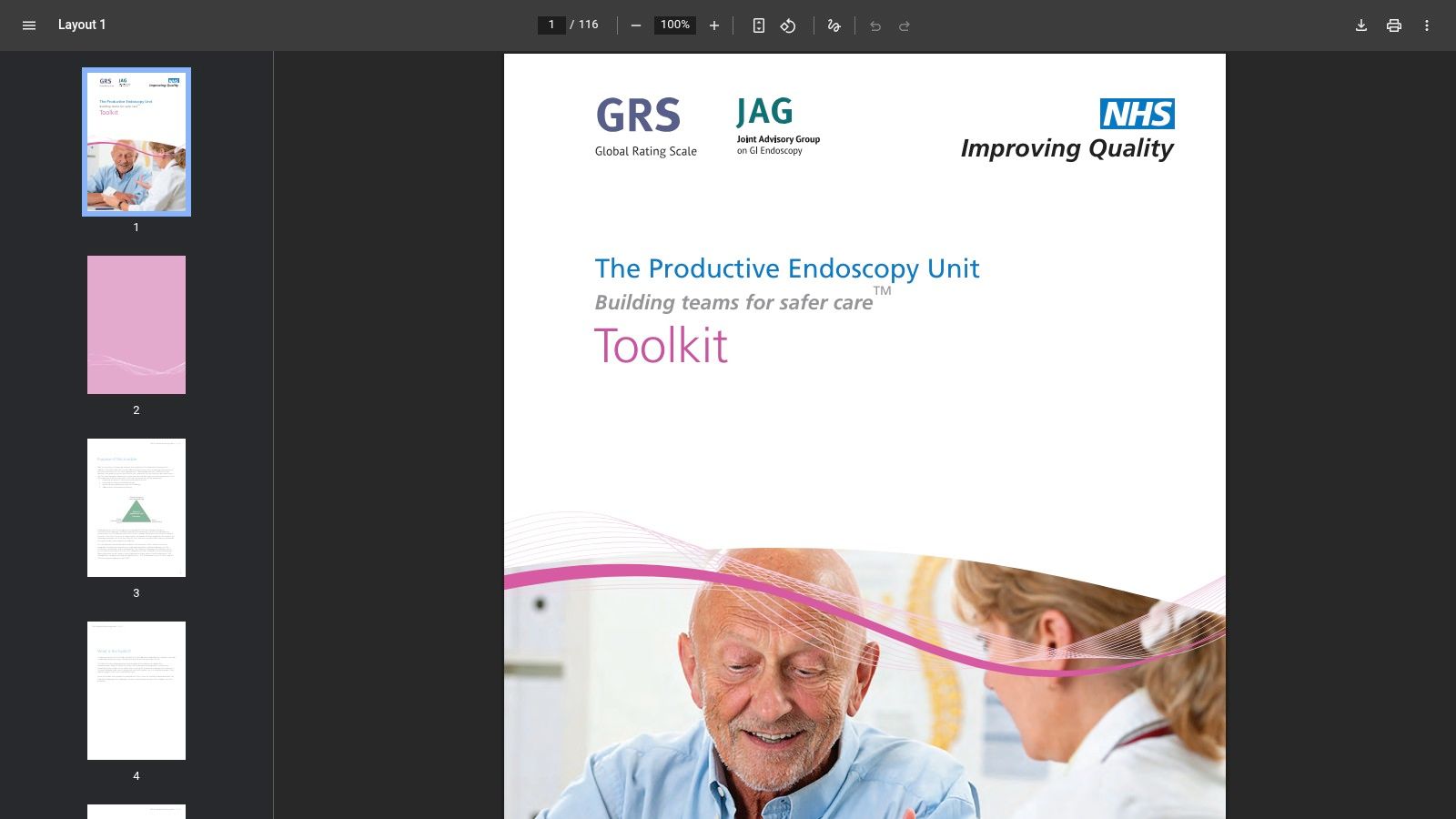
The NHS England Productive Endoscopy Unit toolkit is healthcare-specific, but the Activity Follow Sheet is one of the more rigorous observation formats on this list. It records activity in a disciplined way and includes guidance on analysis, including charting approaches.
For clinical teams, estates departments, and service environments with a lot of handoffs, that rigour is valuable. It forces observers to classify work rather than write vague notes. That makes later analysis much sharper.
Rigour over convenience
This isn't the easiest template to adapt, but it's one of the strongest if you care about defensible data. The healthcare language needs relabelling for non-clinical work, yet the underlying method holds up.
- Minute-level observation: Good for understanding mixed activity across a shift or visit.
- Guidance included: Stronger procedural support than most free templates offer.
- Sector-specific wording: Non-clinical teams will need to rename categories before using it.
This is also where a UK-specific point matters. Existing time in motion templates often ignore the costing nuance around available clinical minutes and grade-specific staffing, even though CSP guidance places real emphasis on collecting data over a stable two-week period for accurate costing. If your business prices skilled labour, that principle matters. You need observations that reflect ordinary delivery, not a chaotic one-off day.
Use this template if you need evidence you can defend in a service review, not just a rough estimate for internal discussion.
7. ACSCO Timer Pro
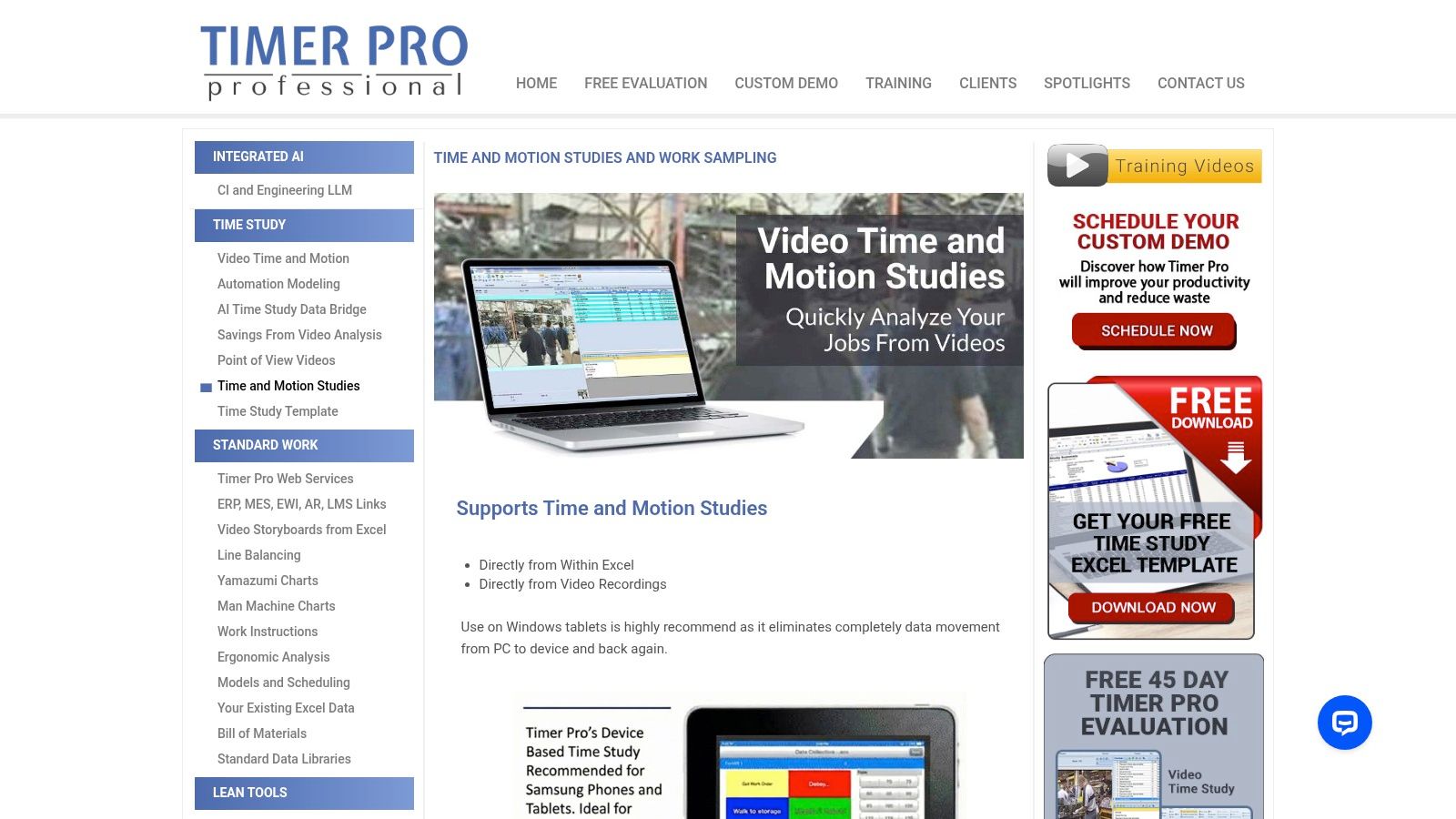
ACSCO Timer Pro is for teams that have moved past casual spreadsheet timing. The free Excel capture template gets you started, but the bigger draw is the software layer, including video analysis and more specialised outputs.
That makes it a realistic option when your studies are becoming frequent, detailed, or commercially significant. If you're redesigning a multi-step service operation, basic forms start to show their limits quite quickly.
When spreadsheets stop being enough
What stands out here is scalability. You can begin with spreadsheet-based capture and progress into more formal analysis without changing methodology entirely.
A few practical points:
- Better depth: Video time study helps when live observation misses detail.
- Excel compatibility: Easier to fit into existing reporting habits.
- Higher complexity: Full use will suit dedicated improvement work more than casual admin reviews.
The obvious downside is that specialist software can outrun the needs of a small service business. Many firms don't need line balancing tools. They need fewer missed bookings, cleaner job handoffs, and faster invoicing.
That's worth remembering because fragmented data is already a major operational problem. A reported 95% of UK and US organisations facing data issues that affect operations and decisions tells you the same story many managers live every week. More analysis tools only help if the underlying workflow is connected.
8. ExcelSirJi
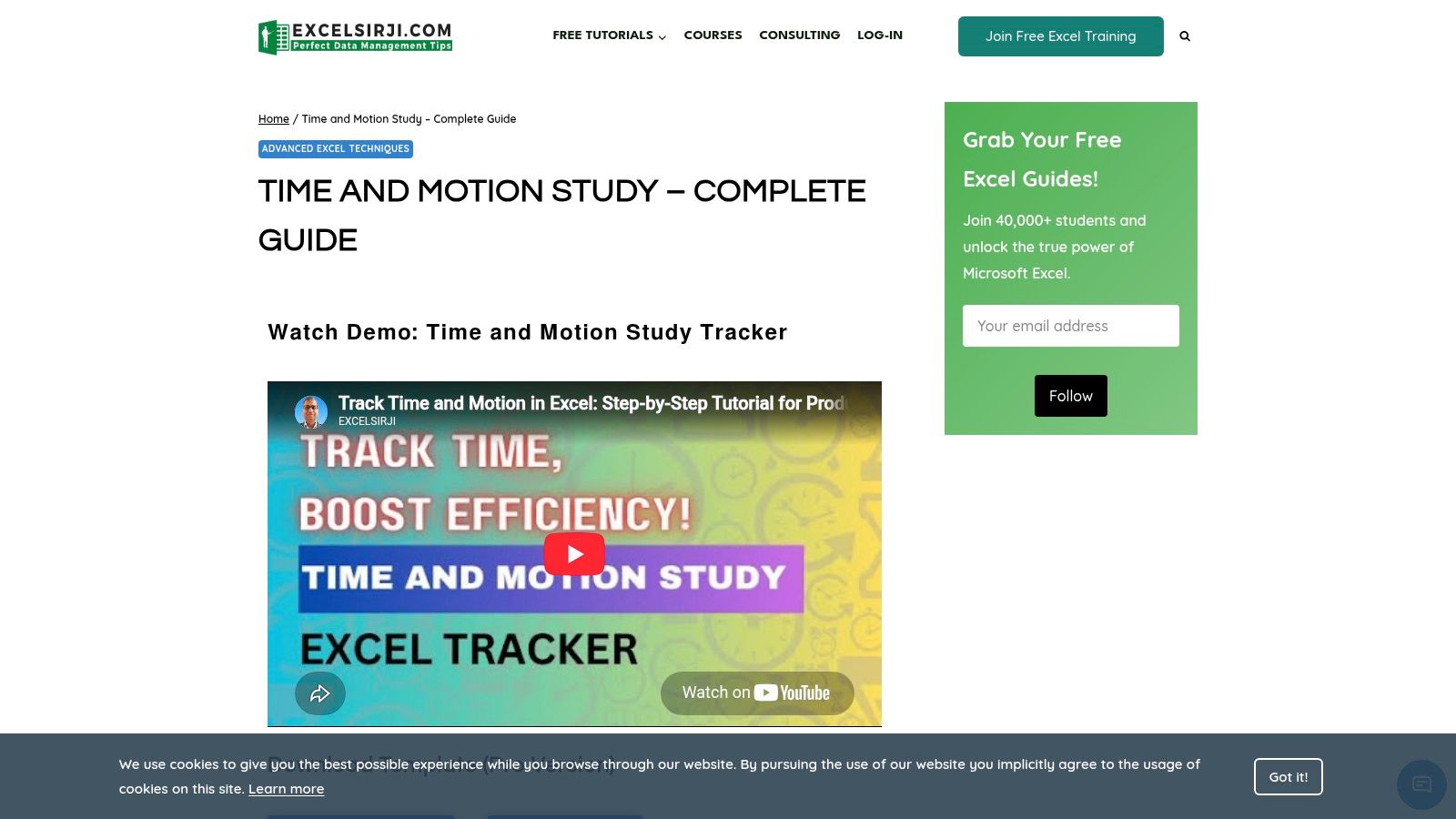
ExcelSirJi's time and motion study template is practical in a very different way. It gives you a macro-enabled workbook with start and stop buttons, timing fields, reset controls, and a setup that feels closer to a stopwatch tool than a static spreadsheet.
That makes it handy for transactional or repeated tasks where speed matters more than process elegance. If you want a quick way to record call handling, dispatch steps, or repetitive admin cycles, it's easy to understand.
Useful if your team lives in Excel
This template is strongest in businesses that already rely on Excel for day-to-day management. There's less resistance because the interface feels familiar.
- Fast deployment: Good when you need a workbook that starts timing immediately.
- Simple controls: Start, stop and reset functions reduce manual entry.
- Macro dependency: Some IT settings will block VBA, which can stop rollout before it starts.
The design is generic, so you'll almost certainly customise labels and IDs. But for early-stage businesses, that's manageable. In UK SMEs, 31% currently use AI-powered tools for task automation and operations or logistics, with another 15% planning adoption. That leaves a lot of firms still relying on manual workbooks and disconnected admin. If that's your starting point, keep the template simple and then move the proven workflow into a proper system.
When you're ready to replace ad hoc spreadsheets with something more stable, AetherCloud company setup gives you a cleaner foundation for operational processes.
9. LeanSmarts
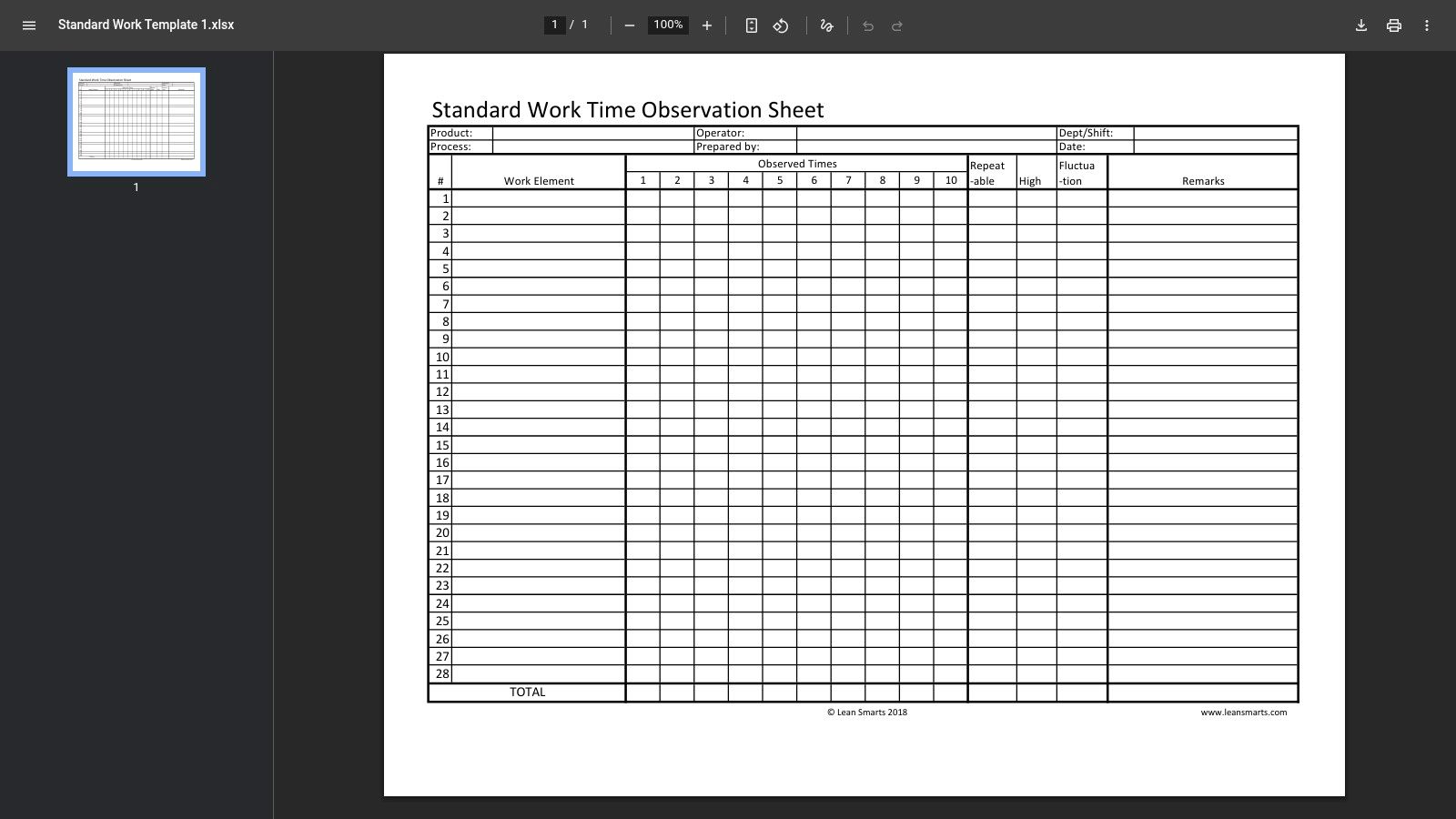
LeanSmarts' standard work time observation sheet is clean, printable, and focused. If you want a paper form for field observation, it does that job well.
For some teams, paper is still the best starting point. Observers can stand beside the work, write quickly, and avoid wrestling with a tablet in a messy environment. That's especially true on shop floors, in facilities work, or on mobile service jobs.
Good on paper, slower in analysis
The trade-off is obvious. A PDF is fast for capture and slow for learning because someone has to re-enter the data later.
That creates two risks. First, re-keying introduces mistakes. Second, the delay between observation and analysis means teams often lose momentum.
- Strong for live observation: Minimal clutter and easy printing.
- Aligned to standard work: Good if you already use basic lean routines.
- Poor for digital follow-through: Manual data entry becomes the bottleneck.
This is a solid field form, not a full operating system. If your team is small and disciplined, that may be enough. If not, the hidden admin arrives later.
10. Standard Textile
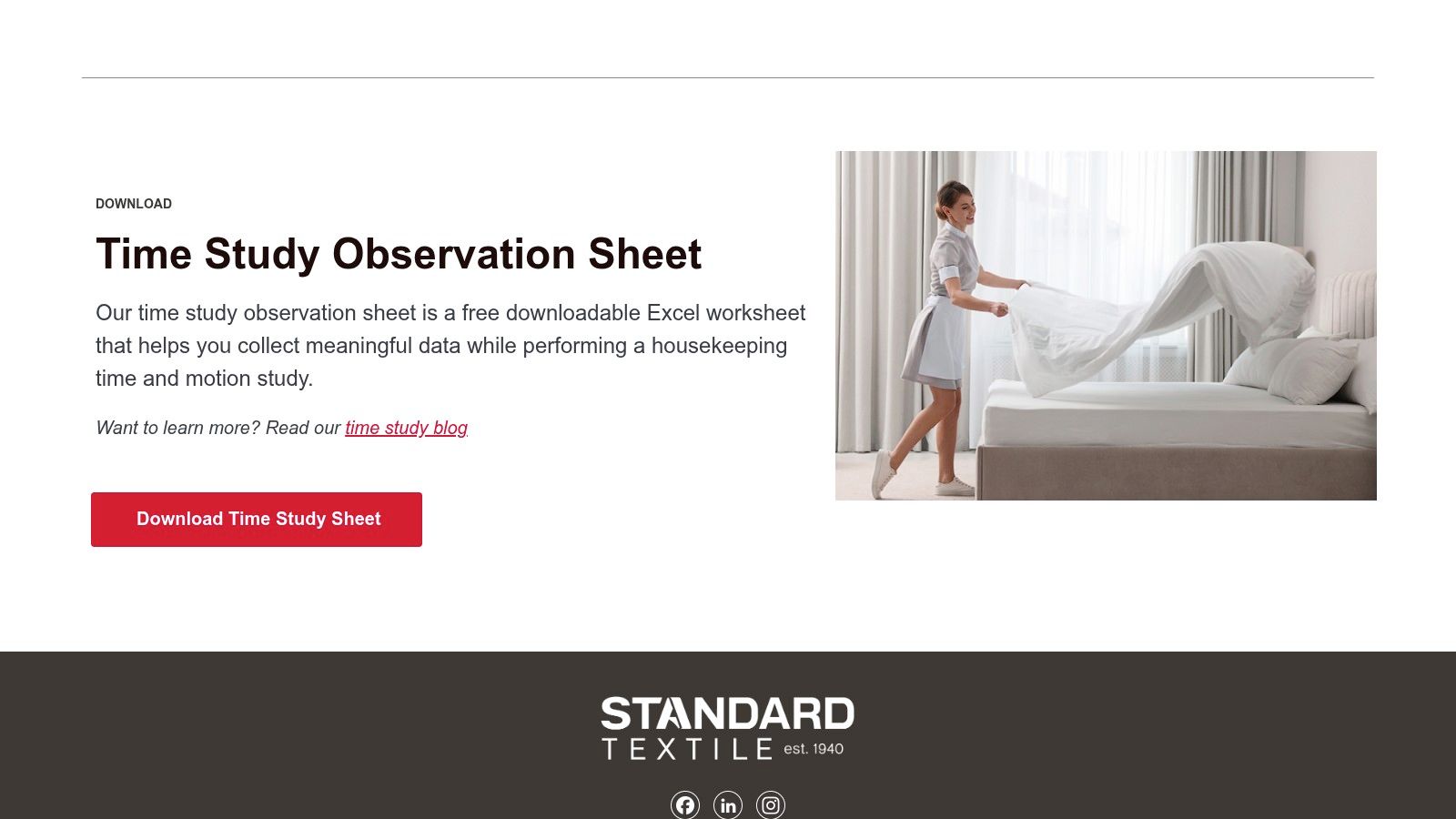
Standard Textile's housekeeping time and motion study sheet is one of the few templates that starts from a service environment rather than a factory one. That gives it an edge for cleaners, facilities teams, hospitality operators, and any business where the work is route-based or task-list driven.
It's spreadsheet-native, which keeps adaptation fairly easy. You can relabel housekeeping tasks into property checks, room setups, cleaning rounds, maintenance prep, or similar service activities without rebuilding the whole file.
A service-oriented worksheet
This template won't give you advanced analysis, but it does fit the rhythm of service work better than many lean forms do. That makes adoption easier.
A few reasons it stands out:
- Service-sector feel: Better starting language for non-manufacturing teams.
- Excel layout: Easier to customise than locked PDFs.
- Narrow original use case: You'll need to relabel categories outside housekeeping or facilities.
The broader issue isn't whether the worksheet is good. It's whether the data ends up changing anything. Repetitive admin such as invoicing, payment collection, and team scheduling is repeatedly identified as wasted time in UK SMEs, and CreatePay's guide to operational efficiency for UK SMEs makes the case for integrated systems that connect CRM, sales, stock and finance in one place. That's the bridge from template to result.
Comparison of Top 10 Time & Motion Templates
| Template / Tool | Target 👥 | Core features ✨ | Ease & quality ★ | Price / Value 💰 |
|---|---|---|---|---|
| Smartsheet, Free Time Study Templates | Observers & small teams 👥 | Ready-to-use forms (PDF/Excel/Sheets), guidance ✨ | ★★★★☆, simple, generic | 💰 Free (trial prompts) |
| Lean Methods Group, Time Observation Template | Lean practitioners & improvers 👥 | Classic Lean worksheet for element timing ✨ | ★★★☆☆, clean but no built-in analysis | 💰 Free |
| SimplicityHub (UK), Process Observation Sheet | UK service & CI teams 👥 | Multi-format sheet + worked examples (UK terms) ✨ | ★★★★☆, UK-focused, needs minor tweaks | 💰 Free |
| Lean Enterprise Institute, Standard Work Process Study Sheet 🏆 | Standards & manufacturing leads 👥 | Process Study Sheet + balance charts, standardized work ✨ | ★★★★☆, authoritative, manufacturing slant | 💰 Free downloads |
| Gemba Academy, Time Observation Sheet | Teams needing training & consistency 👥 | Template + step-by-step lessons, quizzes ✨ | ★★★★☆, high quality training | 💰 Subscription / members-only |
| NHS England, Activity Follow Sheet (Endoscopy) 🏆 | UK healthcare & clinical teams 👥 | Minute-resolution observation, analysis guidance, Excel ref ✨ | ★★★★☆, rigorous, UK-specific | 💰 Free |
| ACSCO Timer Pro, Time & Motion (Software) 🏆 | Analysts & engineers scaling analysis 👥 | Excel template + video analysis, Yamazumi, line balancing ✨ | ★★★★☆, professional, Windows-centric | 💰 Demo free; full software paid |
| ExcelSirJi, Time & Motion Excel Template | Excel-power users & rapid deploy 👥 | Macro-enabled start/stop workbook, Pro dashboard option ✨ | ★★★★☆, quick deploy; macros may be blocked | 💰 Free & Pro paid tier |
| LeanSmarts, Standard Work Time Observation Sheet | Shop-floor / field observers 👥 | Printable element-timing form + companion docs ✨ | ★★★☆☆, simple, PDF-only for capture | 💰 Free |
| Standard Textile, Housekeeping Time & Motion Sheet | Housekeeping / facilities / hospitality 👥 | Excel sheet tailored to housekeeping tasks ✨ | ★★★★☆, service-focused, easy to adapt | 💰 Free |
| NHS England Toolkit, Activity Follow Sheet (PDF) | Clinical teams & process improvers 👥 | Detailed task categories, analysis guidance, Excel examples ✨ | ★★★★☆, thorough but healthcare language | 💰 Free |
Automate Your Efficiency The Next Step After Templates
Time in motion templates are useful because they force honesty. They show how long work takes, where handoffs stall, which tasks create rework, and which parts of the day disappear into admin. For a small UK service business, that's often the first time pricing, staffing and scheduling are discussed with evidence instead of memory.
But templates are diagnosis tools, not the finished solution. A spreadsheet can reveal that quote turnaround is slow, yet it won't send quotes faster. A paper observation sheet can show that staff lose time switching between systems, yet it won't remove the switching. Significant gains come when you use what the study found to redesign the workflow.
That matters because fragmentation is still common. UK government reporting on SME digital adoption notes barriers around standardisation and data portability, and among AI-using SMEs, task automation is a priority while many non-adopters remain exposed to manual inefficiencies in turnaround and cash flow. In plain terms, lots of firms still copy the same information across scheduling, CRM, quotes and invoices because their systems don't talk to each other.
AetherCloud is useful precisely at that point. If your time study shows that leads get lost before booking, you can centralise enquiries and appointments. If it shows that quotes sit in drafts for too long, you can create and send them in one place, then convert approved quotes into invoices without retyping. If payment chasing is eating the end of your week, online payment collection shortens that loop. And if you want to keep a closer eye on performance, the dashboard gives you a practical operational view without juggling separate tools.
A good template tells you what's broken. A good platform helps you stop repeating it.
There's also a legal and practical point for UK operators. Time and motion work should be fair, transparent and tied to a clear purpose. The smartest use of it isn't to monitor how hard somebody looks busy. It's to make work more consistent, easier to deliver, and easier to price properly. That aligns far better with modern service businesses than the old stopwatch stereotype.
So use the templates. Start simple. Run the study during a normal operating period. Add fields that reflect how your business operates, such as travel, waiting, revisions, approvals and payment follow-up. Then don't leave the findings in a file called “process review final v3”.
Move the improvements into the way you run the business. That's when time in motion templates stop being an interesting exercise and start becoming a profit tool.
If you're ready to turn process observations into better scheduling, faster quoting, cleaner invoicing and simpler day-to-day management, try AetherCloud. It's built for UK service businesses that want to replace disconnected tools with one straightforward system.