

Your next customer is probably already looking for you on Google, checking a map listing, or asking a neighbour who they trust. If your details are incomplete, your response is slow, or your quote link is buried, that lead will move on before you even know they were there. For UK service businesses, the best free advertising usually isn't a clever campaign, it's a set of clean, visible, easy-to-act-on public profiles that turn search into enquiries.
The good news is that you can advertise business for free without drifting into random posting or patchwork marketing. The strongest channels all do the same job in different ways, they put your name, service, location, and next step in front of people who already want help. That's why tools like Google Business Profile, Bing Places for Business, Apple Business Connect, and local directories still matter, especially when they're connected to proper booking, quote, and payment pages. If you run plumbing, cleaning, tutoring, consultancy, or agency work in the UK, free visibility becomes real work.
Table of Contents
- 1. Google Business Profile (GBP)
- 2. Bing Places for Business
- 3. Apple Business Connect (Apple Maps)
- 4. Facebook Business Page (Meta)
- 5. Nextdoor for Local Businesses (UK)
- 6. Yell.com (Free UK Business Listing)
- 7. FreeIndex (UK)
- 7 Free Business Listing Platforms Compared
- Turn Free Clicks Into Paying Customers
1. Google Business Profile (GBP)
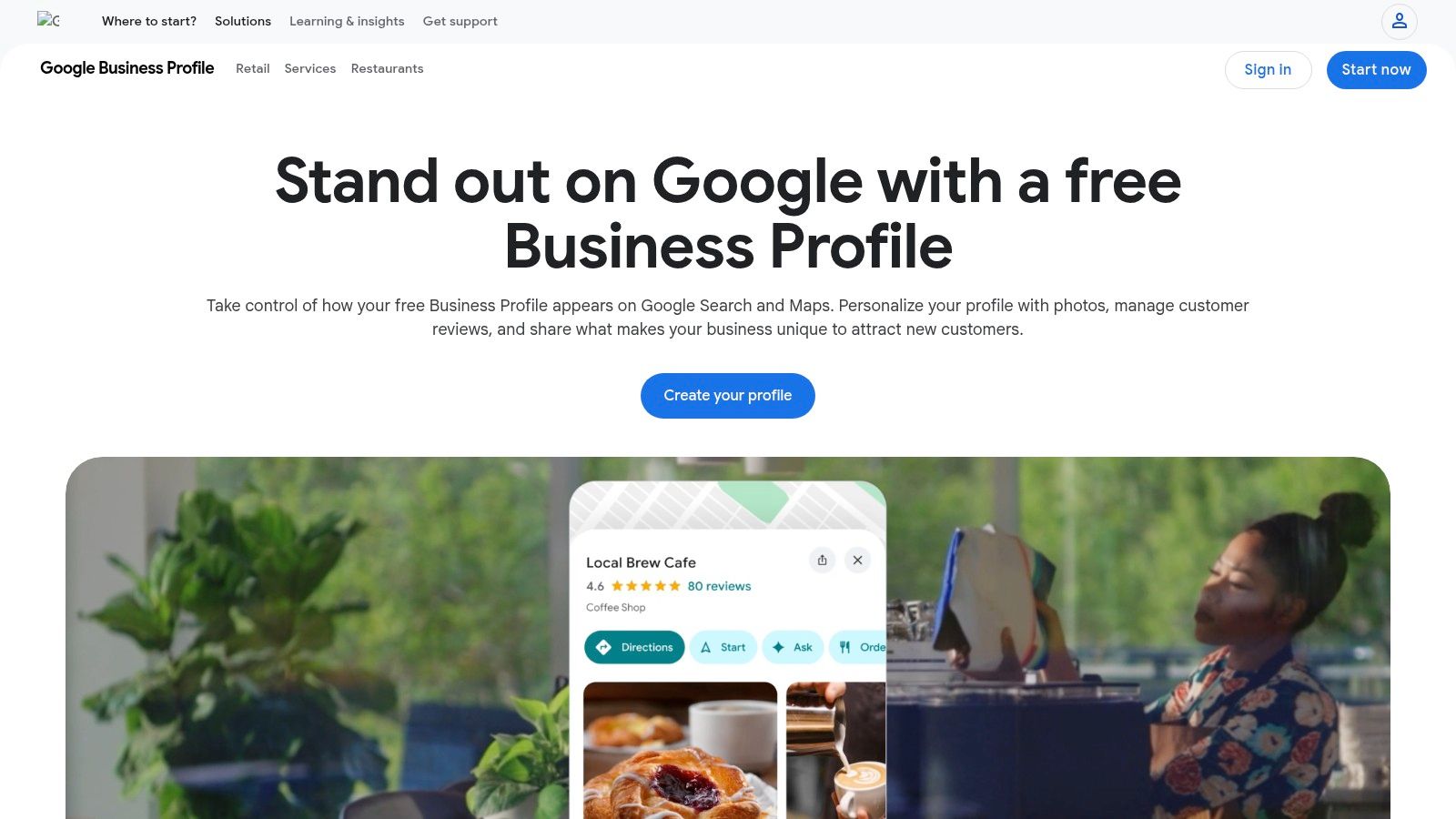
Google Business Profile is still the first place most UK service firms should start because it sits directly inside Search and Maps. Xero's UK guidance on free advertising stresses the value of complete business profiles, and Salesforce's small-business advice points in the same direction, complete listings, customer reviews, and dedicated landing pages are what turn free visibility into enquiries (Xero, Salesforce). For a plumber, cleaner, tutor, or local consultant, that matters because local intent searches are often the moment the buyer is ready to call.
A proper profile is more than a pin on a map. Google's setup expects the business name, address, phone number, website, category, hours, and other requested fields, and Google also requires verification before the listing is fully operational (HubSpot's summary of Google's guidance). That verification step is useful in practice, because it gives the customer a stronger sense that the business is legitimate and active.
Practical rule: treat the profile like a sales page, not a directory entry.
Use the listing to reduce friction. Add services, keep hours current, publish posts or offers when you have a seasonal angle, and connect the profile to booking or quote pages so people can act without hunting around. AetherCloud's own go-to-market guidance fits neatly here, because the point is not just visibility, it's moving a browser from search to a booked job or approved quote.
The weakness is upkeep. Reviews need responses, details need refreshing, and edits can take time to publish. That's still worth it, because this is one of the few free channels where visibility, trust, and action all sit in the same place.
2. Bing Places for Business
If Google is the obvious starting point, Bing Places is the sensible follow-up. It gives you another free local listing in the Microsoft ecosystem, and for UK businesses it's a low-effort way to widen reach without rebuilding anything from scratch. The practical advantage is simple, you can import details from Google Business Profile instead of entering everything manually.
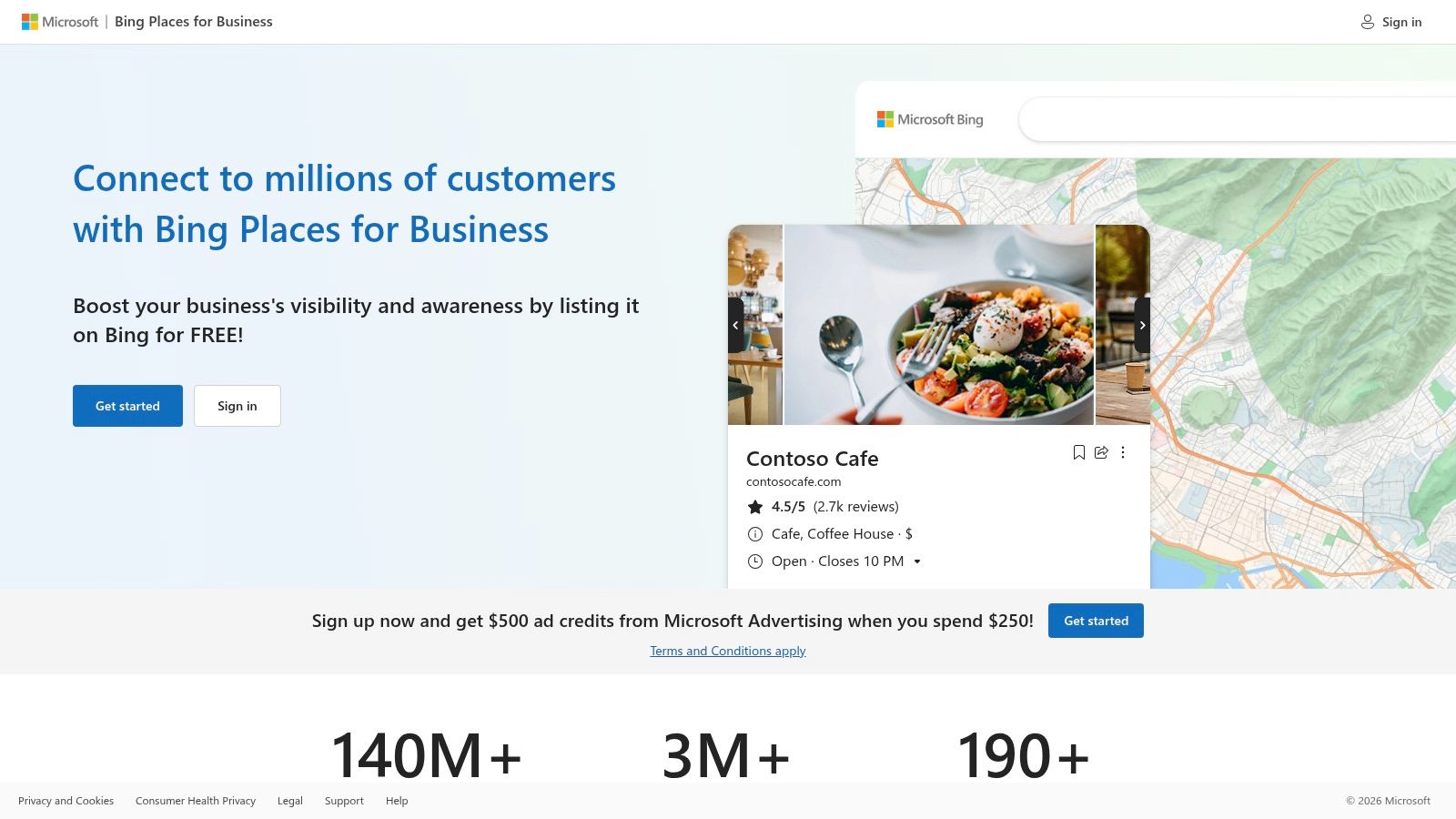
That matters if you manage one location or several. Bing Places supports bulk upload for multi-location businesses, and it lets you claim existing listings and correct bad data, which is useful when directories have picked up old phone numbers or outdated opening hours. The free listing includes photos, hours, and contact information, so you can keep the public version of your business consistent across more than one search engine.
The trade-off is reach. Bing has less UK traffic than Google, so it won't replace your main listing, and it doesn't give you the same depth of posts and engagement tools. Still, that's not a reason to ignore it, especially when the setup is straightforward and the information can often be synced from what you've already completed elsewhere. When you're comparing channels, AetherCloud's business analytics overview is a useful reminder that small visibility gains only matter if you can see where leads are coming from and what converts.
What works best here
- Import first, refine second. Start with your Google data, then fix any mismatched service names or old contact details.
- Use it as a consistency check. If a listing looks different from your site, that's a sign your public information needs tidying.
- Keep it paired with a real next step. A local profile without a booking, quote, or callback path still leaves money on the table.
For service businesses that already do the housekeeping on Google, Bing Places is the easiest extra channel to keep live without adding a lot of admin. It won't be your biggest source of leads, but it can still catch customers who would otherwise never see you.
3. Apple Business Connect (Apple Maps)
Apple Business Connect is the free listing most UK owners forget about, which is exactly why it can be useful. It puts your place card into Apple Maps and related Apple surfaces, so if your customers are using iPhone, iPad, Mac, Siri, or CarPlay, they can find you, check your details, and move straight to action. The key benefit is that it is not just a map pin, it's a controlled public card.
The strongest feature for a service business is the ability to add Custom Action Links. That means a visitor can go from your place card to booking, quoting, contacting, or ordering without extra searching. For a cleaner, salon, tutor, or repair company, that reduction in friction is often the difference between a passive view and a live lead.
There's also a branding benefit. You can add photos, a logo, and opening hours, which helps the business look current and real rather than barebones. Apple also says the tool is free to manage and does not require Apple devices, so setup is not limited to people already inside the Apple ecosystem.
The limitation is the feature set. You won't get the same posting or community style activity that Google and Facebook offer, and updates may feel slower than you'd like. Even so, Apple Business Connect is worth claiming because it supports a different segment of local discovery, and the action link makes it more than a static listing.
A clean place card is valuable. A clean place card with a direct booking or quote link is better.
That's the practical mindset here. Keep the profile accurate, use the action links properly, and treat it as another route into your enquiry flow rather than a separate marketing task.
4. Facebook Business Page (Meta)
For local reach, Facebook still has a place because community behaviour on the platform is built around sharing, recommendations, and direct messages. A free Facebook Business Page gives you a public home for updates, reviews, contact details, and calls to action, while Meta Business Suite lets you schedule content across Facebook and Instagram from one place. That is useful when you need regular visibility but don't want to post by hand every day.
The best use case is straightforward. A roofer can post before-and-after images, a cleaner can show a short walkthrough of a job type, and a consultant can share a useful answer to a common client question. The page can also carry buttons such as Book now or Call now, which makes it much easier for someone to move from interest to enquiry.
Customer engagement guidance from AetherCloud fits this channel well because the issue is rarely whether people can see you, it's whether they take the next step. Facebook helps with conversations, but it still needs a professional backend to handle appointments, quotes, and payment links without chaos.
There are downsides. Organic reach can be uneven, and the platform rewards businesses that post consistently and respond to comments and messages quickly. The interface also changes often enough that page admins end up relearning bits of it from time to time.
A practical way to use Facebook is to keep the content simple and repeatable.
- Answer common questions. That gives your posts a useful angle instead of feeling promotional.
- Link to one action. Don't send people to five different places when one booking or quote page will do.
- Use messaging carefully. It's helpful for quick replies, but it can become messy if enquiries live in different inboxes.
Facebook works best as a trust-and-conversation channel. It's not a substitute for a proper enquiry system, but it's still a strong free way to stay visible in the places local customers scroll.
5. Nextdoor for Local Businesses (UK)
Nextdoor is built around neighbourhood relationships, which makes it especially relevant for trades and home services. A free Business Page lets you post locally, collect recommendations, and reach nearby households that already care about who's working in their area. For work that depends on proximity, trust, and repeat visibility, that hyperlocal context is valuable.
The content that tends to fit here is practical, not polished. Before-and-after photos, short tips, seasonal reminders, and local job updates make sense because they help neighbours understand what you do without a hard sell. A decorator, gardener, locksmith, or handyman can use the platform to show nearby proof of work and availability.
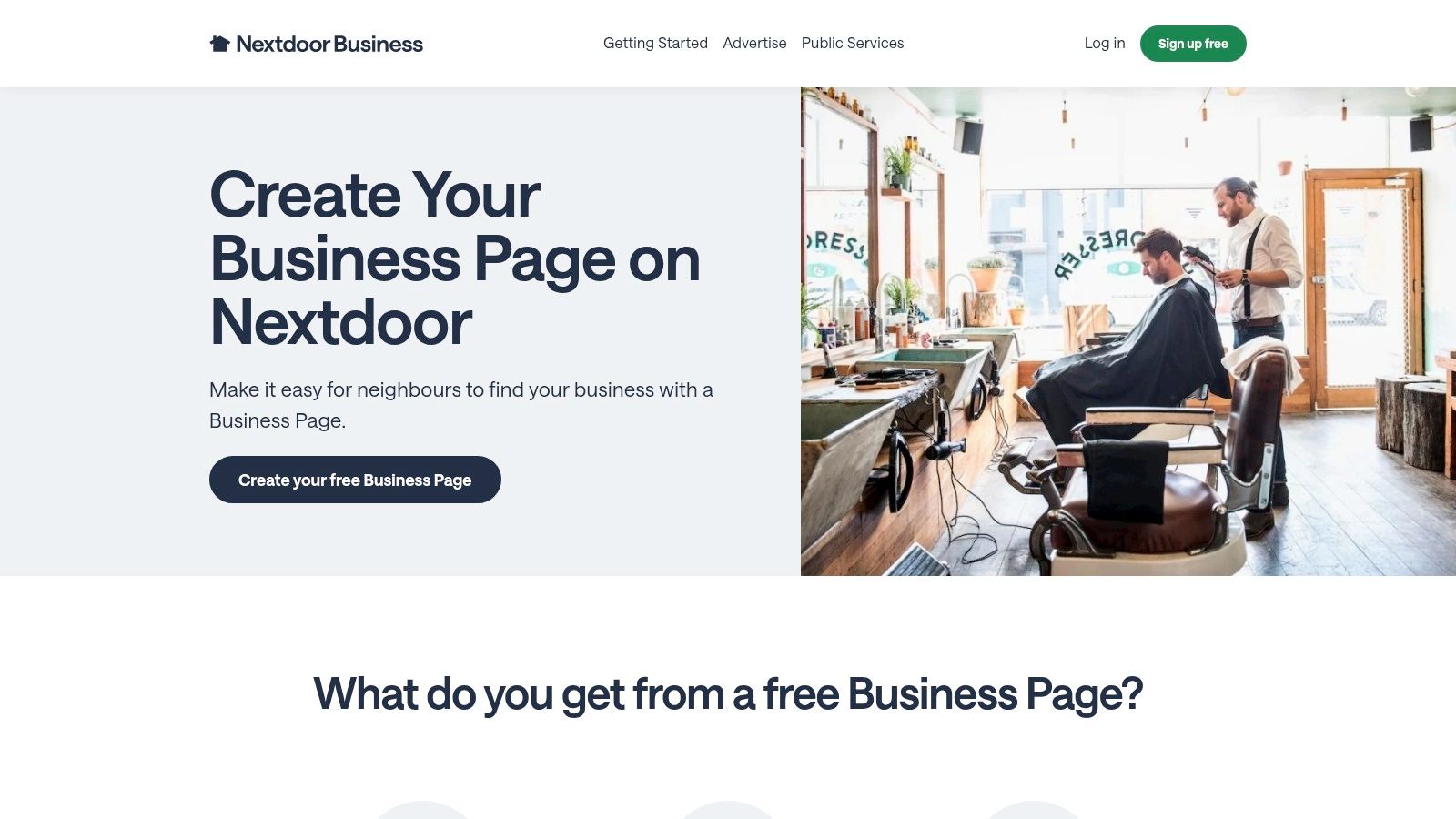
The recommendation system is the main draw. When people in a neighbourhood recommend a business, that carries a different kind of weight from a normal ad because it sounds like lived experience rather than marketing copy. Nextdoor also allows optional paid Local Deals and ads, but the free page is enough to get started if your area is active.
Where it works and where it doesn't
The upside is targeted local visibility. The downside is that performance depends heavily on neighbourhood activity, and some areas are much quieter than others. Community guidelines and moderation can also affect what gets seen, so you need to keep the tone useful and avoid posting like a broadcaster.
Practical rule: on Nextdoor, local proof beats brand polish.
That means sharing jobs, local landmarks, and clear service details, not generic promotional graphics. If you already run appointment availability and quick quote responses through AetherCloud, this channel becomes easier to handle because you can move interested neighbours from a post into a structured enquiry flow without delay. That's the value here, not just reach, but speed.
6. Yell.com (Free UK Business Listing)
Yell still matters because many UK customers know the brand and trust it as a directory. A free basic listing gives you a place to show your address, contact details, web link, images, and reviews, and listings can appear in local category searches. For businesses that rely on straightforward discovery, that makes Yell a useful free extra.
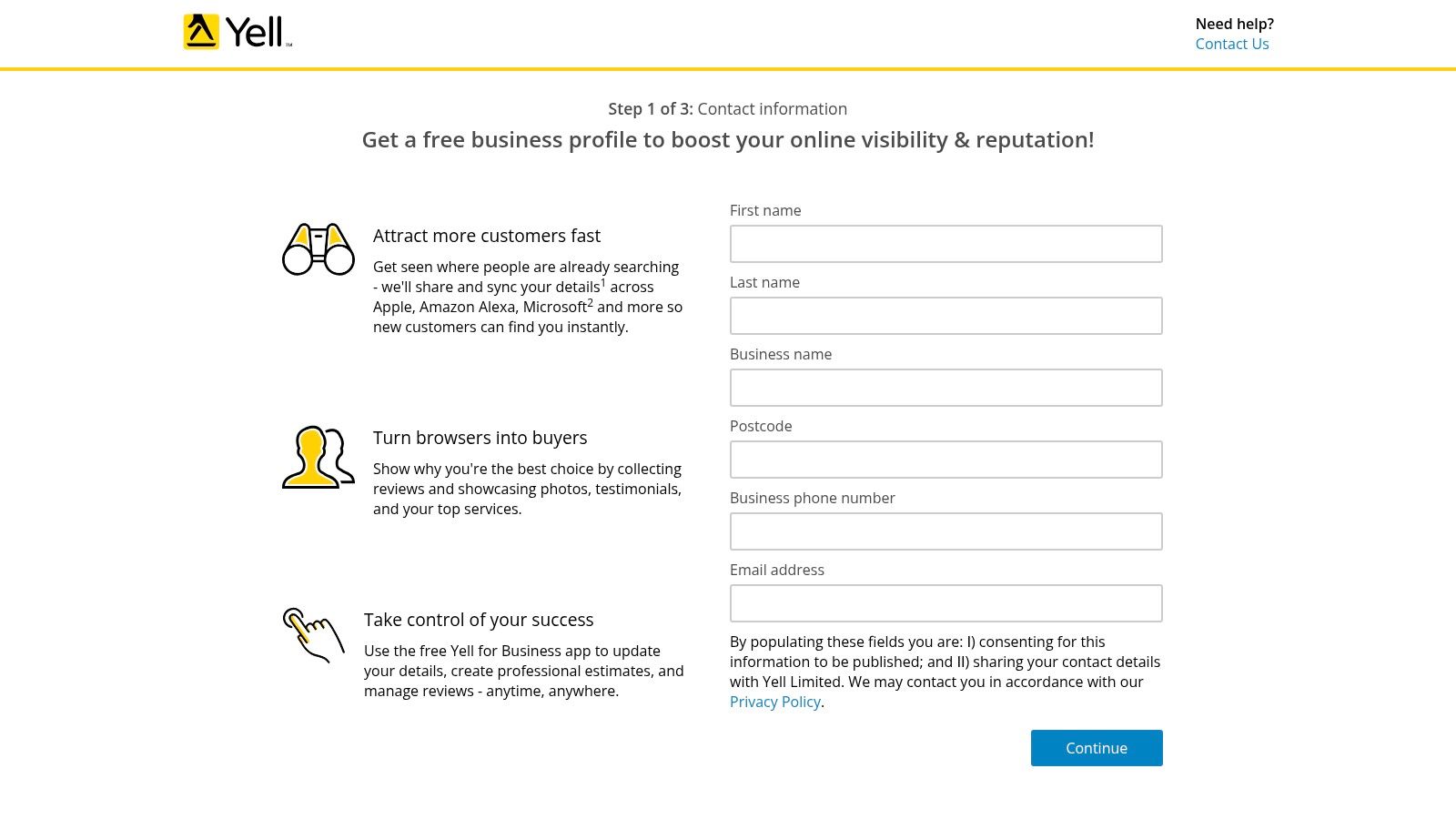
The setup is uncomplicated, and management runs through the Yell for Business app or dashboard. That's handy if you want a single place to update your listing, collect or manage reviews, and keep the profile active without fuss. For service businesses, the review element matters because a directory profile with recent customer feedback generally feels more useful than one that looks forgotten.
The trade-off is commercial noise. Free listings can come with upsell calls or emails for paid services, and traffic quality varies by category and area. That doesn't make the free option useless, it just means you should know why you're using it. Treat it as a visibility layer, not a complete marketing strategy.
If you're linking your directory profile to payments or booking pages, the smoother the backend, the better. That's why AetherCloud's online payments guidance is relevant here. A directory can create the enquiry, but a clean invoice or payment flow is what turns a lead into cash without chasing.
The strongest use of Yell is consistency. Keep your core contact details aligned with the rest of your online presence, use photos that look like your work, and invite real customers to leave feedback. It works best when it's part of a wider local discovery setup rather than an isolated listing.
7. FreeIndex (UK)
FreeIndex is one of the more practical UK directories for service businesses because it's built around profiles, reviews, and quote enquiries. The free listing model is simple enough for sole traders and small teams, and it's especially familiar to people looking for trades and local services. If your business wins work through quotes rather than instant checkout, that setup is useful.
The platform lets customers request quotes through the site, which means the listing can do more than introduce your business. It can generate direct opportunities. Review widgets also give you a way to surface feedback elsewhere, so a positive profile can support your website, landing pages, or other public touchpoints.
How to build a simple spreadsheet process for lead tracking matters here because directory enquiries are only useful if you follow them up properly. A basic system for logging source, job type, and response status will tell you whether FreeIndex is producing real work or just inbox noise.
A few practical points are worth keeping in mind.
- Use the profile fully. Add photos and a clear service description so people know what you do.
- Reply quickly. Quote requests lose value when they sit too long.
- Expect competition in busy categories. Premium placement is paid, so free listings may need better copy and faster responses to stay competitive.
The main strength of FreeIndex is intent. People arriving there are often already looking for a provider, so the enquiry quality can be better than on broader social channels. The weakness is that the interface and traffic experience can feel less polished than the bigger platforms.
For UK service businesses, that trade-off is acceptable if you want a free route into quote-led leads. Keep it accurate, keep it active, and connect it to a proper quoting and follow-up process so the leads don't get lost.
7 Free Business Listing Platforms Compared
| Listing | Implementation 🔄 | Resources ⚡ | Expected Outcomes 📊 | Ideal Use Cases 💡 | Key Advantages ⭐ |
|---|---|---|---|---|---|
| Google Business Profile (GBP) | 🔄 Low–Moderate, claim, verify, ongoing posts & review replies | ⚡ Minimal, time for updates, photos, review management | 📊 High, strong local leads, calls, visits, directions | 💡 Local retailers, services, restaurants; intent-driven searches | ⭐ Top SERP visibility; trusted reviews; mobile-first |
| Bing Places for Business | 🔄 Low, claim or import GBP; verify; bulk support | ⚡ Minimal, easier with existing GBP data | 📊 Moderate, additional reach beyond Google | 💡 Multi-location businesses; Windows/Bing audiences | ⭐ Supplemental free reach; easy GBP import |
| Apple Business Connect (Apple Maps) | 🔄 Low, claim/edit place card; add action links | ⚡ Minimal, needs logos/photos and action URLs | 📊 Moderate–High, visibility for iOS/CarPlay users | 💡 Businesses serving many iOS users; bookings via action links | ⭐ Maps/Siri integration; direct action links |
| Facebook Business Page (Meta) | 🔄 Moderate, set up, schedule content, manage messages | ⚡ Moderate, regular content and community management | 📊 High potential, large reach but variable organic | 💡 Consumer brands, events, community-focused businesses | ⭐ Massive reach; messaging & CTA integration; Instagram sync |
| Nextdoor for Local Businesses (UK) | 🔄 Low, claim page; follow community rules; engage locally | ⚡ Low–Moderate, ongoing local engagement and moderation | 📊 High in active areas, strong recommendations and word‑of‑mouth | 💡 Trades, home services, hyperlocal businesses | ⭐ Highly targeted local recommendations; neighbourhood trust |
| Yell.com (Free UK Business Listing) | 🔄 Low, create and verify basic listing | ⚡ Low, simple maintenance; expect upsell outreach | 📊 Moderate, ranks for local category searches in UK | 💡 UK businesses seeking directory presence; older demographics | ⭐ Recognised UK brand; easy to maintain |
| FreeIndex (UK) | 🔄 Low, straightforward profile creation | ⚡ Low, optional paid boosts for visibility | 📊 Moderate, useful for trade enquiries; category dependent | 💡 Trades and local services seeking free leads | ⭐ Fully free listing; quote requests & review widgets |
Turn Free Clicks Into Paying Customers
A free listing only pays off when the next step feels straightforward. If a prospect sees a complete profile, the same phone number everywhere, a strong review trail, and a clear route to book, quote, or pay, they are far more likely to take action. That pattern runs through Google Business Profile, Bing Places, Apple Business Connect, Facebook, Nextdoor, Yell, and FreeIndex. The businesses that get results from free visibility are the ones that remove friction the moment someone clicks.
UK service firms often lose the job after the click, not before it. The problem is usually consistency and speed. One tool holds quotes, another handles invoices, messages sit in a third inbox, and customer details end up scattered across spreadsheets or notes. Free advertising can then create more admin than revenue, because every enquiry adds another manual task.
A better setup keeps the public listing and the back office connected. AetherCloud brings booking, CRM, quoting, invoicing, payments, digital business cards, and analytics into one place, so leads from your free channels land in a system that is ready to respond. That gives you fewer duplicated tasks, fewer missed follow-ups, and a cleaner experience for the customer.
A practical next step is to make every listing point to one organised process. Use a strong booking link, keep your contact details consistent, and make sure quotes and payments can be handled without back-and-forth. If you need a simple way to map that workflow, this guide to building a service-business spreadsheet shows how to keep enquiries, jobs, and follow-ups in order.
Visit AetherCloud today to see how we can help you turn free advertising into real leads and faster payments.