
Is WhatsApp Holding Your Business Back?
You're on-site, phone buzzing. A potential client is asking for a quote on WhatsApp. Another client is trying to reschedule. You can't find the photo of that completed job from last Tuesday. If this sounds familiar, you're not alone. While WhatsApp is convenient for a quick chat, using it to run your service business creates chaos.
Messages get buried, job details sit in personal chat threads, and chasing payment turns into another back-and-forth that should've been handled in a proper system. In the UK, WhatsApp reaches 92% of adult smartphone users and around 35.9 million people use it daily, which explains why so many businesses end up relying on it by default (UK digital messaging usage data). Convenience isn't the same as control, though.
For a service business, a primary issue isn't only privacy. It's fragmentation. You chat in one app, track leads somewhere else, draft quotes in a template, send invoices from another tool, and hope nothing falls through the gaps. UK small businesses already lose an average of 33 hours a month to admin (report on UK small business admin time). Lost details, missed appointments, and unprofessional follow-ups cost time and money.
It's time to look at a proper alternative to WhatsApp. Not just for messaging, but for running the business professionally.
Table of Contents
- 1. Signal
- 2. Telegram
- 3. Element (Matrix)
- 4. Wire
- 5. Threema / Threema Work
- 6. Viber
- 7. Apple Messages (iMessage) & Apple Messages for Business
- 8. Facebook Messenger
- 9. Discord
- 10. AWS Wickr
- Top 10 WhatsApp Alternatives, Features & Privacy Comparison
- Unify Your Business, Don't Just Change Your Chat App
1. Signal
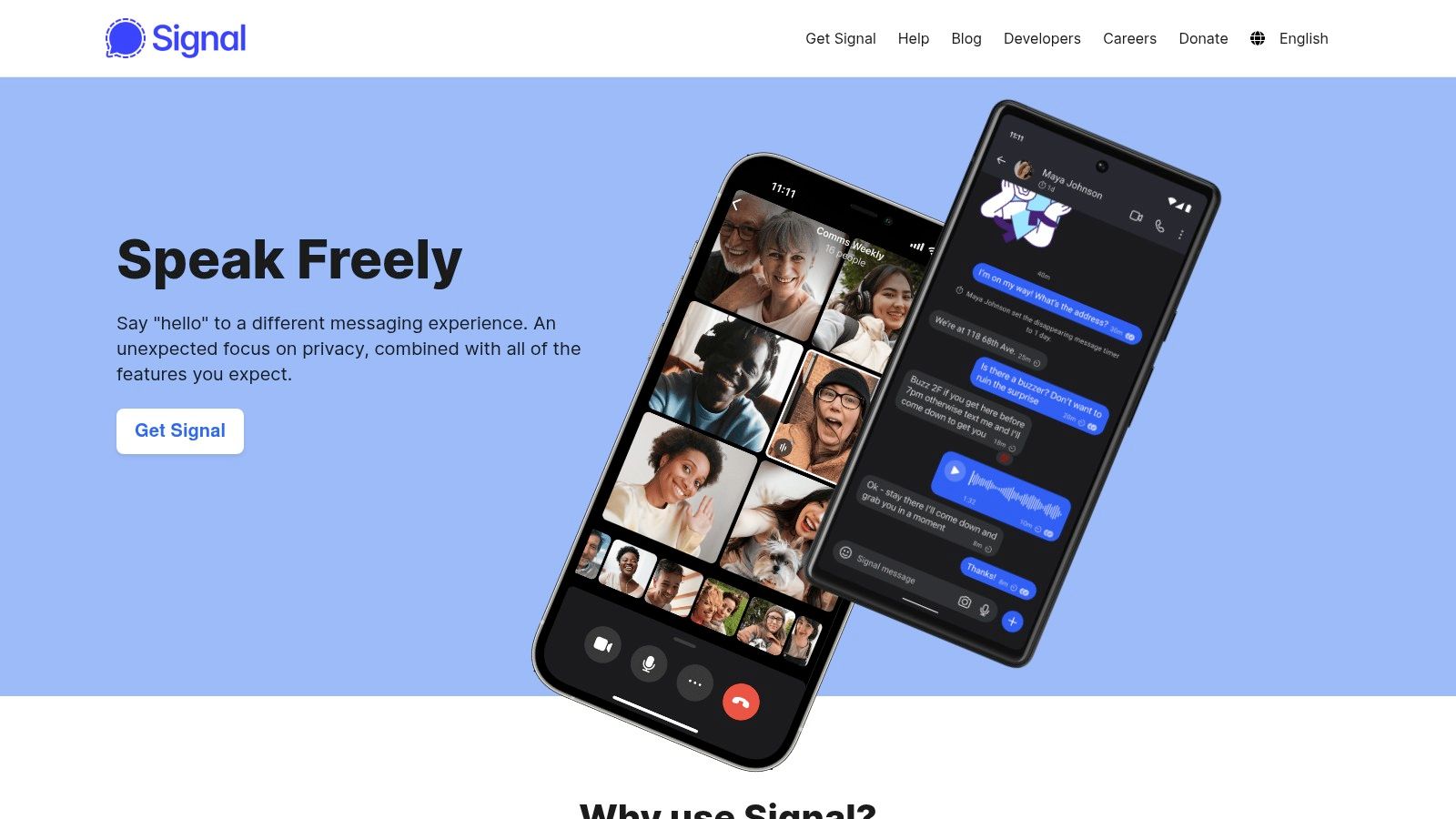
Signal is the cleanest like-for-like alternative to WhatsApp if your main concern is privacy. It gives you encrypted one-to-one chats, group messages, voice calls, video calls, disappearing messages, and desktop apps linked to your phone. For many small teams, that's enough to move internal conversations off Meta without making staff learn a heavy platform.
That simplicity is Signal's strength and its limit. It's easy to roll out, especially if your team only needs secure messaging and quick call handovers during the day. But it doesn't solve quoting, scheduling, client records, or payment collection. If you're still copying job details from Signal into spreadsheets, you've only moved the chaos to a different app. That's where practical systems matter more than a private inbox, and many teams eventually outgrow patching operations together with spreadsheet-based workflows.
Where Signal fits best
Signal works best for internal team coordination or client conversations where confidentiality matters more than business process. Consultants, therapists, and advisers often prefer that cleaner privacy posture. UK SME usage data also shows how hard it is for any alternative to displace WhatsApp, because WhatsApp still leads communications app usage among SMEs at 47%, ahead of Microsoft Teams at 22% (UK SME communications app usage).
Practical rule: Use Signal if you want a more private messenger. Don't expect it to run the business for you.
The main drawback is identity. Signal still relies on a phone-number model, which isn't ideal if you want a cleaner separation between business contact handling and personal mobile use. For a sole trader, that matters more than most app comparisons admit.
2. Telegram
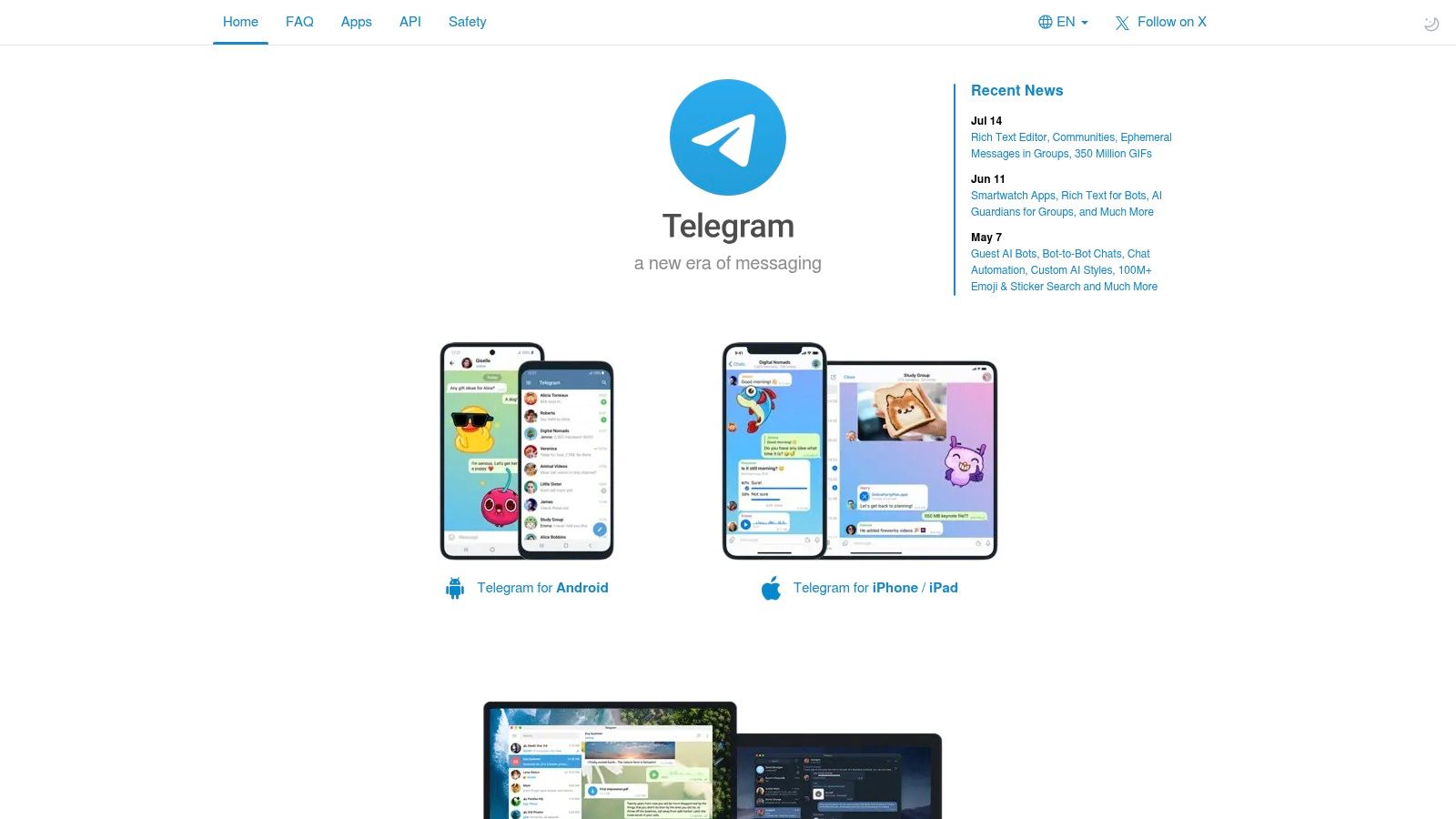
If Signal is the privacy-first swap, Telegram is the reach-and-flexibility swap. It handles fast chats, giant groups, channels, bots, and lightweight automation better than most consumer messaging apps. For businesses that publish updates, manage communities, or want quick auto-replies without a full CRM, Telegram is a practical step up from plain WhatsApp chat.
It also has stronger momentum in the UK than many people assume. In 2024, Telegram saw about 1.22 million UK downloads, while Signal had around 388,000, making Telegram the most downloaded WhatsApp rival in the UK that year (UK downloads of WhatsApp alternatives). That matters because an alternative to WhatsApp only works if clients will use it.
Best use case
Telegram suits businesses that need one-to-many communication. Think training providers, clubs, community-led brands, or agencies sharing updates with groups. Its bots and web apps can also help with simple automation, though once you start layering bots, forms, and manual follow-ups together, you can end up with a brittle setup.
For trades and mobile service teams, that's usually the wrong direction. They don't need another chat feed with bolt-on workflows. They need fewer handoffs between enquiry, booking, quote, and invoice. If you're already mapping work stages by hand, it's worth replacing ad hoc messaging with more structured time and motion workflow templates and then moving that process into one system.
Telegram's trade-off is clear. It's more capable than basic messaging apps for broadcasting and automation, but its default cloud chats aren't the same thing as end-to-end encrypted business records, and it still isn't an operations platform.
3. Element (Matrix)
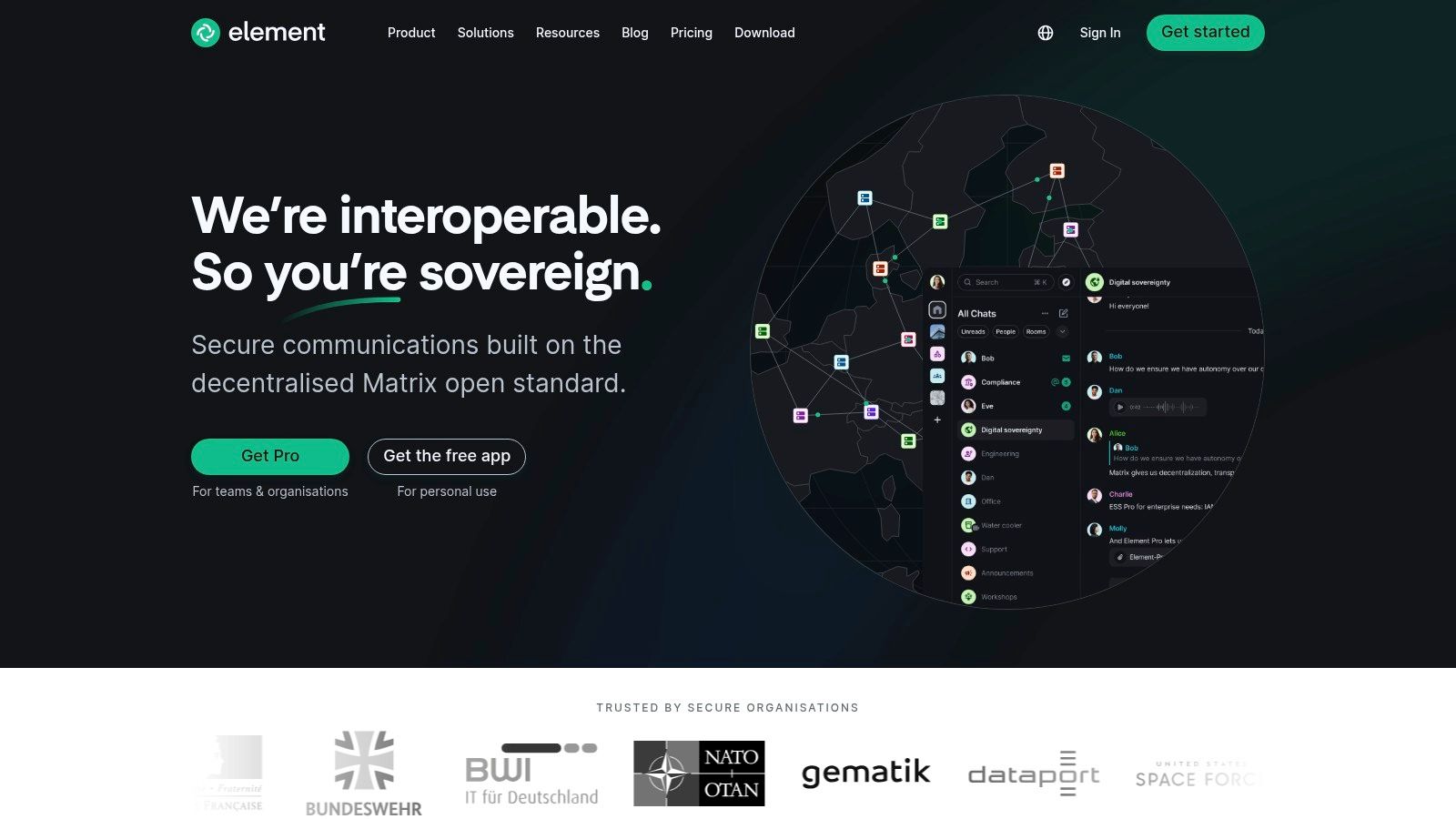
Element sits in a different category from most consumer chat apps. It's built on Matrix, an open standard that supports secure messaging, rooms, team spaces, voice and video, and federation across organisations. In plain terms, it gives you more control over where conversations live and how your organisation manages them.
That makes it a serious option for teams with compliance pressure, external collaborators, or a need to avoid platform lock-in. If your work crosses departments, contractors, or regulated client environments, Element gives you structure that WhatsApp never will.
Who should choose Element
Element is strongest when governance matters. A consultancy handling sensitive client communications, or a service business working with public sector clients, may value the ability to use hosted or self-hosted setups and keep more control over data handling. It isn't the quickest app to roll out to non-technical teams, though.
Some businesses don't need another popular messenger. They need clearer ownership of conversations, access, and data.
That's why Element isn't usually the best fit for a local plumber, electrician, or solo consultant who just wants to stop losing customer messages. It solves a different problem. It helps when messaging needs to behave more like managed infrastructure.
For most small service businesses, that still leaves a gap. You can tighten messaging governance and still have no native way to issue a quote, send an invoice, take payment, or give customers a clean booking page. That's the dividing line between a secure messenger and a business platform.
4. Wire
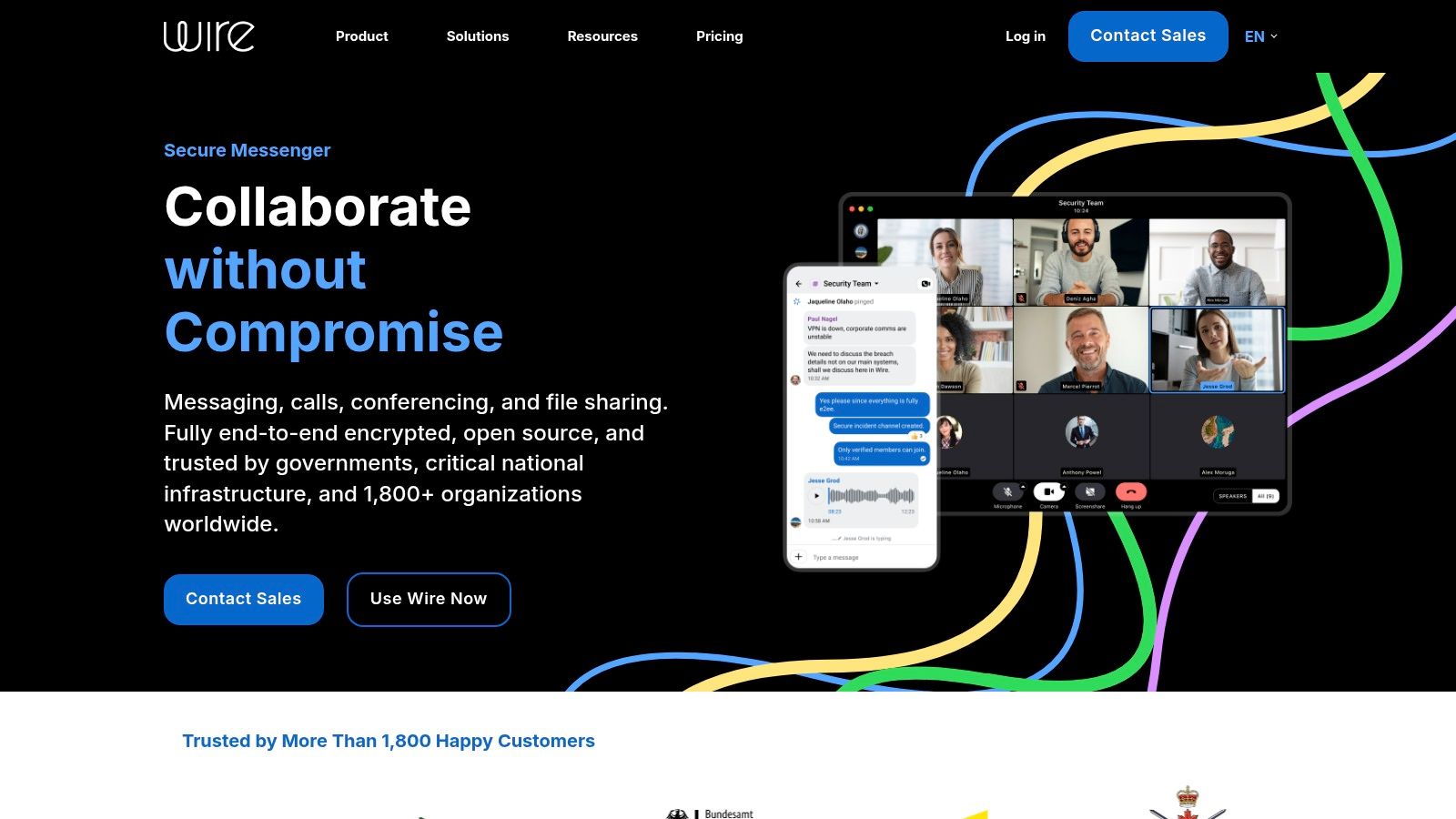
Wire is one of the more business-oriented alternatives to WhatsApp. It focuses on encrypted communications, multi-device access, and organisational controls such as enterprise authentication and governance features. If your concern is professional-grade communication rather than consumer familiarity, Wire deserves a look.
It's also one of the few alternatives regularly discussed in a business compliance context. A UK guide to WhatsApp alternatives highlights Wire as a non-Meta encrypted option priced at €7.45 per user per month, while also pointing to Threema Work at about $3.50 per user per month and noting Signal's low integration capabilities for teams that need CRM or invoicing links (UK guide to business-focused WhatsApp alternatives).
Where it works in practice
Wire makes sense for firms that want staff accounts, controlled access, and a more formal communications layer than a consumer app can offer. Design studios, consultancies, legal support teams, and specialist contractors can all make good use of it if secure communication sits high on the priority list.
The problem is familiar. Wire improves messaging discipline, but it still doesn't replace your scheduler, quote builder, or invoice flow. If you're using one app to talk, one app to plan, and another to chase billing, the admin drag remains. That's why business owners often get more value from choosing planning tools that support actual operations and then reducing the number of separate apps altogether.
Wire is good when the communication layer needs to look more like managed business software. It isn't the smartest long-term choice if the primary pain sits in workflow fragmentation.
5. Threema / Threema Work
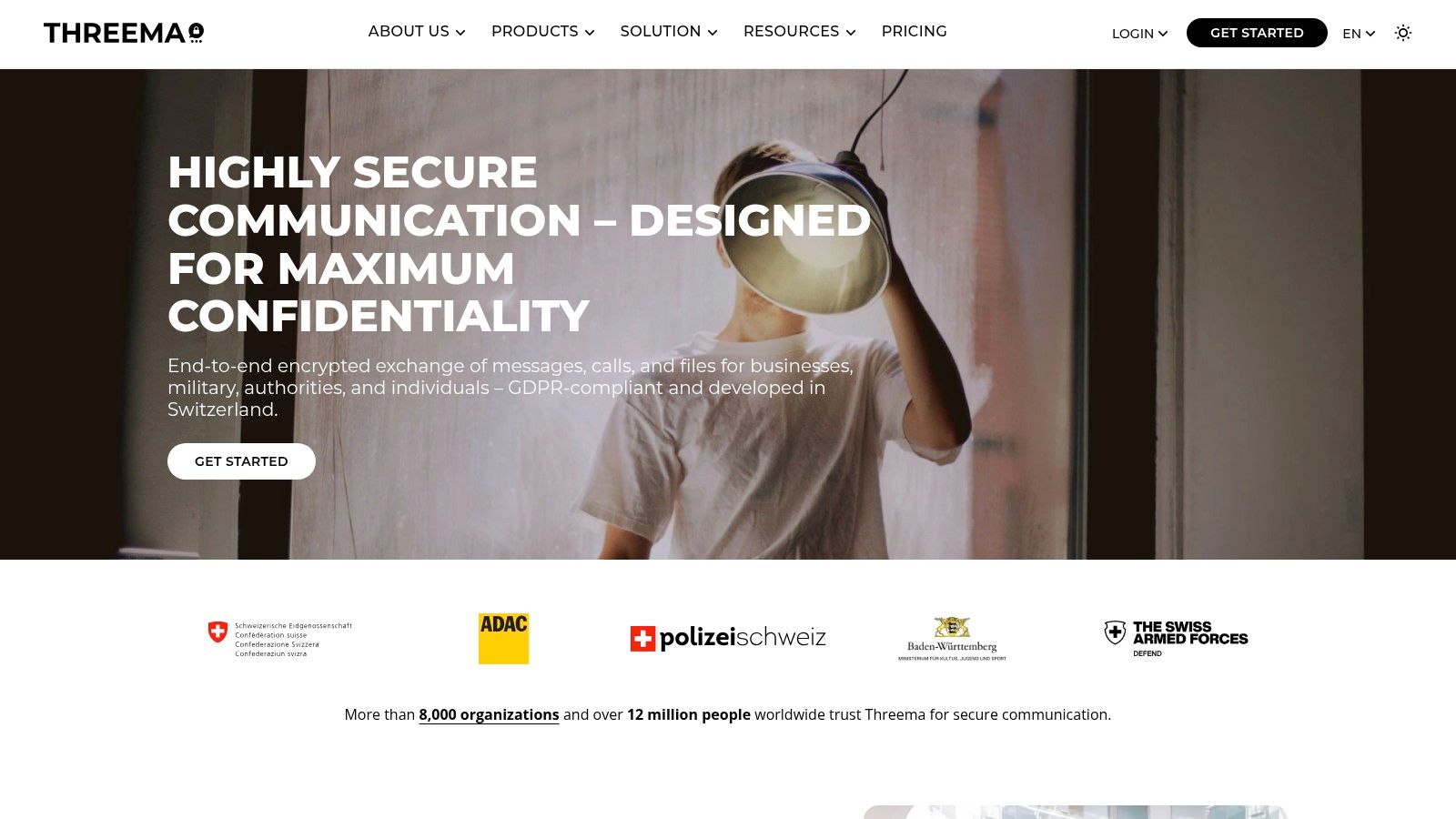
Threema is one of the few names in this list that addresses a problem many UK business owners overlook. It doesn't require a phone number for identity in the same way most mainstream chat apps do, and Threema Work adds admin controls, user management, and broadcast options for organisations.
That sounds niche until you look at sensitive client work. If you handle confidential enquiries and don't want your business communication model tied directly to personal numbers, Threema becomes more interesting than its smaller network might suggest.
The privacy angle most guides miss
A European alternatives guide points out an important gap in most UK coverage. Phone-number-free options such as Olvid and SKRED are rarely discussed, even though 73% of UK small businesses cite data privacy as their top operational fear and 89% of WhatsApp alternative articles ignore phone-number-free alternatives (European overview of WhatsApp alternatives). Threema is relevant here because its identity model is much closer to privacy-by-design than the usual phone-tethered setup.
If your work involves sensitive clients, the question isn't only "Which app encrypts messages?" It's also "What personal data does the app force me to expose in the first place?"
That's the upside. The downside is adoption. Clients are less likely to already have Threema installed, and any tool with a smaller network creates friction. For internal staff use, that may be acceptable. For broad client communication, it's often a harder sell.
Threema Work can be a smart specialist choice. It just won't replace the need for a proper customer-facing business system.
6. Viber
Viber is easy to underestimate because in the UK it isn't usually the first app people mention. Still, it has a polished mobile experience, community features, desktop access, and business messaging options that can work well for transactional updates and customer notifications.
For a service business, that matters if your communication style is simple and outbound. Appointment reminders, service updates, and support-style messaging are areas where Viber's business tools can be useful without demanding a heavyweight technical setup.
When Viber makes sense
Viber is worth considering if your clients already use it or if your business has an international customer mix where Viber is common. It can be a reasonable channel for straightforward messaging with less noise than trying to manage every client touchpoint through WhatsApp threads.
But the same weakness appears again. Viber helps you send and receive messages. It doesn't give you a built-in quoting system, customer record, or payment workflow that fits everyday UK service work. For local businesses under margin pressure from higher employer National Insurance contributions, rising minimum wage, and reduced business rates relief in some sectors, that gap matters because inefficient admin is harder to absorb (report on rising UK small business cost pressures)).
A messenger can improve contact. It doesn't remove the cost of disconnected admin.
7. Apple Messages (iMessage) & Apple Messages for Business
If your clients are heavily invested in Apple devices, Apple Business offers one of the smoothest customer messaging experiences around. iMessage feels native, familiar, and low-friction for Apple users, while Apple Messages for Business can let customers start conversations from places such as Maps, Safari, websites, and apps.
For premium service brands, that matters. A clean branded thread and in-message payment experience can feel more professional than "Send me a message on WhatsApp and I'll get back to you".
Strong for Apple-first client bases
This route works best when your audience is already in the Apple ecosystem. Think personal services, boutique consultancies, high-end home services, or city-based client work where iPhone usage is common. The experience is slick, but the audience is limited by device.
That's the core limitation. You're building around a subset of your market, not the whole thing. For many UK businesses, that's too restrictive as a main client channel.
Apple Messages for Business can be an excellent supporting channel. It just doesn't fix the bigger operational issue of messages, appointments, quote approvals, invoices, and payments living in separate systems. You still need one place to manage the work behind the conversation.
8. Facebook Messenger
Facebook Messenger remains a practical business channel when customers discover you on Facebook or Instagram. If someone taps from a social profile into chat, Messenger often feels more natural than pushing them onto email or phone. That can be useful for first contact, quick questions, and low-friction lead capture.
It's strongest for front-end acquisition. Page-linked inboxes, automation through partners, and click-to-message ads make it a useful channel for businesses that depend on social discovery. If your work comes from local recommendations and social posts, Messenger can still pull in enquiries without much setup.
What Messenger does well
Messenger works best when speed matters more than record-keeping. A decorator replying to a quick availability check or a fitness coach handling first-touch questions can move faster in Messenger than in email. For businesses focused on nurturing leads, practical customer engagement strategies often start with faster response times and a lower-friction first contact point.
The trade-off is dependence on the Meta ecosystem. If you're trying to move away from WhatsApp because you don't want your business communication tied to Meta, Messenger obviously doesn't solve that. It also doesn't give you a proper operational backbone once the conversation turns into a live job, approved quote, or overdue invoice.
Messenger is fine for starting the conversation. It isn't where you should be running the job.
Used well, it's a top-of-funnel channel, not a full alternative to WhatsApp for business operations.
9. Discord
Discord is excellent at persistent communities. It gives you servers, channels, roles, moderation tools, events, voice chat, and bot support. If your business sells membership, coaching, education, or group support, Discord can do things WhatsApp handles badly.
That's why it works for training cohorts, paid communities, creative groups, and peer support spaces. You can separate announcements, resources, live sessions, and discussion channels in a way that feels organised rather than chaotic.
Better for communities than service delivery
Discord isn't built for straightforward client administration. For a plumber, electrician, cleaner, or consultant sending quotes and collecting payment, the interface usually feels too busy and too community-oriented. Clients who just want to book, approve, or pay may find it unnecessary.
That mismatch is important because many "alternative to WhatsApp" roundups focus only on messaging features and ignore workflow friction. A UK guide noted that 62% of sole traders abandon WhatsApp Business because of quote-to-cash friction, 41% of UK tradespeople use progressive web apps for customer interaction, and 94% of alternative recommendations are still native mobile apps with no public booking or payment endpoints (UK guide discussing tradesperson workflow friction).
Discord is powerful if community is your product. It isn't the right replacement if your real bottleneck is turning messages into booked, paid work.
10. AWS Wickr
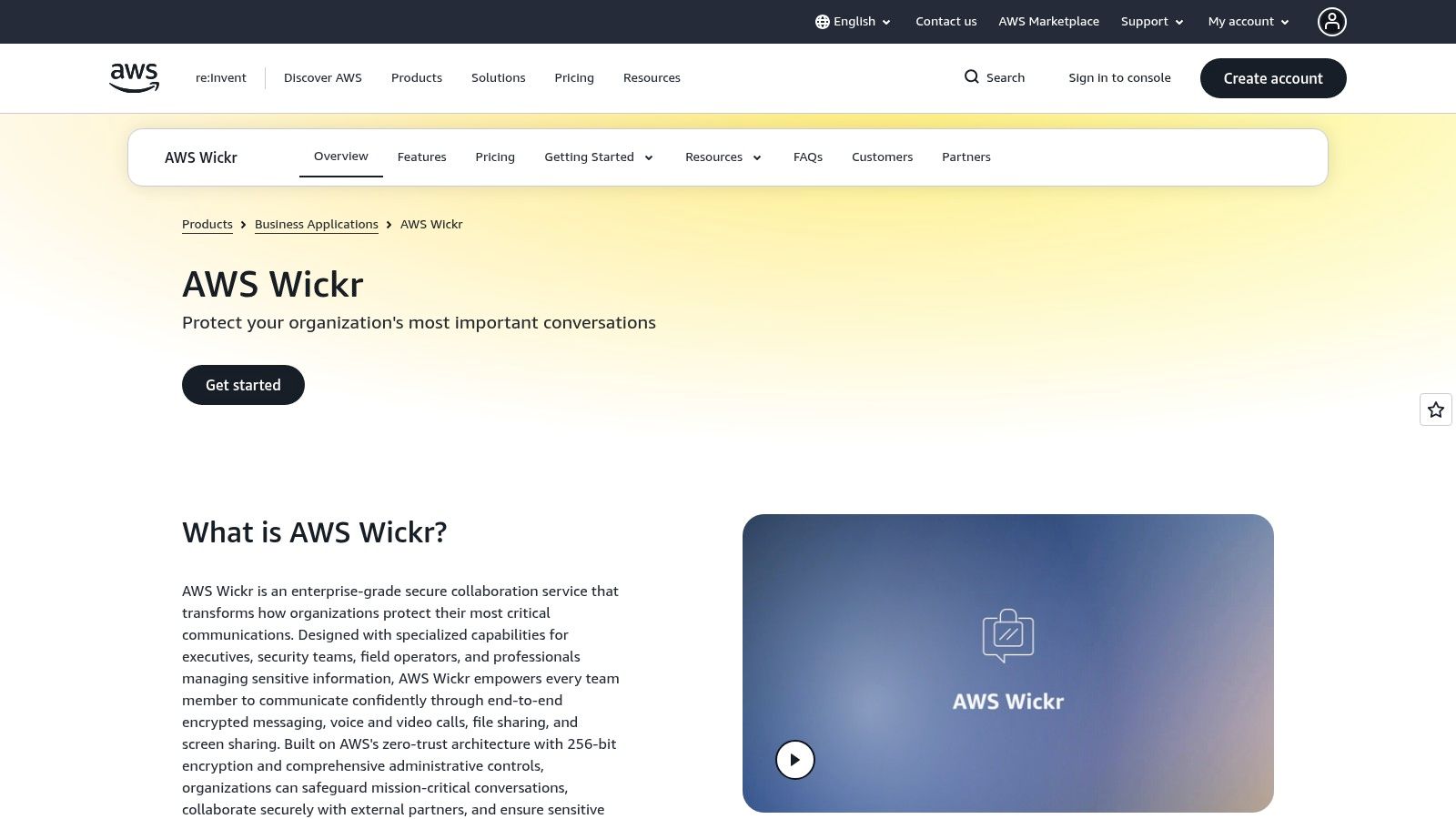
AWS Wickr is built for controlled internal communication, not broad public messaging. It offers encrypted chat, secure file sharing, administrative controls, and retention policies. For organisations handling sensitive information, it's a serious tool.
That makes Wickr relevant for internal teams in regulated or security-conscious environments. If staff need a locked-down communication layer with stronger oversight, Wickr has a clear place.
Where Wickr belongs
Wickr is far better for internal operations than public client-facing communication. A local service business won't choose it because customers are waiting on Wickr. They won't be. This is a staff and compliance tool, not a customer communication channel.
That distinction matters more in the UK now because businesses are being pushed toward cleaner digital processes. The coming impact of Making Tax Digital and the DMCC Act means small businesses need compliant data handling and digital invoicing practices, not just better team chat (UK small business regulatory changes overview). Once you think that way, messaging becomes one small part of a bigger operating model.
If you want a system that helps you track jobs, quotes, invoices, and payment status, secure chat alone won't do it. You need visibility as well, and that's where business analytics for small teams start becoming more useful than another inbox.
Top 10 WhatsApp Alternatives, Features & Privacy Comparison
| Platform | Core features | Security ★ | Business features ✨ | Pricing 💰 | Target audience 👥 |
|---|---|---|---|---|---|
| Signal | E2EE messages & calls, disappearing msgs, desktop linked | ★★★★★ E2EE by default | ✨ Privacy‑first UX; limited business APIs | 💰 Free (donation‑funded) | 👥 Privacy‑focused teams & individuals |
| Telegram | Fast cloud chats, huge groups/channels, bots | ★★★ Secret Chats E2EE; cloud chats not E2EE | ✨ Powerful bots, channels & automation | 💰 Free; Premium/in‑app options | 👥 Broad consumer reach, broadcast/automation |
| Element (Matrix) | E2EE, rooms/spaces, federation, bridges, self‑host | ★★★★ E2EE + self‑hosting/data control | ✨ Federation & integrations; flexible hosting | 💰 Free/self‑host or paid cloud options | 👥 Regulated orgs & IT‑managed teams |
| Wire | E2EE, SSO/SAML, governance, large group calls | ★★★★ E2EE + enterprise controls | ✨ SSO, audits, compliance features | 💰 Paid enterprise plans | 👥 Enterprises needing policy & governance |
| Threema / Threema Work | Anonymous IDs, E2EE, admin console, gateway API | ★★★★ E2EE + anonymous identity | ✨ Anonymous IDs, Work admin & broadcast API | 💰 Paid app + Work licences | 👥 SMEs & public‑sector with privacy needs |
| Viber | E2EE eligible chats, communities, business messages | ★★★ E2EE for eligible chats | ✨ Viber Business Messages, verified accounts | 💰 Per‑message billing (region varies) | 👥 B2C businesses & consumers |
| Apple Messages & Business | iMessage E2EE, verified profiles, Apple Pay in chat | ★★★★ E2EE Apple‑to‑Apple | ✨ In‑chat Apple Pay, Maps/Safari entry points 🏆 | 💰 Free for Apple users; MSP for business | 👥 iPhone‑centric customers & retailers |
| Facebook Messenger | Page inbox, APIs, click‑to‑message, ads | ★★ Privacy varies; not E2EE by default | ✨ Ads + Instagram integration, easy discovery | 💰 Free platform; ad spend applies | 👥 Large UK consumer audience & marketers |
| Discord | Servers, roles, channels, voice/video, bots | ★★ Not E2EE; consumer focus | ✨ Rich community tools & bot automation | 💰 Free to start; Nitro optional | 👥 Communities, support groups, training cohorts |
| AWS Wickr | E2EE, secure file sharing, retention & admin controls | ★★★★★ Enterprise E2EE & compliance | ✨ Retention policies, AWS integrations, audits | 💰 Enterprise pricing via AWS | 👥 Regulated enterprises & secure internal comms |
Unify Your Business, Don't Just Change Your Chat App
Switching to an alternative to WhatsApp can help. In some cases, it can help a lot. Signal improves privacy. Telegram improves reach and automation. Element, Wire, Threema, and Wickr offer stronger control for businesses with security or compliance needs. Messenger and Apple Messages can reduce friction at the point of first contact. Discord is useful if your business revolves around community.
But none of those tools fix the deeper problem most UK service businesses are dealing with. The problem is fragmented work. A client sends a message. You manually turn that into a note. Then you draft a quote somewhere else, send an invoice from another tool, chase payment by text, and try to remember what was agreed. That isn't a messaging problem. It's an operations problem.
For many service businesses, the smartest move isn't swapping one chat app for another. It's reducing the number of tools involved in the whole enquiry-to-payment journey. That's where an all-in-one platform makes more sense than building a new stack around another messenger.
AetherCloud is designed around the way UK service businesses operate. You can manage appointments, store contact details, create quotes quickly, convert approved quotes into invoices, collect payments online, and track revenue in one place. It supports GBP billing, VAT-ready invoicing, and UK GDPR and Data Protection Act 2018 compliance. That means less copying, less chasing, and fewer details getting lost between apps.
This matters on the ground. Tradespeople need to send a quote fast while they're between jobs. Consultants need a clean client record and a professional invoice trail. Freelancers need to look organised without juggling five subscriptions. Agencies need a simple way to keep enquiries, billing, and payments connected. A messaging app doesn't solve those needs. A proper business platform does.
There's also a customer experience angle. Clients don't care which app you prefer. They care that booking is easy, quotes are clear, approvals are simple, and payments don't require another round of messages. AetherCloud's public customer-facing pages for appointments, quotes, invoices, and payments remove that friction. That gives you something most messaging apps can't. A clear path from conversation to action.
Use a messenger if it suits the way your clients like to talk. Keep it as a channel, not the operating system of the business. The primary benefit comes when messaging stops being the place where work gets trapped.
For most UK service businesses, that's the better long-term alternative to WhatsApp.
If you're tired of running jobs, quotes, invoices, and payments through scattered chats, AetherCloud gives you one simple place to manage it properly. See how AetherCloud simplifies this process, helps you look more professional, and cuts down admin without forcing you into a complicated stack. Try AetherCloud to streamline your workflow.