
If the phone's been quiet, the inbox is patchy, and the next job feels dependent on a referral that may or may not land this week, you're already living the problem that business lead generation is meant to solve. For UK service businesses, the goal isn't to “do marketing” for its own sake, it's to build a repeatable way to get enquiries, qualify them quickly, and turn them into paid work without losing half the day to chasing people.
That's especially true now that most lead capture happens through owned digital channels. A 2026 lead-generation benchmark found that 90.7% of marketers use their websites to generate leads and sales, 89.2% use blogs, 69.2% use email marketing, 65.9% use organic social, and 53.7% use PPC lead-generation benchmark report. For a plumber, consultant, cleaner, or agency, that means the website, quote form, booking page, and contact page are no longer support acts, they're the front door.
The businesses that win usually don't have the most complicated stack. They have the clearest path from first click to confirmed booking, then from quote to invoice to payment. That's the difference between a busy week and a predictable pipeline.
Table of Contents
- What Business Lead Generation Means for UK Services
- Prioritising Your Lead Generation Channels
- Your Step-by-Step Playbook for Capturing Leads
- From Lead to Paid Job How to Qualify and Convert
- Measuring What Matters Your Lead Generation Dashboard
- Common Pitfalls and Staying Compliant in the UK
- Building Your Business Growth Engine
What Business Lead Generation Means for UK Services
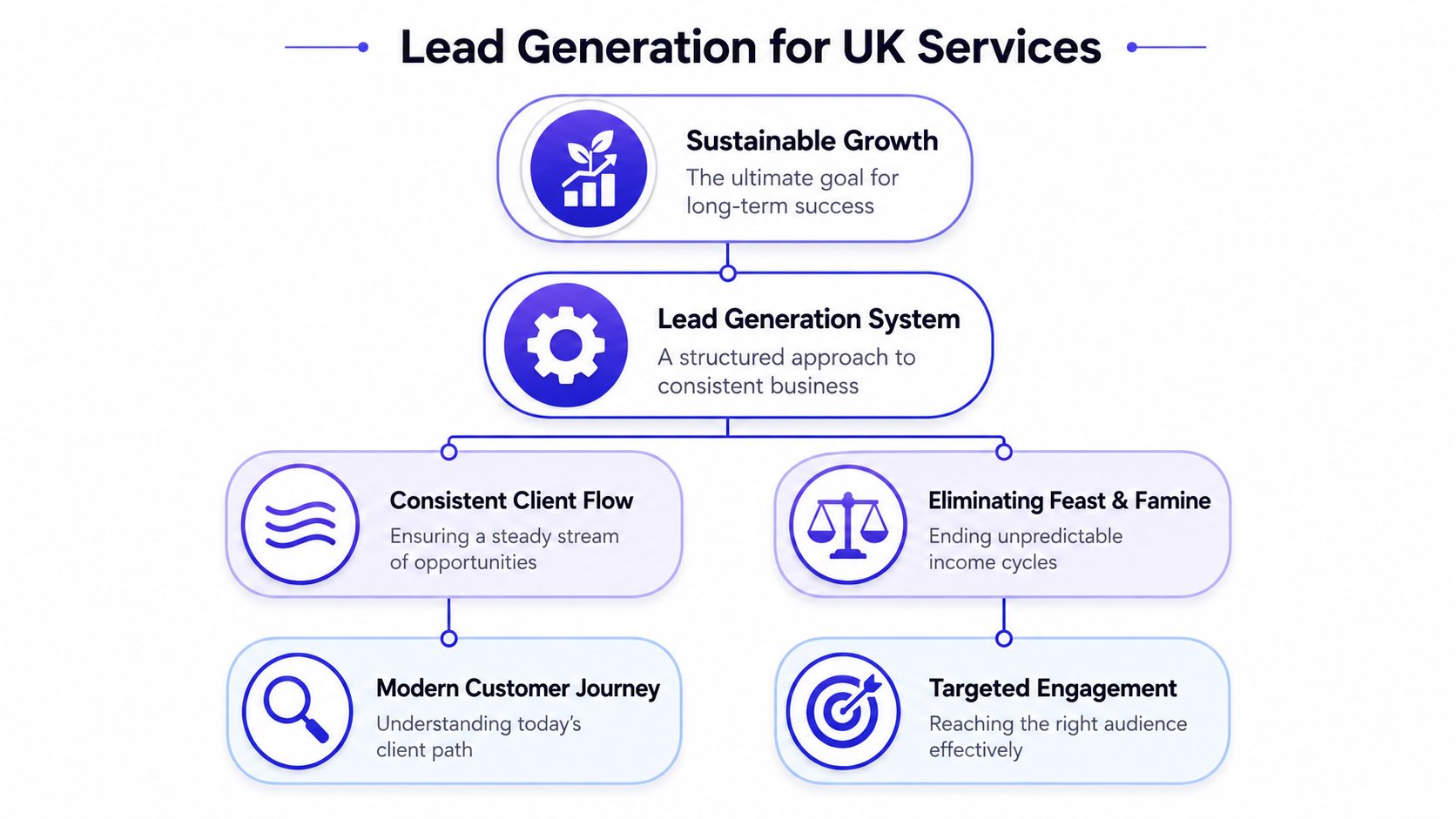
Lead generation is the system that stops a service business drifting between feast and famine. Instead of waiting for the diary to fill itself, you create a path that brings the right people in, gives them a simple way to enquire, and helps you turn interest into booked work. For UK service businesses, that matters because most customers don't want a long sales process, they want a quick answer, a clear price, and confidence that you're legitimate.
What counts as a lead in practice
A lead is an enquiry. A prospect is a lead you've qualified enough to take seriously. A customer is someone who has paid you. That distinction sounds basic, but it changes how you manage time, because not every name in your inbox deserves the same follow-up.
Practical rule: if someone hasn't told you what they need, when they need it, or where they are, they're not qualified yet.
The modern UK buyer journey is usually short and intent-led. A homeowner searches for a local tradesperson on mobile, checks reviews, scans your website, and decides within minutes whether to call, book, or move on. For consultants and agencies, the path can be slightly longer, but the principle is the same. The buyer is trying to reduce risk quickly, and your public pages need to answer that risk before another business does.
Why visibility and ease matter more than persuasion
Lead generation isn't aggressive selling. It's being findable, credible, and easy to hire when the buyer is ready. A service business that looks organised, answers clearly, and removes friction from the enquiry process will usually outperform a business that has a clever pitch but a clumsy website or an inbox full of missed replies.
That's where owned channels matter most. When your website, contact form, quote page, and booking page are structured properly, they become a working part of the business rather than a passive brochure. If you want a useful strategic lens for that setup, the go-to-market approach needs to be practical, local, and built around how people decide to hire a service.
Prioritising Your Lead Generation Channels
The fastest wins usually come from the channels closest to buying intent, not the channels that create the most noise. For UK service businesses, that means local search and referrals sit at the top of the list, while content, ads, and partnerships work best when they support a clear conversion path.
Start where the intent is already high
Google's local search behaviour is hard to ignore. Google reports that 76% of people who search for something nearby on a smartphone visit a business within a day, and 28% of those searches result in a purchase Google local search report. That makes local discovery, especially a well-managed Google Business Profile, one of the strongest near-term conversion levers for plumbers, electricians, cleaners, and other local providers.
Referrals still matter because they arrive with trust already attached. They're often the cheapest source of work, but they're not a system unless you ask for them consistently and make it easy for a happy customer to pass on your details.
Compare the main channels by speed and effort
| Channel | Cost profile | Effort level | Typical value |
|---|---|---|---|
| Local search | Low to moderate | Medium | Strong intent, fast response window |
| Referrals and word of mouth | Low | Low to medium | High trust, often higher close rate |
| Hyper-local paid ads | Variable | Medium to high | Useful when you need visibility fast |
| Practical content marketing | Low to moderate | Medium | Builds proof through case studies and project galleries |
| Strategic partnerships | Low | Medium | Works well with complementary local businesses |
The order matters. A local electrician or consultant usually gets better early results from search visibility and partner referrals than from trying to publish general advice that nobody local is searching for. Once the core route to enquiry is working, content can support credibility, and paid ads can fill gaps during quieter periods.
Use content to support proof, not just traffic
Practical content works when it helps a buyer choose you. A short case study, before-and-after gallery, service area page, or FAQ page often does more for conversions than a long educational article. Buyers want reassurance that you've done the work before, that you understand the job, and that you're set up to respond quickly.
A channel is only useful if it can hand a live enquiry into a process you can actually manage.
That is the key trade-off. The more channels you chase at once, the easier it is to miss calls, let forms sit unanswered, or fail to track which source produced revenue. Start with the channel mix that can be handled properly, then expand once the response process is reliable.
Your Step-by-Step Playbook for Capturing Leads
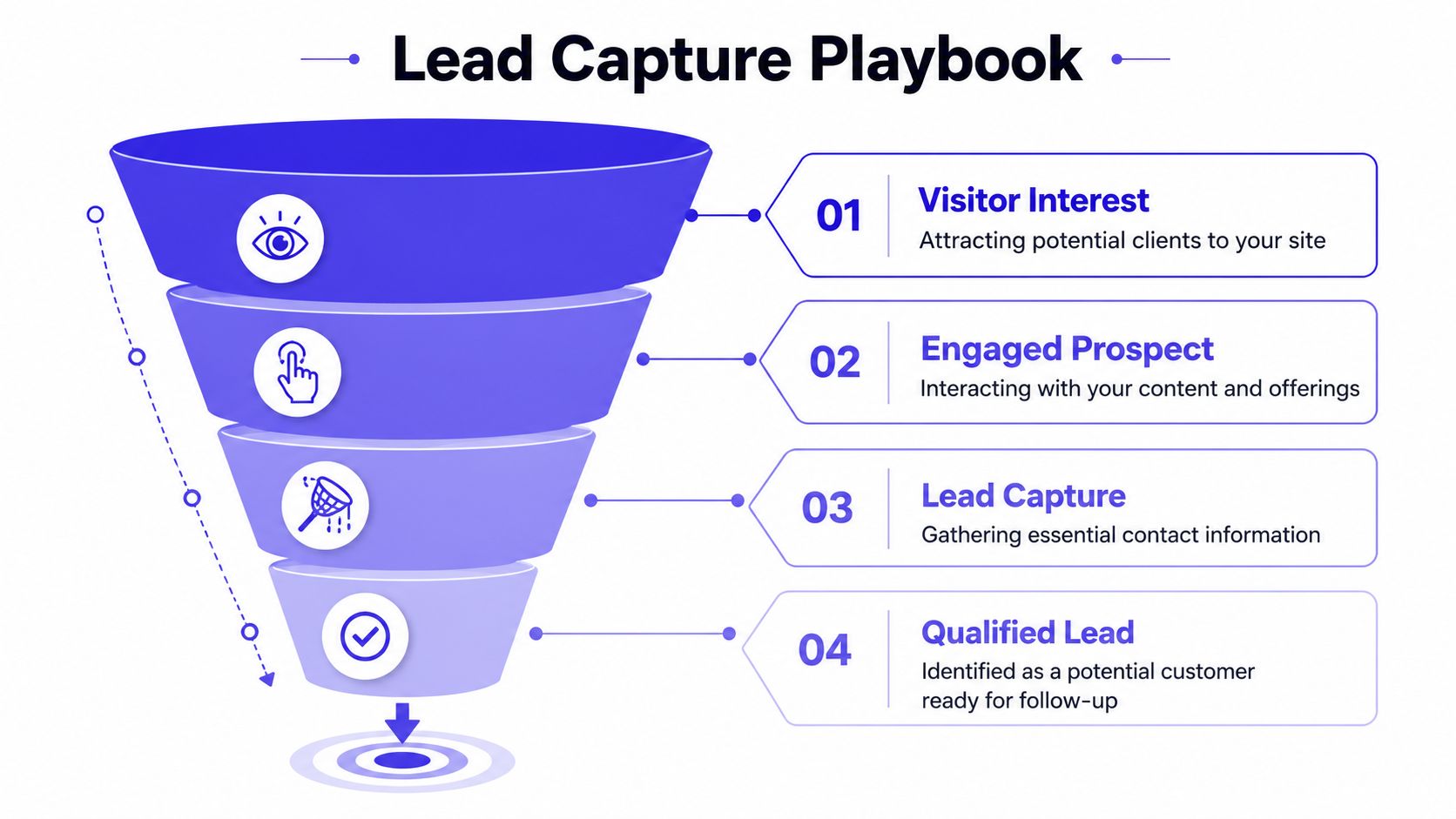
The capture stage is where most service businesses lose money without realising it. Someone is interested, but the form is too long, the call-back is delayed, or the enquiry lands in a general inbox that no one checks properly. Once that happens, the lead cools off and the job often goes elsewhere.
Make every public contact point do one job well
A strong capture setup doesn't ask visitors to work hard. It gives them a direct route to the next action, whether that's requesting a quote, booking a call, or sharing details through a digital business card. Best-practice guidance recommends keeping forms concise, using auto-fill and real-time validation, and aligning fields with CRM-based lead scoring so sales can prioritise high-intent enquiries faster lead generation best practices.
That means your form shouldn't feel like an admin test. Ask only for what you need to respond properly, then route the data straight into your CRM so nothing gets buried in email.
Build capture around the customer's moment
For a service business, the most effective capture points usually look like this:
- Booking pages: let prospects choose a slot without back-and-forth, especially for consultations, site visits, or discovery calls.
- Quote forms: collect enough detail to price the work sensibly, but keep the fields short enough that people finish them.
- Digital business cards: use them at meetings, events, and site visits so a contact can save your details and enquire later.
- Payment pages: if a customer is already ready to pay, don't make them chase an invoice by email.
- CRM logging: make sure every enquiry enters one organised record, not three different places.
Each of these points should feed the same workflow. That's how you avoid duplicate entries, missed follow-up, and the vague sense that “someone else must have replied”.
Treat the capture process like a handover, not a form
The best lead capture systems feel invisible to the customer and obvious to the business owner. A visitor clicks, submits, books, or pays, then the record lands in the right place with the right context. If you're already thinking about how customer information should flow into a single system, the customer engagement approach is usually where the operational gains start to show.
From Lead to Paid Job How to Qualify and Convert
A lead isn't valuable until it turns into a paying job. That's why speed matters so much after the first enquiry. If you wait too long to qualify, quote, or follow up, the buyer often gets responses from other businesses and chooses the one that feels easiest to deal with.
Follow a simple response sequence
The fastest conversion path is usually straightforward. Confirm the enquiry quickly, check whether it's a real fit, send a clear quote, and follow up without pressure if the customer hasn't replied. This isn't about chasing people, it's about removing uncertainty.
A good workflow for a service business looks like this:
- Acknowledge the enquiry so the customer knows it landed.
- Qualify the job with a short, relevant conversation.
- Send the quote while the need is still fresh.
- Track the response so you know whether it's open, approved, or stalled.
- Convert to invoice immediately once approved, especially if you need fast cash collection.
That last step matters for UK businesses because quoting and billing shouldn't live in separate systems. In the UK, HMRC guidance says a VAT invoice must be issued within 30 days of the date of supply for VAT-registered businesses making taxable supplies to another VAT-registered business or organisation, and invoices need details such as a unique invoice number, the tax point, the supplier's VAT number, the customer's name and address, and a description of the goods or services supplied HMRC invoicing guidance. A messy handoff between quote and invoice creates delay and invites mistakes.
Practical rule: the sooner a quote turns into an invoice, the less chance there is for the job to go cold or the admin to drift.
A clean quoting workflow also improves perception. Customers tend to trust businesses that respond neatly, present prices clearly, and make approval simple. If you're turning leads into work through one joined-up process, the sales cycle becomes easier to manage because you can see where each job is sitting instead of guessing.
Later in the day, the pressure often isn't getting more leads, it's getting paid for the work already won. That's why online payment links and invoice tracking need to sit alongside quoting, not somewhere else in a separate app.
If you can move from enquiry to quote to approval without retyping the same details, you'll feel the difference quickly. Fewer admin gaps mean fewer lost jobs, and fewer lost jobs mean more reliable cash flow.
Measuring What Matters Your Lead Generation Dashboard
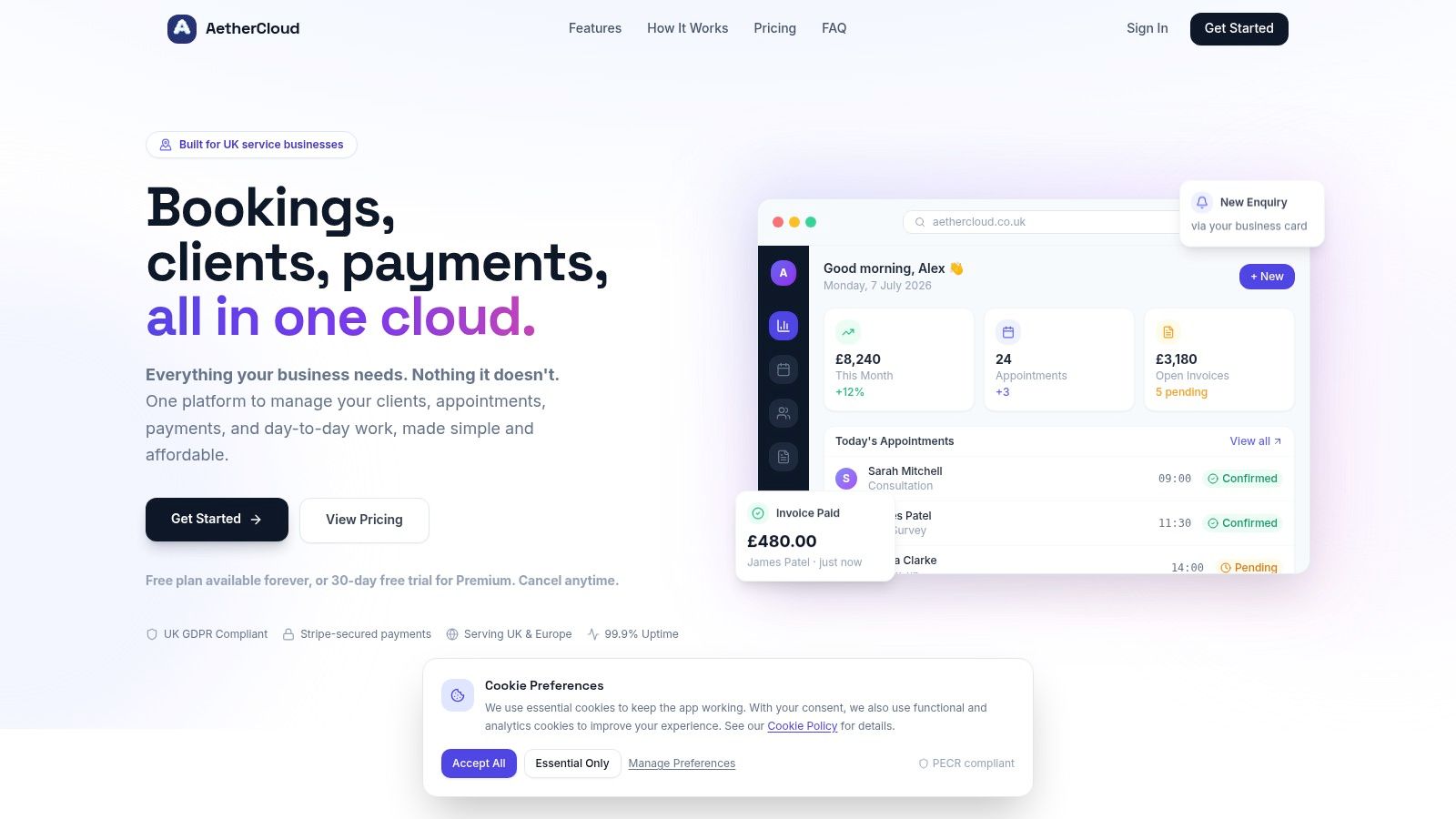
Most owners don't need a complicated dashboard. They need a short list of metrics that tell them whether enquiries are turning into work, and where the process is breaking. The trick is to measure the stage where money is being lost, not just admire incoming enquiries.
The numbers that tell the truth
A technically strong UK benchmark is to watch lead velocity and stage conversion, not just raw lead volume. Industry KPI guidance defines lead velocity rate as the month-over-month growth in qualified leads, while noting that visitor-to-lead conversion rates commonly average 2–5% lead-gen metrics guidance. If your leads rise but your response times slip, the business may look busy without improving.
You can keep the dashboard simple:
- Lead volume: how many enquiries came in.
- Visitor-to-lead conversion rate: how many site visitors became enquiries.
- Cost per lead: what you paid to generate each enquiry, if you used ads or paid promotion.
- Lead-to-customer rate: how many enquiries turned into paying jobs.
- Stage timing: how long each enquiry sits before quote, approval, or invoice.
Read the dashboard as a business owner
The point of tracking these metrics is not to build reports for their own sake. It's to spot friction. If the visitor-to-lead number is weak, the website or form may be the issue. If leads come in but don't convert, the quote, timing, or follow-up may be the problem. If approved jobs still pay slowly, the billing process needs attention.
A useful signal here is the gap between stages. When that gap widens, the process is slowing down, and that usually costs real money. Public booking pages, quote pages, and invoice payment links help because they shorten the path from interest to action, which is especially valuable for local service work where the buyer often wants a quick answer.
Keep analytics tied to action
The best dashboard is the one that tells you what to do next. If a channel produces enquiries but poor conversions, cut back on it until the handoff improves. If a service page attracts interest and closes well, give it more visibility. If payment follows approval slowly, remove the delay from the billing step.
If you want to make those decisions without spreadsheet work, the business analytics basics are simple, track the stages, review them regularly, and fix the step that slows revenue down.
Common Pitfalls and Staying Compliant in the UK
One of the most expensive mistakes in business lead generation is thinking the only problem is getting enough enquiries. In practice, many UK service businesses already have enough interest, they just leak value through slow replies, scattered records, and inconsistent follow-up. A missed form submission or an unanswered call can result in a lost job.
The operational mistakes that cost jobs
The first pitfall is no central system. If enquiries sit in email, WhatsApp, spreadsheets, and a notebook in the van, the business owner ends up relying on memory. That works for a while, then the busy weeks become the ones where leads disappear.
The second pitfall is uneven follow-up. Someone enquires on Monday, gets no reply until Wednesday, and has already booked elsewhere. Service buyers rarely wait long when they have an immediate problem.
The third pitfall is measuring the wrong thing. More leads don't help if they're low quality or if the business can't respond well enough to convert them. That's why the earlier section on stage tracking matters so much.
A busy inbox is not the same as a healthy pipeline.
UK compliance is part of the lead process
Compliance isn't a separate legal topic that lives outside marketing. It's part of how you collect, store, and use personal data. Under UK GDPR, an organisation can be fined up to £17.5 million or 4% of annual worldwide turnover, whichever is higher, for the most serious infringements, and the Data Protection Act 2018 sits alongside it to govern how personal data is handled in the UK UK GDPR and DPA 2018 guidance. That matters whenever you collect names, phone numbers, email addresses, job details, or payment data through your forms and booking pages.
The practical rule is simple. Collect only what you need, explain why you're collecting it, and keep it secure. If you use cookies on public pages, the Information Commissioner's Office says non-essential cookies require consent before they're set, and consent must be freely given, specific, informed, and unambiguous ICO cookie guidance. That means no pre-checked marketing boxes and no hidden tracking by default on quote or booking pages.
Keep quoting and billing compliant too
For many service businesses, lead generation flows directly into billing. That's where Making Tax Digital and VAT rules come in. HMRC says businesses with taxable turnover above the VAT threshold must follow MTD for VAT, and the VAT registration threshold is £90,000 of taxable turnover in a 12-month period Making Tax Digital guidance. If your lead process creates invoices, your billing setup needs to be digital, organised, and ready for compliance.
The businesses that handle this well don't treat compliance as a blocker. They build it into the workflow. That means clean forms, clear privacy information, sensible retention, and invoicing that matches the way the business operates. Done properly, compliance supports trust rather than slowing sales down.
Building Your Business Growth Engine
Business lead generation works best when it becomes a repeatable engine, not a set of random campaigns. The structure is simple. Attract the right people, capture their details cleanly, qualify them quickly, convert them into paid jobs, and measure which stage is slowing things down. If one part fails, revenue becomes less predictable.
A significant advantage comes from unifying the process. When scheduling, quoting, invoicing, payments, and client records live separately, the business spends too much time copying details and chasing updates. When they sit together, the owner gets one view of the pipeline, quicker approvals, and less admin friction.
That also helps with cash flow, which is why online payment collection should sit close to the quote and invoice process rather than in a separate workaround. If you're thinking about that final step in the customer journey, it's worth understanding how to accept online payments without creating more manual work for the team.
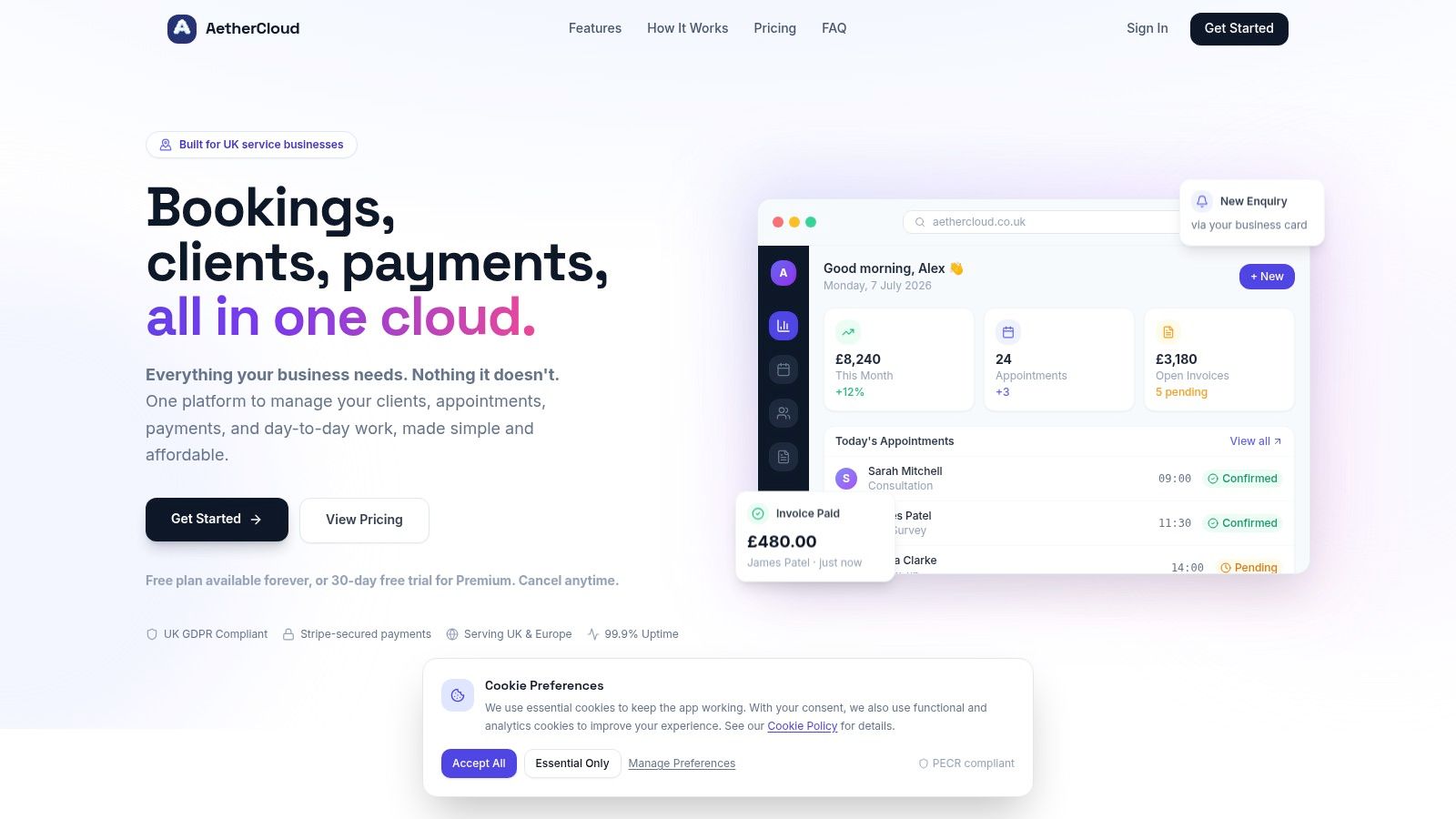
A strong lead generation system should make the business feel easier to run, not harder. It should also make the business look more professional to the customer, because trust is often what turns an enquiry into a paying job. If you want that entire workflow in one place, AetherCloud is built to combine scheduling, CRM, quoting, invoicing, payments, digital business cards, and analytics for UK service businesses.
A CTA for AetherCloud. Try it to see how a single system can help you capture more enquiries, convert quotes faster, and manage lead generation without juggling separate tools.