
Chasing invoices, checking your bank balance before every supplier payment, and trying to guess what next month will look like can make cash flow feel like a constant firefight. For a UK service business, that pressure usually starts with the same problem, money is tied up between doing the work and getting paid for it. That's why cash flow management software matters. It helps you see what's coming in, what's going out, and where the gaps are before they become a crisis.
The market itself has moved from specialist planning tools into mainstream finance software. One estimate values the category at about USD 1.2 billion in 2024 and projects it to reach about USD 3.5 billion by 2033, with an 11.3% CAGR from 2025 to 2033, which shows how central cash visibility has become in day-to-day business operations MarketsandMarkets. In the UK, the practical need is even clearer. Late payment still hits small firms hard, with 56 million invoices paid late in the previous year and GBP 22.8 billion owed to smaller businesses, according to the UK government's 2024 review UK government review referenced in the market brief.
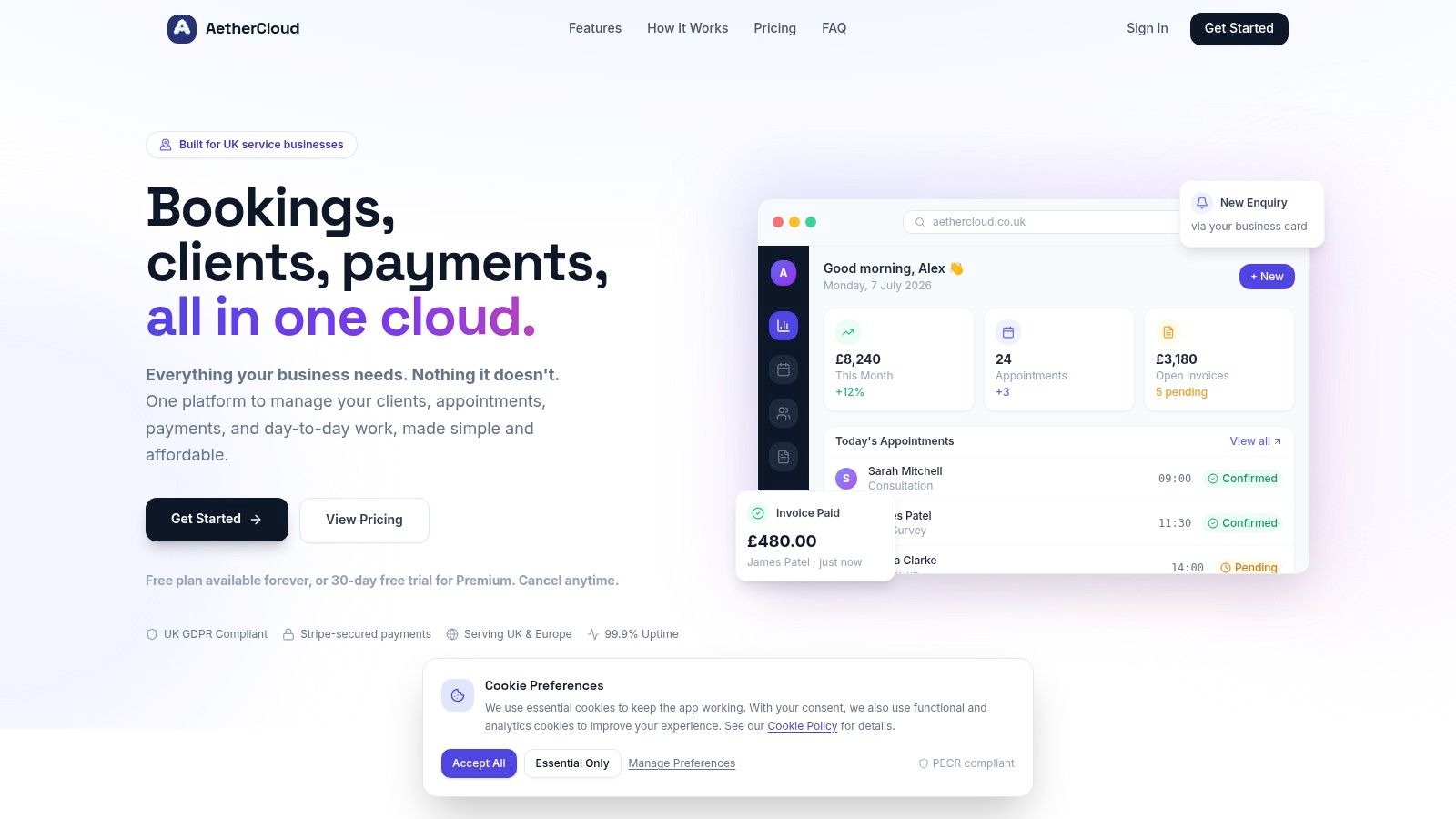
The right tool depends on the problem you're trying to solve. Some businesses need faster invoice collection. Others need a live cash dashboard, or a simple 90-day forecast that doesn't require spreadsheets. If you want to reduce admin and keep quote-to-cash in one place, AetherCloud is worth a close look.
Table of Contents
- 2. Agicap
- 3. Float
- 3. Float
- 4. Futrli by Sage
- 5. Xero Analytics / Analytics Plus
- 6. QuickBooks Online Cash Flow
- 7. FreeAgent Cashflow
- 8. Chaser
- 9. Cash Flow Frog
- 10. Dryrun
- Top 10 Cash Flow Management Software Comparison
- Stop Juggling Tools: Unify Your Cash Flow in One Place
2. Agicap
Agicap suits businesses that already have accounting data in place and need a clearer live view of cash across several accounts. It focuses on bank aggregation, categorisation, scenario planning, and multi-entity visibility, so owners can see their cash position without rebuilding it by hand in spreadsheets. For service firms with several accounts or branches, that can be the difference between spotting a shortfall early and reacting too late.
The platform is strongest when bank data and accounting data need to sit together. Agicap's native Xero connector helps bring invoices and bills into forecasts, and its cash dashboard is useful when you want to see the effect of payments, receipts, and timing changes in one view. It works best as a planning layer on top of tidy records, especially if your priority is cash visibility rather than fixing the whole customer journey from quote to payment. For service businesses that want to understand that wider flow, the cycle of sales is a useful way to separate front-end sales work from cash planning.
One limitation is scope. Agicap is built for cash visibility and planning, but if your main problem is invoicing, booking, and collection, the software will not solve the front end of the workflow on its own. That makes it a better fit once your operational process is already under control.
A practical comparison is whether you want a live cash dashboard or a system that also helps you create the invoice and get it paid. Agicap is stronger on the first job.
3. Float

Float suits service businesses that want a clear forecast without living in spreadsheets. It connects to Xero, QuickBooks Online, and FreeAgent, then turns those ledgers into rolling forecasts that can be updated as invoices move, bills arrive, and payment timing shifts. For firms that need a practical view of cash without buying a heavier finance platform, that is a useful middle ground.
The value is in how it handles day-to-day changes. Float supports rolling 13-week forecasts, longer monthly views, and payment-date adjustments that reflect how customers behave, not how quickly you hope they will settle. That matters in the UK, where late payment can leave otherwise healthy service firms short on cash while work is still being delivered.
Where Float works well
- Fast setup on UK ledgers. It is straightforward for non-financial users who just need a forecast that updates with the books.
- Weekly visibility. Useful when payroll, contractor costs, and supplier bills all land in the same period.
- Scenario changes. Helpful when a delayed payment, a new contract, or a slipped invoice changes the picture.
Where it falls short
- It sits alongside accounting software. Float does not replace your ledger, so you still need clean records elsewhere.
- Pricing is less transparent than some teams want. That can matter if you are comparing tools on simple budget control as well as forecasting.
- It focuses on forecasting, not the full cash workflow. If your problem starts earlier, at quote, booking, invoice, and payment collection, a wider system may save more admin.
For business owners trying to connect forecasts with real operational behaviour, business analytics is the useful lens. Float gives you a cleaner view of what is likely to happen to cash, but it still depends on other systems to create and collect the money in the first place.
3. Float
A service business can look busy on paper and still run short of cash. Invoices are out, costs are already due, and the bank balance can move faster than the spreadsheet you last updated. Float is built for that gap.
It suits firms that want a clear forecast without getting buried in manual models. It connects to Xero, QuickBooks Online, and FreeAgent, then builds rolling forecasts that you can adjust as invoices move, bills land, and payment timing changes. For UK service businesses that need day-to-day visibility but do not want a heavy finance platform, that is a practical middle ground.
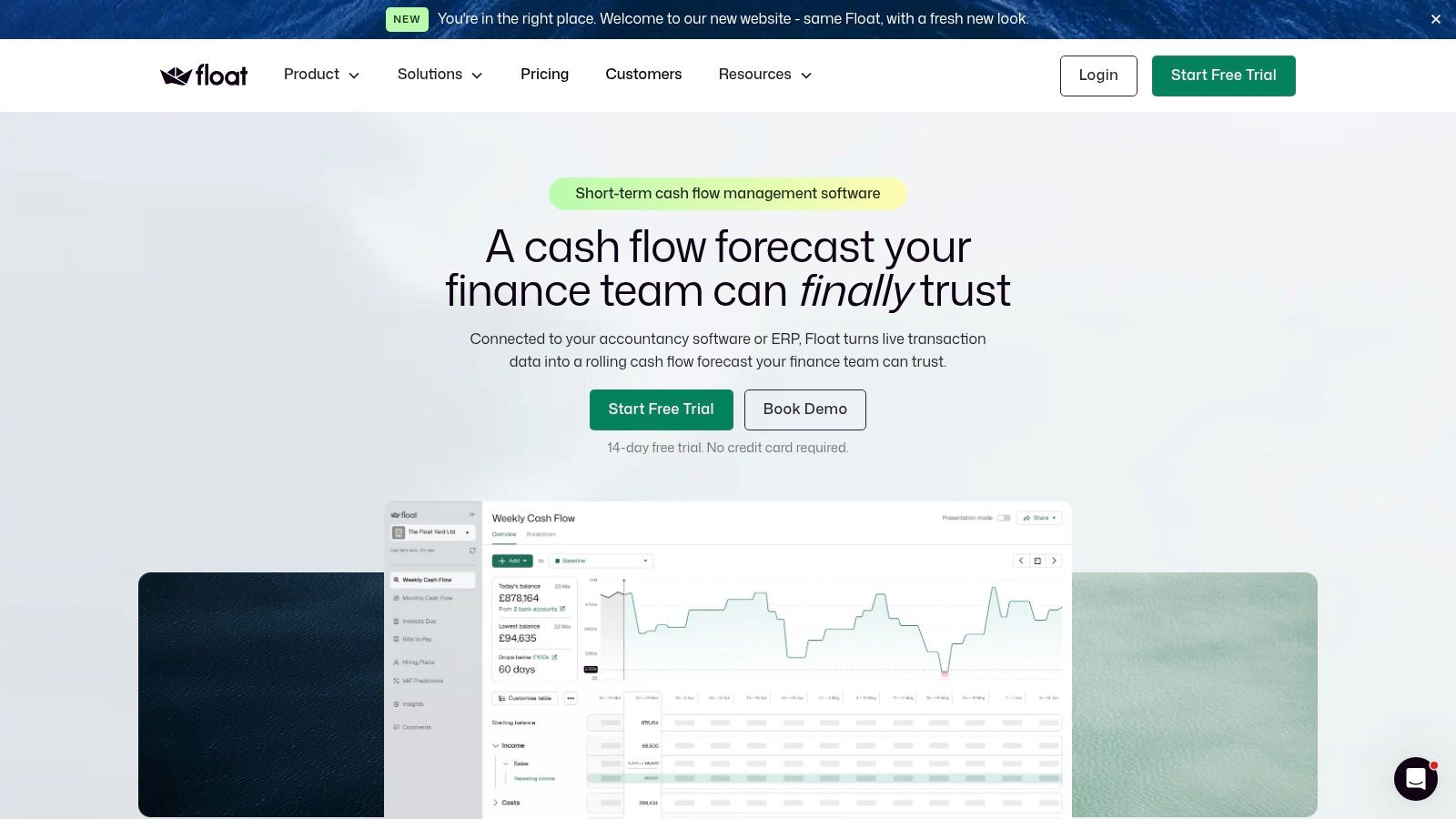
The useful part is the operational detail. Float supports rolling 13-week forecasts, longer monthly views, and payment-date adjustments that reflect how customers behave rather than how quickly you wish they would pay. That matters in the UK, where late payment can leave healthy service firms short on cash while work is still being delivered UK government review referenced in the market brief.
Where Float works well
- Fast setup on UK ledgers. It is approachable for non-financial users who need a forecast that updates with the books.
- Weekly visibility. Useful when payroll, contractor payments, and supplier bills all land in the same period.
- Scenario toggles. Handy when a delayed payment or new job changes the picture.
Where it falls short
- It sits alongside accounting software. It does not replace your ledger, so clean records still have to live elsewhere.
- Pricing is less transparent. That can matter if you need to compare tools against a tight budget before you commit.
- It focuses on forecasting, not the full cash workflow. If the pressure starts earlier, at quote, booking, invoice, and payment collection, a wider system can reduce more admin.
For businesses that still need a single system to manage the quote, booking, invoice, and payment chain, business analytics is the right lens. Float gives you a clearer view of what is likely to happen to cash, but it still depends on other systems to create and collect the money in the first place.
4. Futrli by Sage
Futrli by Sage is better suited to businesses that want cash flow planning plus structured reporting. It offers daily cash-flow forecasting, scenario modelling, and 3-way forecasting across cash flow, profit and loss, and balance sheet, which gives finance-minded owners more context than a single cash dashboard. That makes it appealing when stakeholders want reports, not just a projected balance.
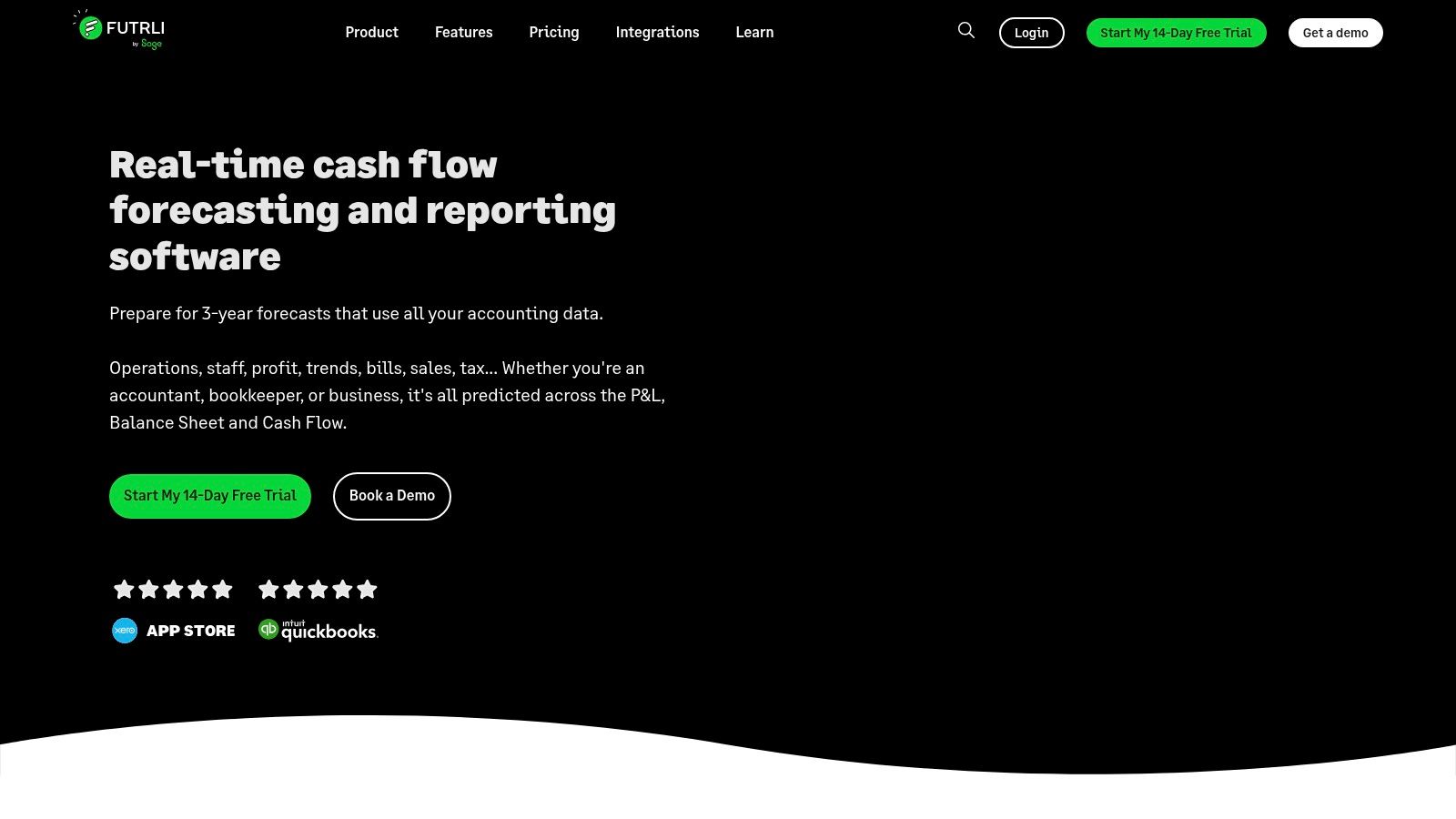
The strongest argument for Futrli is that it links daily movement with a fuller view of the business. Independent evaluations of forecasting tools place weight on three-way integrated forecasting, scenario modelling, and integrations with systems such as Xero, Sage, QuickBooks, and MYOB Fathom HQ. Futrli fits that style of planning well, especially if you want to share report packs with advisers or investors.
Some businesses don't need more data, they need a clearer story around the data they already have.
That said, the trade-off is obvious. If you only want a simple short-term cash view, Futrli can feel like more tool than you need. The setup and reporting depth are useful, but they're not the quickest route to simpler operations.
If your real problem is messy quote-to-cash handling, a more unified system like AetherCloud may be the better starting point. It also helps when you want to understand your wider performance, not only liquidity, as discussed in AetherCloud's business analytics guide.
5. Xero Analytics / Analytics Plus
If your business already runs on Xero, this is the least disruptive option. Xero's built-in analytics give you a short-term cash-flow view and a business snapshot without extra integrations or another login to manage. For many UK service businesses, that convenience matters more than having the most advanced model.
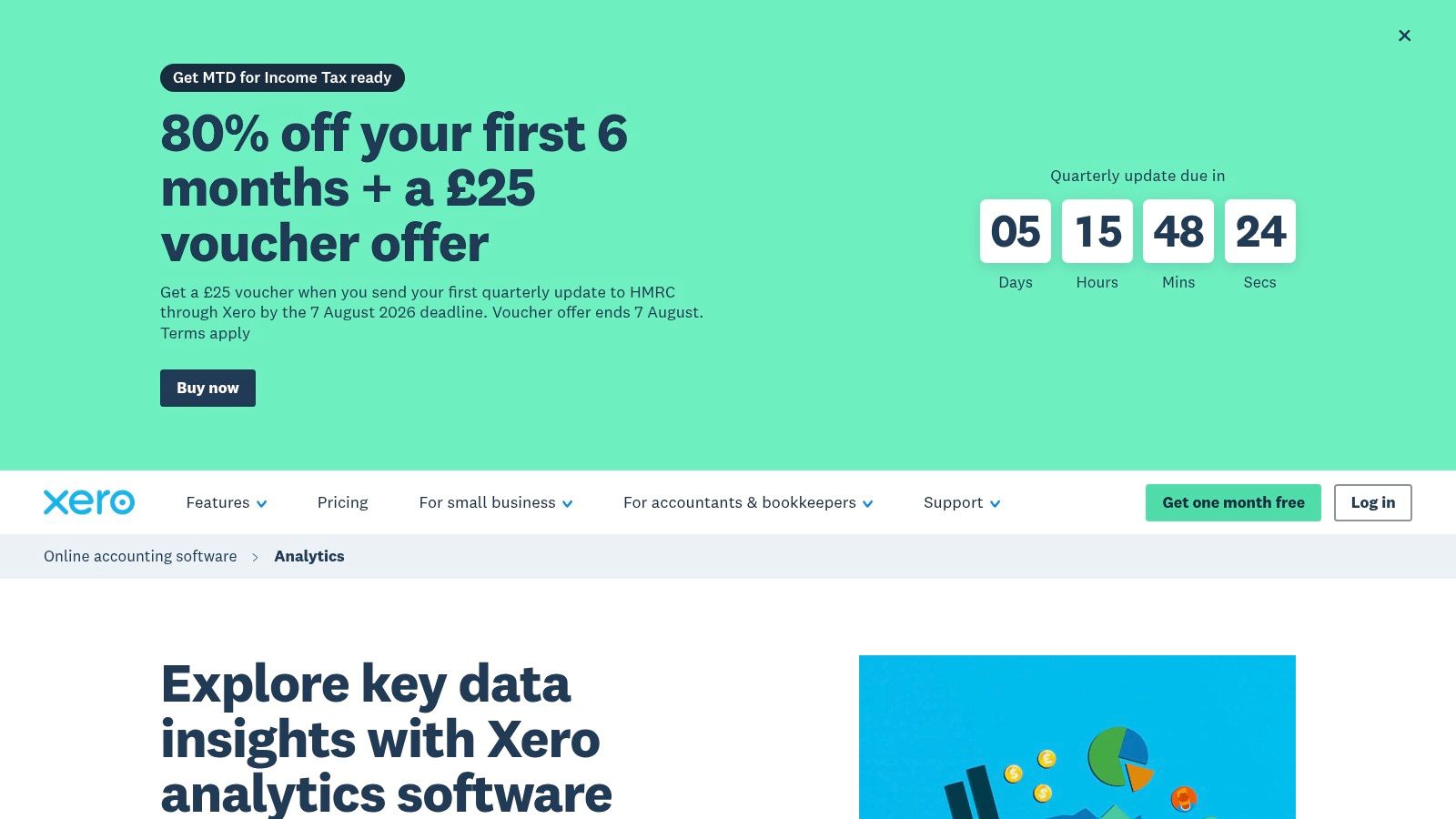
Xero Analytics is a pragmatic first step, and Analytics Plus expands that with more short-term forecasting and customisation. The appeal is obvious for firms already using Xero's bank feeds and bookkeeping workflows, because the data is already there. The ONS reported that 43% of UK businesses were using cloud-based accounting software in 2024, with 31% using at least one other cloud-based finance tool, which helps explain why integrated options often win adoption ONS.
The limitation is scope. Xero's native view is useful for a near-term look, but it won't give you deep scenario planning or the workflow control that a dedicated business platform can offer. If your bookings, quotes, and invoices live elsewhere, the forecast is only as useful as the data you bring into Xero.
A practical test is this. If you already live in Xero and only need a light forward view, start here. If you want to tighten the whole customer journey, AetherCloud's quoting and invoicing flow may save more time than another forecasting layer. You can also compare how AetherCloud handles financial structure in its financial statement formatting guide.
6. QuickBooks Online Cash Flow
QuickBooks Online Cash Flow is a neat option for businesses that want a forecast inside the accounting platform they already use. It projects the next 90 days from historical bank and ledger activity, then lets you make basic what-if adjustments. For owners who mainly want a simple, short-term check on whether cash will be tight, that can be enough.
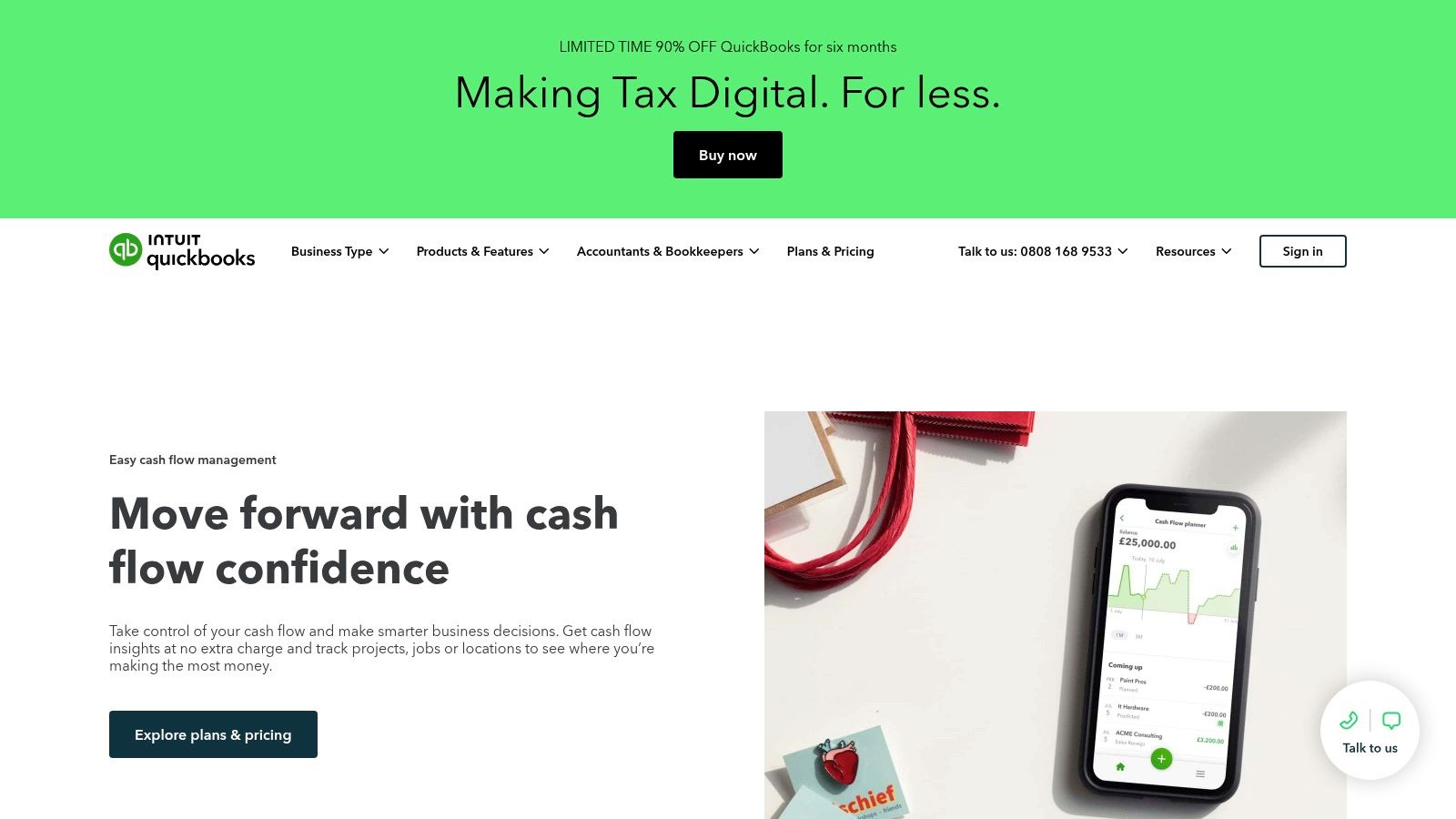
The strength here is convenience. There's no extra system to connect, and the forecast uses the same data you're already entering for bookkeeping. That makes it a sensible fit for smaller service businesses that want a quick view without adding another subscription layer.
The weakness is equally clear. A 90-day planner is useful for short-term decisions, but it won't replace deeper forecasting or multi-entity planning. If your cash timing depends on milestone billing, part payments, or several active projects at once, the view can feel too shallow.
Best use case: keep QuickBooks Online Cash Flow for a near-term sanity check, then move to a more complete system when you need quote, invoice, and payment tracking in one workflow.
For businesses that want cash visibility tied directly to the customer journey, AetherCloud is a more complete operational choice. It reduces the need to reconcile payment status across different tools and makes the payment step easier for clients too.
7. FreeAgent Cashflow
FreeAgent Cashflow works well for sole traders and smaller service businesses that want a simple, real-time projection without much setup. It builds a 90-day forecast using bank balances, invoices, bills, and tax timelines, so the picture stays current as the numbers change. That's appealing if you want something practical, not a finance project.
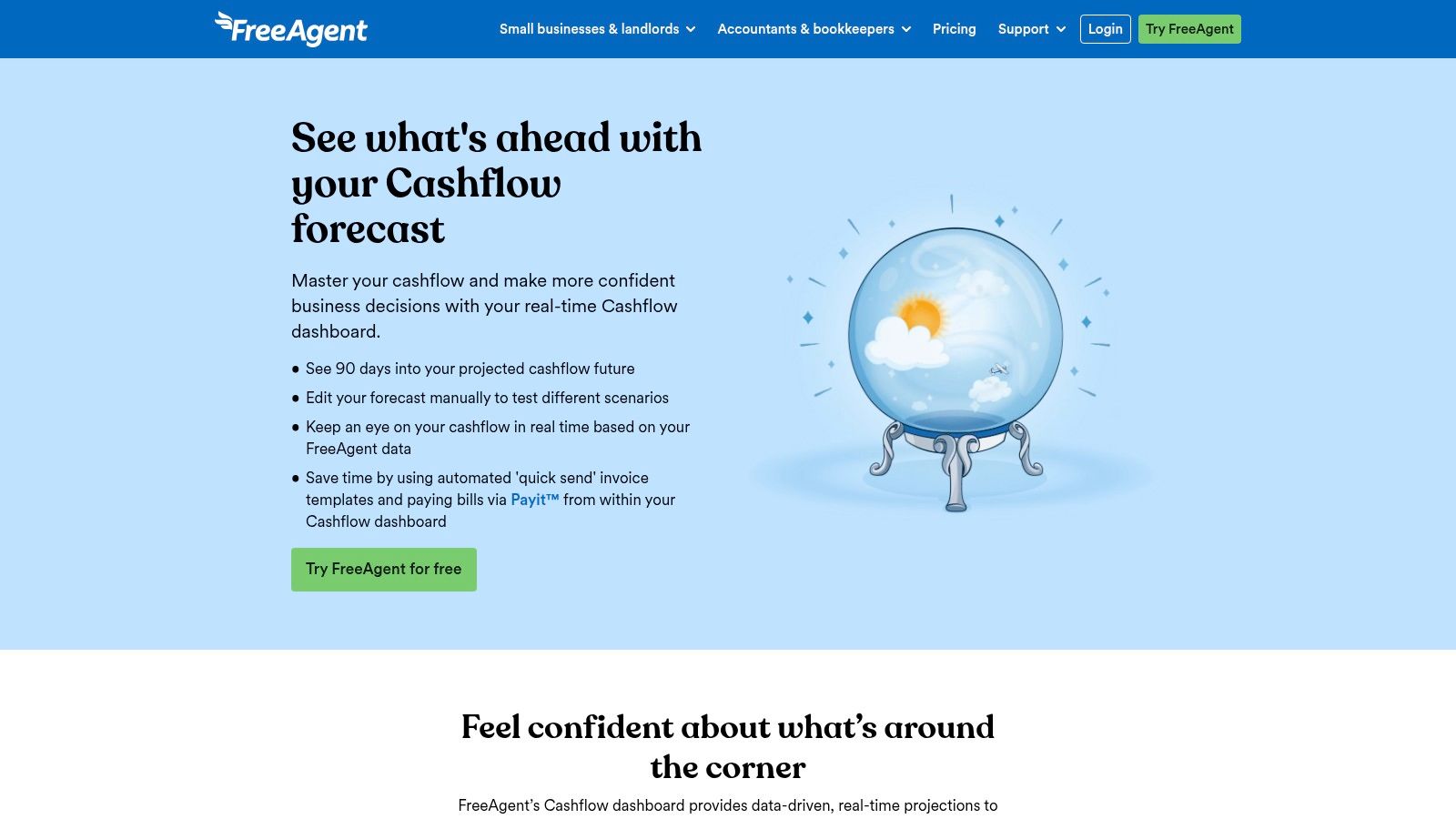
FreeAgent's main advantage is low friction. It's easy to understand, and for some users it's bundled through partner banks such as Mettle and NatWest Group, which can reduce the barrier to getting started. That kind of accessibility matters when late payment pressure is already taking time away from client work, because the point is to see the problem early and stay organised.
The trade-off is forecast depth. FreeAgent Cashflow is built for short-term visibility, not heavy scenario modelling or complex multi-entity planning. If you're a freelancer, contractor, or small agency, that may be perfectly fine. If you're managing several teams or want a broader operational platform, it'll feel limited.
A sensible way to judge it is by how much of your business lives outside accounting software. If most of your process is still split between quote creation, scheduling, invoicing, and payment chasing, a fuller system like AetherCloud can remove more friction than another cash view alone.
8. Chaser
Chaser is not a forecasting suite in the classic sense. It's a credit-control and accounts receivable platform that helps you get paid faster by automating invoice chasing across email, SMS, and letters, then giving you receivables forecasting and debtor risk insight. For UK service firms where overdue invoices are the main constraint, that can make a real difference.
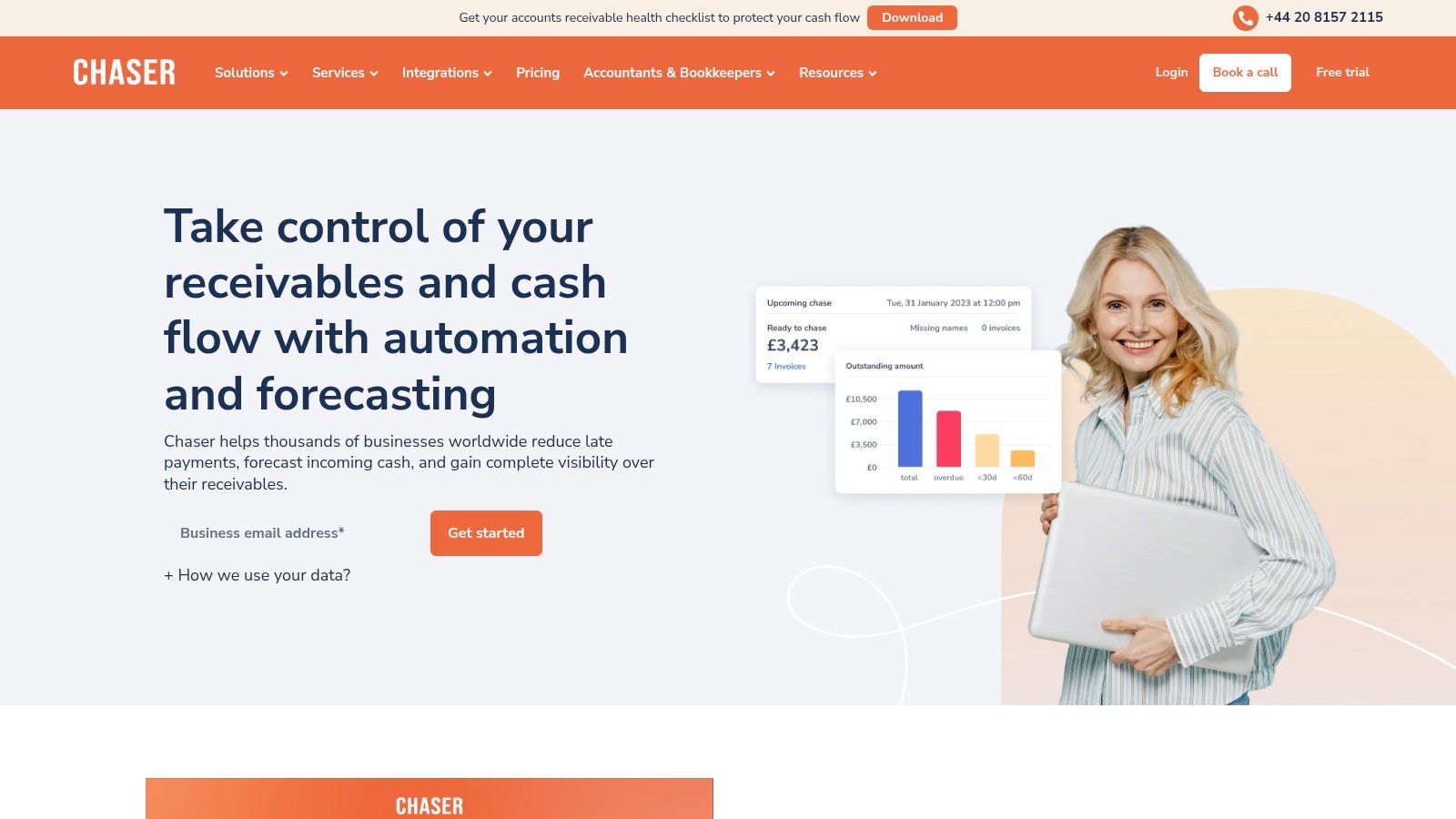
The UK late-payment context matters most here. The Federation of Small Businesses says late payment affects roughly one in three small firms, and overdue invoices are a major working-capital issue for smaller service businesses FSB. Chaser is built to attack that exact problem by making follow-up more consistent and less manual.
It also integrates with major accounting platforms and includes a hosted payment portal, which keeps the payment journey moving without a lot of extra admin. If your team spends too much time sending reminders and checking who's paid, Chaser can be a practical helper.
The limitation is focus. It improves cash in, but it doesn't give you end-to-end cash planning. If you need the full workflow from quote through payment, you'll still need another system alongside it. For many smaller service businesses, that extra complexity is exactly what AetherCloud is designed to remove. You can also see how its online payments flow supports faster collection.
9. Cash Flow Frog
Cash Flow Frog suits teams that need tidy forecasts and clear reporting more than hands-on cash collection. It pulls figures from accounting systems including Xero, QuickBooks, and Sage Intacct, then turns them into rolling forecasts, scenario plans, and cash reports that are easy to share with clients, partners, or internal stakeholders. If your job is to explain where the money stands without building the numbers from scratch, that is where it helps.
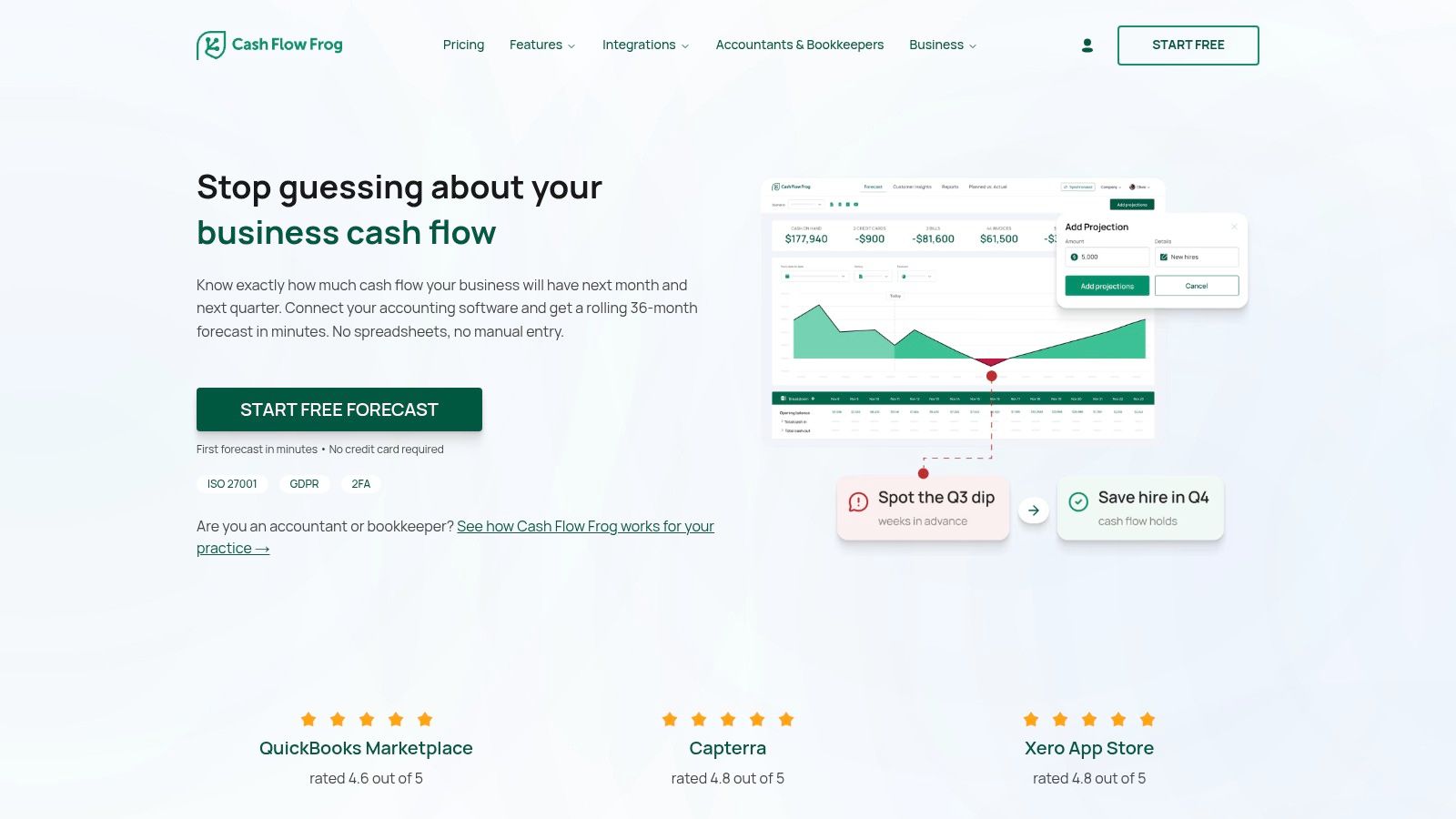
The platform also works well when a business needs a clearer view of customers and suppliers, not just a bank balance. Its reporting and multi-entity support are useful for firms that compare different scenarios or send out polished summaries without spending time assembling them manually. That can save admin, especially when several people need the same answer in a format they can use.
Strengths that matter in practice
- Better presentation quality. The reports are easier to show to non-finance readers.
- Broad accounting coverage. It supports more than the most common ledgers.
- Scenario view. Helpful when a delayed payment or supplier shift changes the month.
The main trade-off is depth of control. Cash Flow Frog is good for structured reporting, but teams that need more granular driver-based modelling may want a tool with deeper planning logic. For service businesses that mainly need clarity and communication, though, it is a practical fit.
This level of control is a clear step up from managing cash flow with a basic spreadsheet, a process covered in our guide on how to create a spreadsheet for business. If the bigger issue is that quotes, invoices, and payments are still split across different tools, AetherCloud is more useful because it brings those cash flow drivers into one place earlier. That means fewer gaps to explain later and less time spent reconciling after the fact.
10. Dryrun
Dryrun is aimed at finance teams that need a more rigorous cash-planning environment. It models AR and AP timing at the transaction level, supports rolling 13-week views, and handles multi-entity and multi-currency consolidation. That makes it a serious choice for companies that have outgrown lightweight cash widgets.
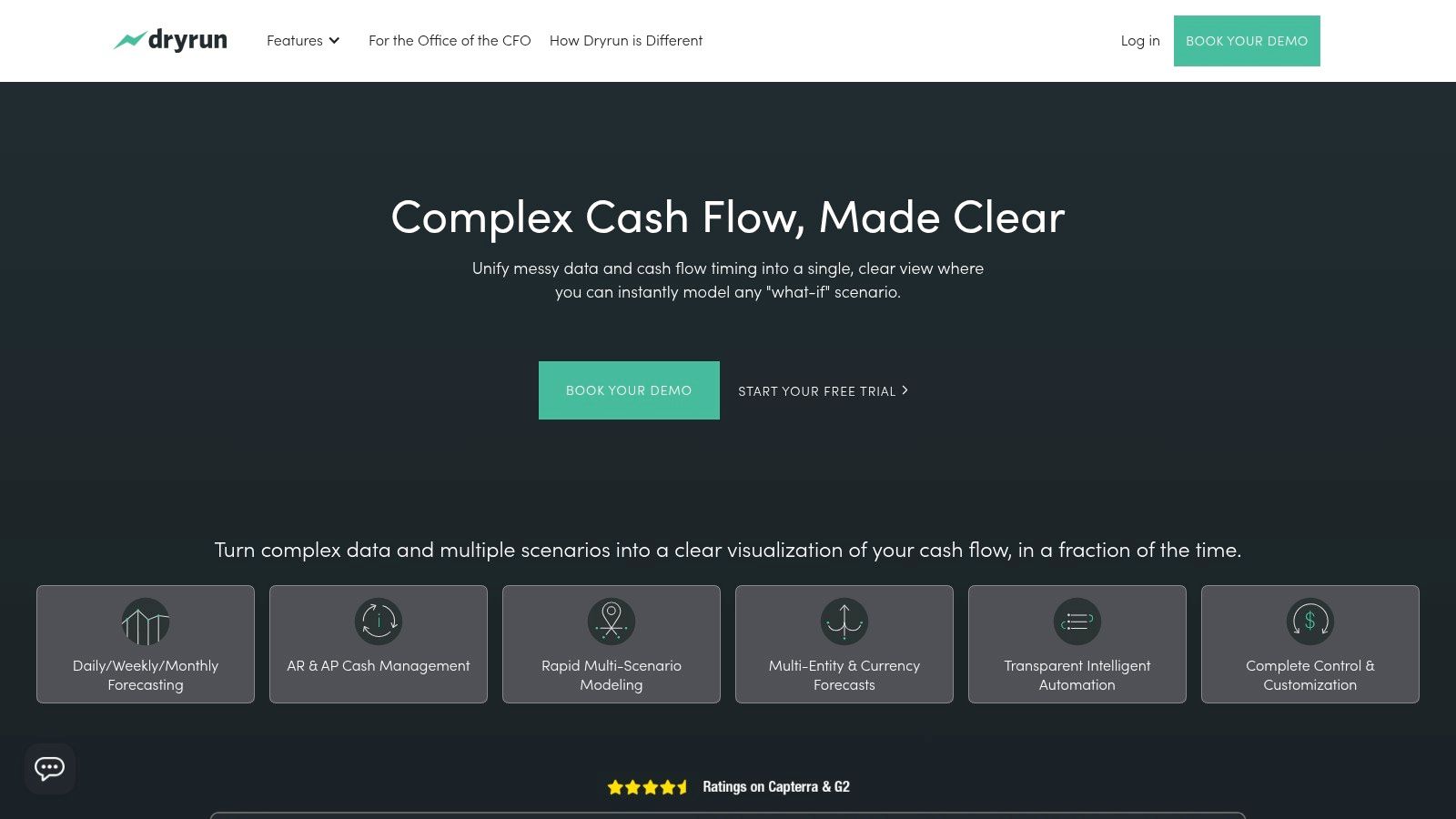
The value of that detail is precision. If your team needs to track invoice aging, variance, and timing assumptions carefully, Dryrun gives more control than basic planner tools. Independent reviews of forecasting software highlight driver-based planning and linked operational inputs as important features for connecting real business activity to cash outcomes Fathom HQ, and Dryrun sits firmly in that camp.
That power comes at a cost. It's more complex than starter tools, and it suits businesses that already have internal finance discipline. For a micro business, it can be too much, too soon.
If you're still trying to cut admin, speed up approvals, and keep invoices moving without a pile of disconnected tools, AetherCloud is the simpler route. For many UK service businesses, the biggest cash improvement comes from fixing the whole workflow, not adding a more advanced forecast model.
Top 10 Cash Flow Management Software Comparison
| Product | Core features | UX / Quality | Value & Pricing | Target audience | Unique selling point |
|---|---|---|---|---|---|
| AetherCloud 🏆 | Scheduling, lightweight CRM, quotes, invoices & online payments, digital business card, analytics, PWA | ★★★★☆, unified mobile-friendly workflow | 💰 Trial / contact sales (no public pricing) | 👥 UK trades, solo pros, local agencies, SMBs | ✨ Public microsites for quotes/booking/payments; UK-focused stack |
| Agicap | Bank aggregation, automatic cash positions, Xero sync, scenario planning | ★★★★☆, strong live cash visibility | 💰 Sales-led pricing (demo/quote) | 👥 SMEs with multi-bank needs | ✨ Extensive UK/EU bank coverage (3,000+ banks) |
| Float | Live sync to Xero/QBO/FreeAgent, rolling forecasts, scenario toggles | ★★★★☆, approachable setup for non-finance users | 💰 Tiered plans (usage/entities) | 👥 Service SMEs needing weekly cash view | ✨ Fast rolling 13‑week forecasts with payment-date tweaks |
| Futrli by Sage | Daily cash forecasts, 3‑way forecasting, report packs, multi-currency | ★★★★☆, accountant-friendly & granular | 💰 Clear pricing + 14‑day trial | 👥 Advisors & SMEs needing structured planning | ✨ Full 3‑way models (cash, P&L, balance sheet) |
| Xero Analytics / Analytics Plus | Short-term cash dashboard, business snapshot, extended projections (Plus) | ★★★☆☆, zero friction for Xero users | 💰 Included / paid upgrade (Analytics Plus) | 👥 Xero bookkeeping customers | ✨ Native in-bookkeeping insight with minimal setup |
| QuickBooks Online Cash Flow | 90‑day planner, historical view, simple what‑if inputs | ★★★☆☆, integrated, simple near-term view | 💰 Included with QBO subscription | 👥 QBO users wanting basic short-term forecast | ✨ Built-in 90‑day planner with ledger/bank data |
| FreeAgent Cashflow | Real-time 90‑day projection using bank feeds, invoices, tax timelines | ★★★☆☆, very user-friendly for sole traders | 💰 Often free/low cost via partner banks | 👥 UK sole traders & small SMEs | ✨ Low-friction adoption; bank partner bundles |
| Chaser | Automated invoice chasing (email/SMS/letters), hosted payment portal, AR insights | ★★★★☆, focused on collections & cash acceleration | 💰 Clear UK pricing; free trial | 👥 SMEs needing faster collections | ✨ Multi-channel chase + hosted payment portal |
| Cash Flow Frog | Rolling forecasts, scenario modelling, payment-habit analysis, branded reports | ★★★★☆, strong presentation-ready reporting | 💰 Variable pricing by entities/volume | 👥 Firms needing polished reports & multi-ledger support | ✨ Broad ledger support & branded stakeholder reports |
| Dryrun | Granular AR/AP timing, driver-based forecasting, multi-entity & FX support | ★★★★☆, CFO-grade control & accuracy | 💰 Sales/demo led (typically mid-market pricing) | 👥 Finance teams & mid-market companies | ✨ Transaction-level driver modelling & rolling 13‑week views |
Stop Juggling Tools: Unify Your Cash Flow in One Place
Choosing the right software depends on where your biggest cash flow challenge lies. If late payment is the main issue, a tool like Chaser can help with collections. If forecasting is the priority, Float, Futrli, Cash Flow Frog, or Dryrun can give you more structure and visibility. If you already use Xero or QuickBooks, the built-in tools may be enough to start.
For many UK service businesses, though, the most useful change is not another forecasting layer. It's removing the friction between quote, booking, invoice, and payment so cash moves faster with less admin. That's where AetherCloud stands out, because it brings scheduling, CRM, quoting, invoicing, online payments, digital business cards, and analytics into one system built for UK service firms.
When your team doesn't need to jump between apps, follow up on the same job in multiple places, or reconcile status manually, you get a clearer view of cash and a smoother customer journey. You also look more professional to clients, which helps approvals and payments happen sooner.
If you want the simplest all-in-one way to manage cash flow as part of everyday operations, visit AetherCloud and see how it can bring your quote-to-cash process into one place.