

You can get away with a vague promise on a coffee shop poster. You can't get away with one on a website when a customer has already paid for a boiler repair, a branding session, or a loft survey and then wants their money back. In a UK service business, a money back guarantee isn't just a nice line on a page, it's a contract promise that can clash with cancellation rights, refund duties, and the way you deliver work.
That's why so many tradespeople, consultants, and agencies get this wrong. They copy a guarantee from an online shop, paste it onto a service site, and then discover it's weaker than the customer's existing legal rights, or so loose that every awkward complaint becomes a refund risk. A service guarantee has to fit appointments, call-outs, reports, revisions, and completed work. If it doesn't, it creates more grief than trust.
Table of Contents
- Why Most UK Service Guarantees Miss the Point
- Anatomy of a UK-Ready Money Back Guarantee
- Guarantee vs Statutory Rights in the UK
- Sample Policy Templates and Customer-Facing Copy
- Building Your Refund Workflow in AetherCloud
- Stopping Refund Abuse Without Killing Trust
- Metrics to Track After You Launch the Guarantee
Why Most UK Service Guarantees Miss the Point
A lot of owners only realise the problem after a complaint lands. A plumber offers a “money back guarantee” on his site, a web designer adds the same line to a footer, and neither has tested what happens when the customer says the job was “not what I expected”. At that point, the generic copy looks less like reassurance and more like a promise written by someone who never had to honour it.
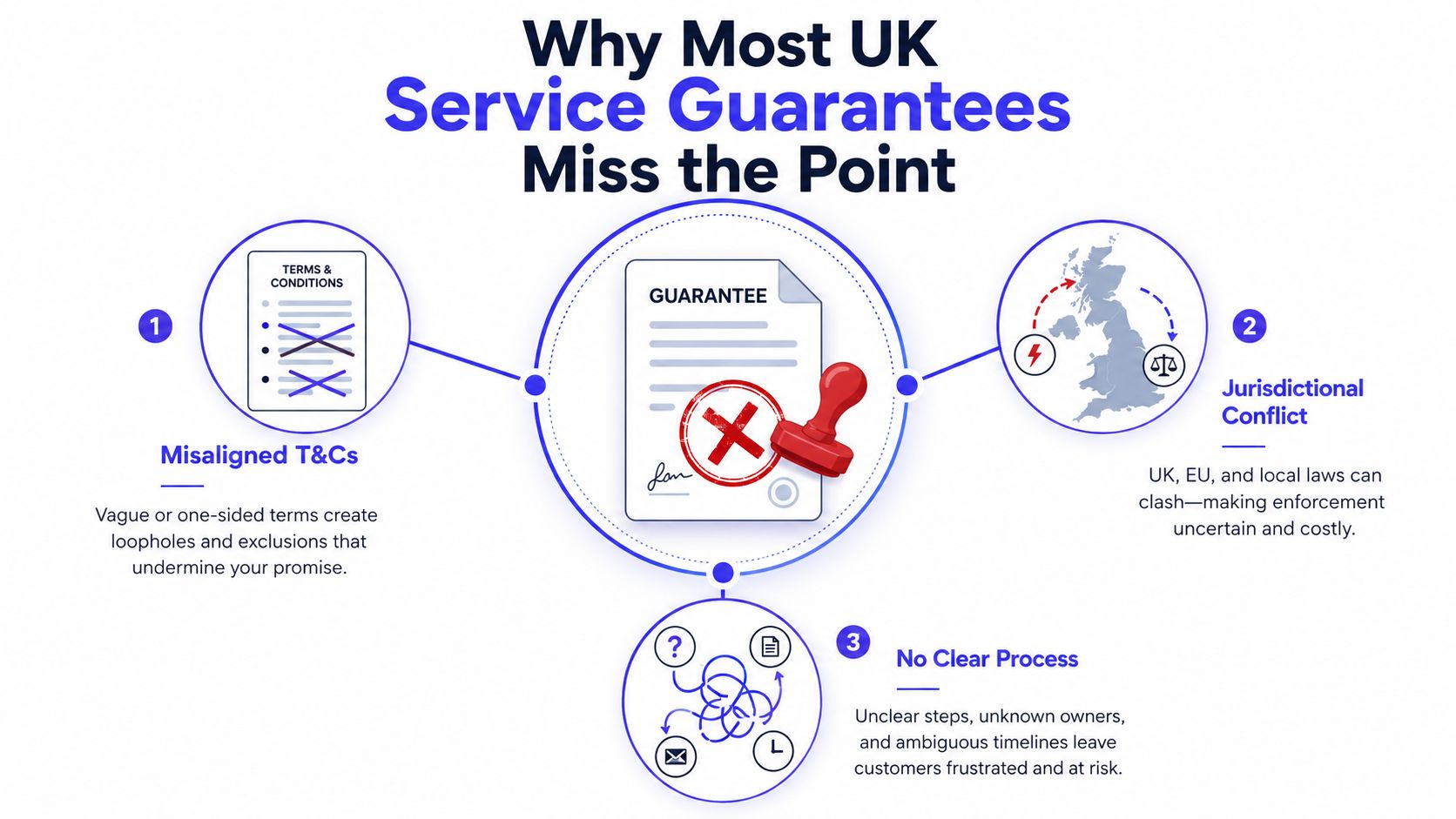
The biggest mistake is treating a service guarantee like a parcel-return policy. That works badly for appointments, site visits, strategy calls, installations, and finished work because there's nothing to “send back”. The issue is not postage or packaging, it's whether the job was done as agreed, whether the customer had a fair route to raise the issue, and whether the wording collides with the rights already built into UK consumer law.
Practical rule: if your guarantee is broader in marketing than it is in operations, it will break the first time a customer tests it.
What usually goes wrong
The first failure is misaligned terms and conditions. The guarantee says one thing, the quote says another, and the invoice says nothing at all. The second failure is jurisdictional conflict, where the business copy ignores that UK buyers already have statutory cancellation and refund rights for many online and phone sales under the Consumer Contracts Regulations 2013, including a 14-day cooling-off period and a refund within 14 days of return or proof of return (ESMT Berlin).
The third failure is more practical. There's no clear process. The customer doesn't know whether to email, call, fill in a form, or chase the technician. That's how a simple complaint becomes a messy back-and-forth, especially when the “product” is a completed service rather than a box on a doorstep.
A better guarantee is tighter than the generic stuff you see online. It tells customers what qualifies, what doesn't, and what happens before any refund is issued. It also sits comfortably beside statutory rights instead of pretending they don't exist. For service firms that market online, your public promise needs to match your real delivery process, which is why your guarantee should be designed alongside your quote and booking flow, not written in isolation. If you're shaping the offer before launch, the right go-to-market discipline matters, and a practical starting point is this AetherCloud guide on go-to-market planning.
Anatomy of a UK-Ready Money Back Guarantee
A service guarantee only works when every part of it is specific. The loose version sounds friendly, but it leaves too much room for arguments. The strong version tells the customer exactly when the promise starts, what they must do, and what they'll get back if the job missed the mark.
Build the guarantee from six pieces
Start with the trigger event. In a UK service business, that usually means dissatisfaction, missed timing, failed delivery, or a service that didn't match the agreed scope. A gardening company might trigger a refund if a booked clearance wasn't completed. A bookkeeping consultancy might trigger one if agreed monthly reporting never happened. A photography studio might trigger one if it missed the confirmed shoot date without a workable reschedule.
Next comes eligibility. Don't leave this fuzzy. Decide whether the guarantee applies to first-time customers only, to the original job only, or only within a set window after completion. Guidance on guarantee drafting commonly recommends a defined period such as 30 days as a default, while also recognising that businesses may use 14, 60, or 90 days depending on the offer and the evaluation period they want to give customers (Usercentrics).
Then define the remedy. A guarantee doesn't always have to mean cash back immediately. You can offer a redo, a partial credit, a full refund, or store credit, but you need to say which one applies in which situation. For services, a staged remedy often makes more sense than a straight refund, especially when the work can be corrected quickly.
A one-page checklist you can actually use
- Trigger: what exactly starts the refund right, such as missed delivery or unsatisfactory work.
- Eligibility: who can claim, for which job, and within what timeframe.
- Remedy: full refund, partial credit, redo, or another defined outcome.
- Process: how the customer submits the claim and what evidence, if any, is needed.
- Exclusions: custom work, third-party materials, work already signed off, or change of mind after work has started.
- Escalation: who reviews disputes and how long the customer waits for a reply.
A strong guarantee is not soft. It's specific enough to be trusted and narrow enough to survive a complaint.
A bookkeeping firm, for example, should not promise a blanket refund on “any dissatisfaction” if the client ignored requests for missing records. A cleaner example is a fitness instructor who offers a refund only if the first session never happened and the customer gave notice through the correct channel. That kind of wording feels fair because it reflects the actual service model rather than pretending all services are the same.
Guarantee vs Statutory Rights in the UK
A voluntary guarantee is not the same thing as UK consumer law. That distinction matters because a lot of websites blur the two, and customers notice when a business tries to sound more generous than it really is. If you offer a guarantee, it has to sit beside the law, not over it.
What the law already gives the customer
For many distance and off-premises purchases in the UK, the Consumer Contracts Regulations 2013 give consumers a 14-day cooling-off period from receipt of the goods, and sellers must reimburse the customer within 14 days of getting the goods back or proof of return (ESMT Berlin). That's a statutory refund right. You don't need to “sell” it as a bonus.
The other key layer is the Consumer Rights Act 2015, which already gives remedies for goods that are faulty, not as described, or not fit for purpose, and for services that aren't provided with reasonable care and skill. That's why so many UK service firms are on shaky ground when they use guarantee language that sounds bigger than the law, but offers less in practice. The wording matters because a customer who already has a legal right to challenge poor work won't be impressed by a watered-down promise dressed up as extra protection.
When a guarantee adds value
A guarantee is useful when it fills a real gap. It can help when a customer changes their mind after the statutory window, or when the work was technically delivered but the client still feels let down in a way that's awkward to resolve. It can also be a sensible trust signal for services where the client is buying before they fully know the outcome, such as design work, advisory calls, or one-off site visits.
The trap is trying to use the guarantee to rewrite statutory rights. Don't do that. Don't suggest the customer must accept a weaker process than the law already gives them. A guarantee can add clarity, speed, and confidence, but it cannot reduce or contradict legal rights. If it does, the copy is not just clumsy, it's misleading.
If you want a simple internal reference point for policy wording, keep your refund language aligned with the broader structure in AetherCloud's refund policy guidance. The rule is simple, your promise can be tighter than the law, but never smaller in a way that confuses the customer.
Sample Policy Templates and Customer-Facing Copy
You don't need a lawyerly wall of text to make this work. You need wording that is short, readable, and honest about what happens when the job misses the mark. The same structure can sit in a terms page, under a quote, or on a booking page, but the tone should shift depending on where the customer sees it.
Master policy template
Money Back Guarantee. If you are not satisfied with our service, contact us within [X days] of completion at [email or phone]. We will review the issue and may first offer a re-visit, correction, or other remedy. If the issue cannot be resolved fairly, we will issue a [full refund / partial refund / credit] for the relevant service. This guarantee applies to [specific services] and does not apply to [excluded items or situations], including work already approved, third-party charges, or changes of mind after work has started.
That version works because it names the trigger, the process, the remedy, and the exclusions. It's plain enough for customers and firm enough for the business.
Short footer version
Satisfaction guarantee: if our service misses the agreed standard, tell us within [X days] and we'll review it, offer a fix where possible, and refund eligible work where appropriate. Terms apply.
That line is compact enough for a quote footer or invoice note. It's not trying to do the whole legal job, it's just pointing the customer toward the process.
Friendlier website version
We stand behind our work. If something we deliver isn't right, let us know within [X days] and we'll put it right or, where the issue can't be fixed fairly, discuss a refund for the affected service.
That wording is better for a homepage or booking page because it sounds human without sounding reckless.
Trade-specific examples
For a heating engineer, the promise might say the customer can claim if the booked visit was missed or the agreed diagnostic work wasn't carried out. For a freelance copywriter, the wording should focus on a defined revision or delivery failure, not subjective taste after multiple rounds of changes. For a local fitness instructor, the safest route is to cover missed sessions or unusable bookings, not vague disappointment after a completed class.
If the customer can't tell when the guarantee applies, the guarantee is already too weak to use.
Building Your Refund Workflow in AetherCloud
A guarantee only behaves properly if the back office can keep up with it. Most refund chaos comes from disconnected tools, not from the policy itself. The quote lives in one place, the invoice in another, the payment link somewhere else, and nobody wants to trace the trail when the customer asks for money back.
A cleaner process starts with the approved quote. Once the customer accepts the work, the invoice should be tied to that quote so the original scope is easy to check later. When the customer pays online, the payment record should stay attached to the invoice, because that gives you a usable audit trail if a claim comes in. AetherCloud handles quoting, invoicing, and payment collection in one system, so the refund conversation starts from the original job record instead of from three disconnected spreadsheets.
A practical workflow for service firms
- Quote approved. The customer accepts the scope, dates, and price.
- Invoice issued. The approved quote becomes the invoice, so nothing gets lost in translation.
- Payment collected. The invoice is paid through the online payment page.
- Refund request logged. The request is attached to the original invoice, not buried in email.
- Decision recorded. You issue a full reversal, a partial credit, or a redo note, and keep the reason on file.
That kind of structure matters when several claims arrive in the same week. It stops staff from making ad hoc decisions and helps you see patterns, such as which service, technician, or booking type generates the most complaints. It also means the customer gets a consistent reply, which matters more than people admit.
Keep the customer informed
Say what happens next, who handles the claim, and when they'll hear back. A clear workflow feels more professional than a fast, messy one. If you want to tighten the payment side of this process, AetherCloud's guide to accepting online payments is a useful companion for linking invoices and payments cleanly.
The point is simple. Refund handling should be part of your operations, not a panic response. When quoting, invoicing, and payments live together, you're less likely to lose track of what was promised, what was delivered, and what should be refunded.
Stopping Refund Abuse Without Killing Trust
A boiler service is a good example because it feels straightforward, yet it still creates arguments. The engineer arrives on time, completes the service, notes the work, and leaves the property. A week later, the customer sends a message saying they want the whole amount back because they've changed their mind, or because they expected a different outcome from a job that was completed properly.
That's not a reason to ditch the guarantee. It's a reason to build a smarter process.
Use a staged response
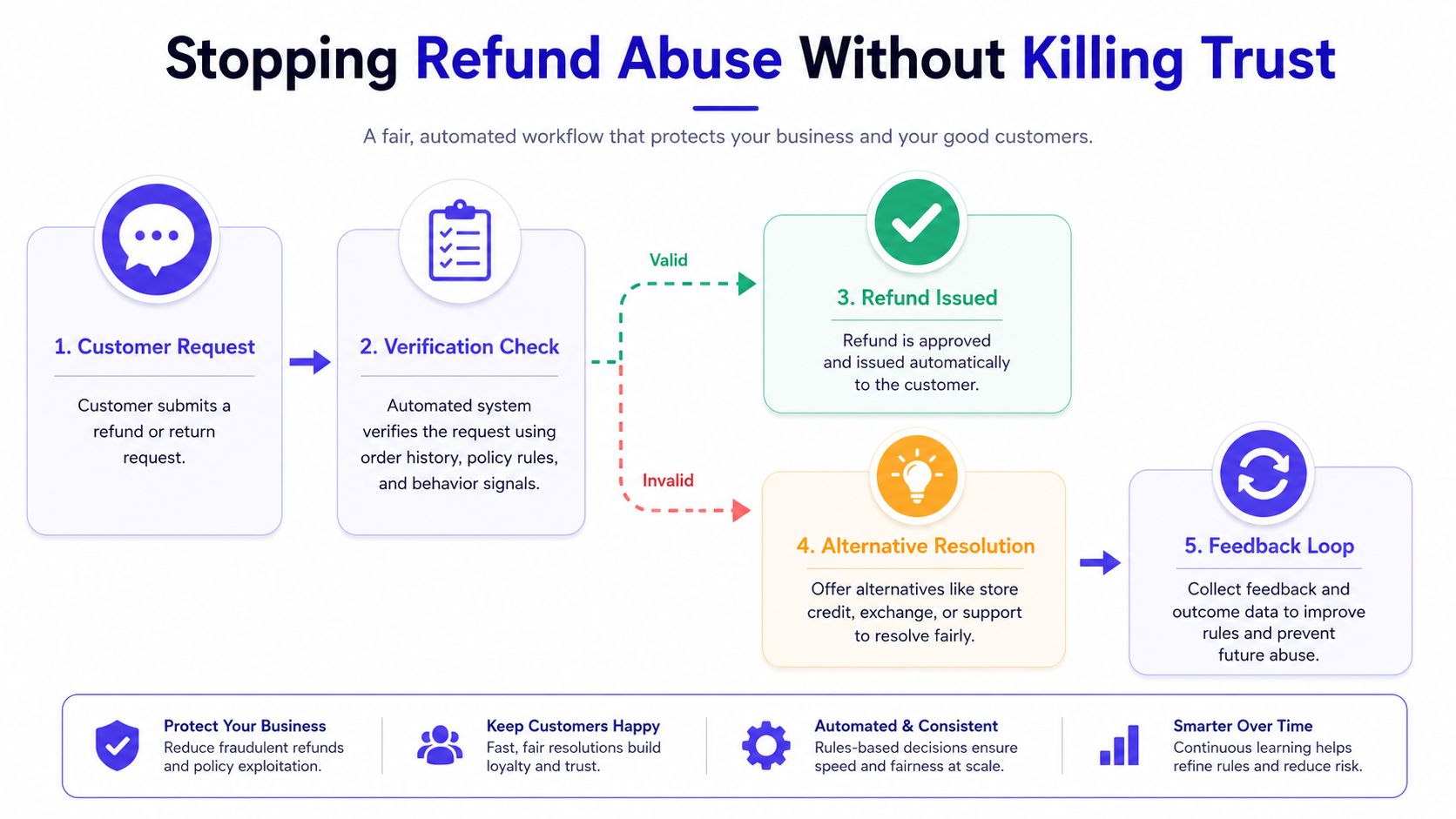
Start with a written complaint. Ask the customer to describe the problem clearly, and ask for any photos, job notes, or supporting details that help you check the claim. Then offer a re-visit or another remedy before you jump straight to cash. That sequence protects your margin without making the customer feel stonewalled.
A guarantee can be sensible for trust and still safe for the business. A reasoned process is better than an all-or-nothing refund promise, because most legitimate issues can be fixed without paying the same job twice. A staged resolution also makes it easier to identify the rare claims that are not genuine.
Set guardrails that feel fair
The main safeguards are boring, which is good. They work because they're predictable.
- Written description: ask the customer to explain the issue in writing.
- Supporting evidence: request photos, call notes, or the job record where relevant.
- Clear window: define the period after completion in which claims are considered.
- Remediation first: offer a fix, redo, or partial credit before a full refund.
- Eligibility filter: limit claims to the relevant job, not unrelated future work.
A freelancer or tradesperson doesn't need to sound defensive. They need a process that shows they'll listen, check the facts, and act fairly. That's how you avoid turning a guarantee into a refund loophole.
Fairness doesn't mean saying yes to every claim. It means giving every claim a proper route.
If you want the customer relationship side of this to stay healthy, keep the tone calm and consistent. AetherCloud's customer engagement guidance fits well here because the same communication habits that win repeat work also help you handle complaints without creating drama.
Metrics to Track After You Launch the Guarantee
A guarantee is a live test of how your business sells and serves. If you don't track it, you're guessing. Keep the measurement simple enough that you'll look at it each month, and keep everything in one place if you can.
Watch the numbers that matter
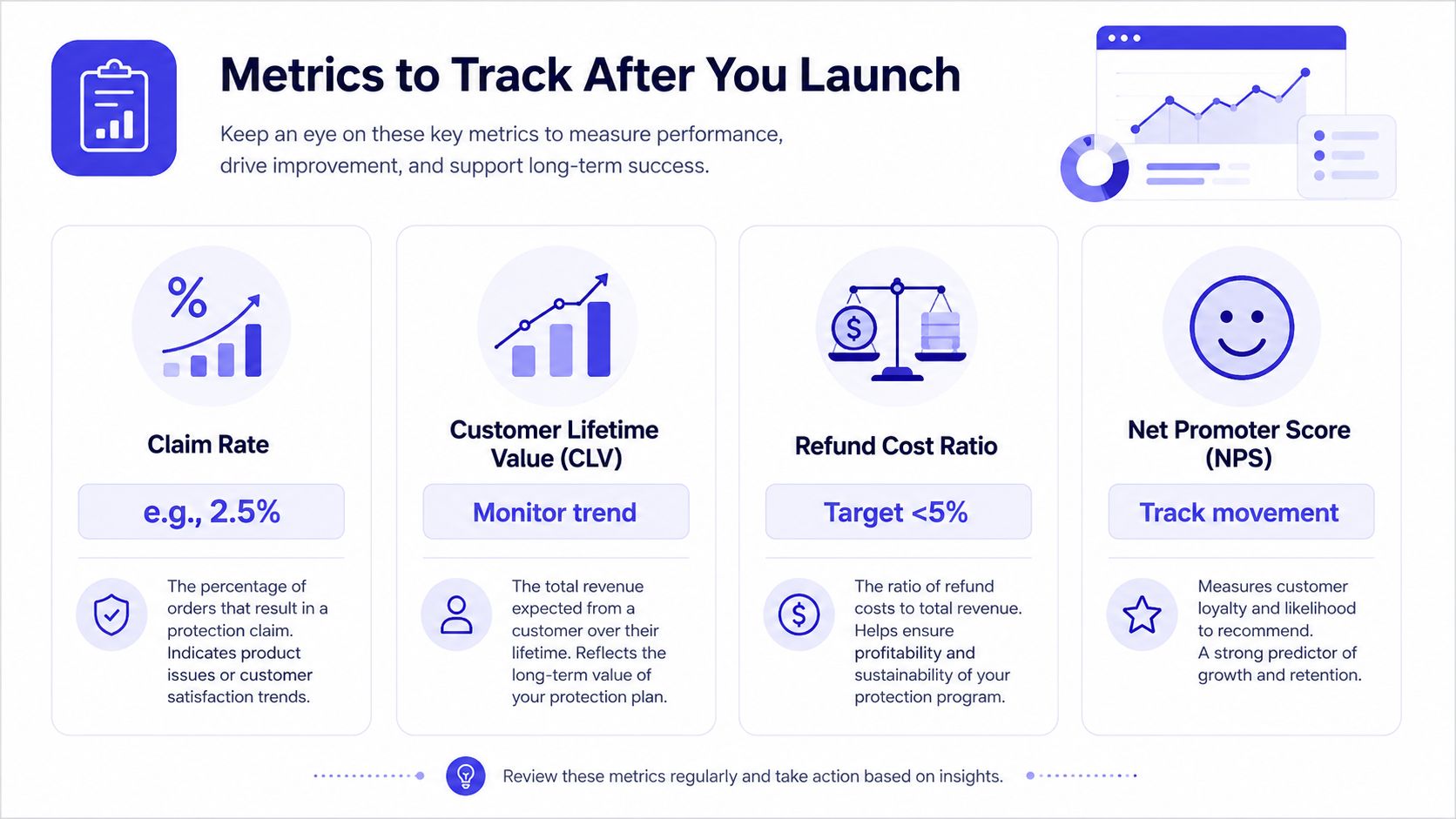
Track refund request rate so you know whether the guarantee is being used at all. Track refund approval rate so you can see whether your policy is too strict, too loose, or just right. Track average time to resolve a refund because slow replies turn a manageable issue into a reputational one.
You should also compare quote to invoice conversion before and after the guarantee goes live. If the promise helps prospects feel safer, that should show up in the sales flow. Then look at the repeat-buyer rate among customers who did claim a refund, because a well-handled complaint often says more about trust than the original sale did.
Use leading indicators too
Don't wait for the headline numbers alone. Watch how fast quotes get approved, and notice how often customers mention the guarantee in enquiries. Those early signals tell you whether the copy is getting attention and whether it's attracting the right kind of customer.
A simple dashboard is enough for most firms. You do not need a sprawling spreadsheet system just to see whether the guarantee is helping or hurting. If you want quoting, invoicing, payments, and analytics in one place, AetherCloud's business analytics guide is the right place to understand how those figures can sit together without extra admin.
The hard truth is this. A guarantee is only worth keeping if it increases trust without turning into an operational mess. Measure it, adjust it, and keep the policy tied to the way your service business works.
If you want a cleaner way to manage quotes, invoices, payments, and customer records around a guarantee, AetherCloud keeps the whole workflow in one place. You can issue quotes, track invoice status, collect payments, and keep the refund trail together instead of chasing it across separate tools. That makes a money back guarantee easier to run, and much harder to misuse.